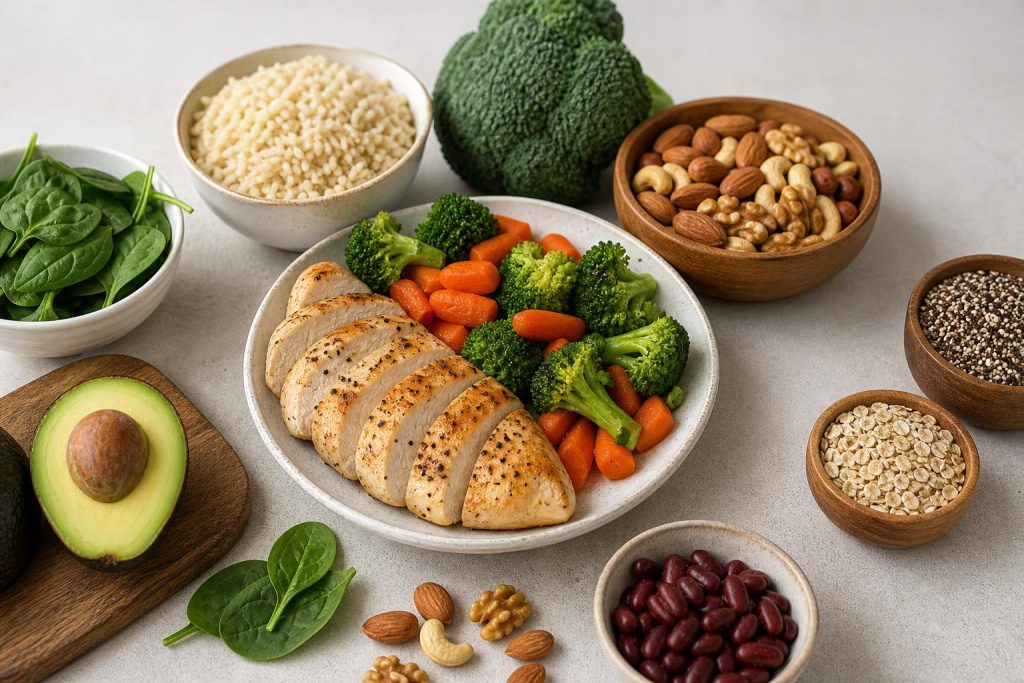
When semaglutide cuts your appetite by 30 to 40 percent, the instinct is to celebrate the smaller portions and move on. But there’s a catch buried in the biology — and it has everything to do with protein. The same mechanism that makes Ozempic so effective at reducing food intake also makes it dangerously easy to under-eat the one macronutrient your body can’t afford to shortchange. If you’re using a GLP-1 medication, or honestly, if you’re in any kind of caloric deficit trying to lose fat while keeping your muscle, protein isn’t optional. It’s the variable that determines whether you come out of this leaner and stronger, or just lighter and weaker.
The drug works, that much is clear. Research published in 2025 in Obesity found that semaglutide-induced weight loss actually improved skeletal muscle mitochondrial efficiency — specifically, the rate of ATP produced per oxygen consumed increased significantly in treated mice. That’s meaningful. It suggests the medication isn’t just causing the scale to drop; it’s changing how your muscles generate and use energy. But here’s the tension: those same mice also lost lean mass alongside fat mass. Mitochondrial efficiency is a good thing, but losing the muscle tissue that houses those mitochondria is not. That tradeoff is where protein becomes the deciding factor.
What Ozempic Does to Your Appetite — and Why That’s a Protein Problem
GLP-1 receptor agonists like semaglutide work by mimicking the incretin hormone GLP-1, which the gut releases after eating. The result is slower gastric emptying, reduced hunger signaling, and a meaningful blunting of the brain’s reward response to food. A landmark 2025 study published in Science identified a neural pathway from the peri-locus ceruleus to the ventral tegmental area that governs hedonic eating — the kind of eating driven by palatability rather than hunger — and showed that GLP-1 receptor activation directly opposes the dopamine neurons that drive this behavior. In plain terms, Ozempic doesn’t just make you less hungry; it makes food less rewarding. High-calorie, palatable foods lose their pull. That’s powerful for fat loss. But if those high-reward foods are also your primary protein sources — a steak, a chicken breast, even a protein shake — you may find yourself avoiding them not because you don’t need them, but because nothing sounds particularly appealing anymore.
This is the protein gap that quietly develops in GLP-1 users. Total caloric intake drops sharply, often into the 1,200 to 1,600 calorie range for men who were previously eating 2,500 or more. If those calories aren’t deliberately structured around protein, the diet ends up protein-deficient by default. And the consequences aren’t subtle. Muscle tissue is metabolically expensive — the body will cannibalize it for energy when intake is insufficient. Research consistently places the threshold for muscle preservation during weight loss at a minimum of 1.2 grams of protein per kilogram of bodyweight, with most sports science recommendations for actively training men landing between 1.6 and 2.2 grams per kilogram. On a suppressed appetite, hitting those numbers requires intentionality that most men don’t realize they need until the damage is already done.
How to Protect Muscle While Ozempic Does Its Job
The strategy isn’t complicated, but it does require a shift in how you think about eating on this medication. Rather than waiting until you’re hungry and eating whatever sounds tolerable, protein needs to come first — literally in meal order and structurally in your planning. Start every meal with your protein source before touching anything else on the plate. When appetite is blunted, you’ll often find that after eating your protein, there isn’t much room for anything else. That’s fine. You’ve protected the macronutrient that matters most.
For most men, aiming for 30 to 40 grams of protein per meal across two to three meals is a realistic framework on a reduced appetite. Lean sources like Greek yogurt, eggs, cottage cheese, canned fish, and whey protein are practical because they deliver high protein density without requiring large volume. A good whey isolate or a collagen-plus-whey blend mixed into something easy to drink can bridge the gap on days when solid food feels unappealing. This isn’t about supplementing for the sake of it — it’s about meeting a biological requirement when your appetite-regulation system has been pharmacologically altered.
Resistance training is non-negotiable in this equation. The mitochondrial improvements seen in the 2025 Obesity study are encouraging, but muscle tissue itself is only preserved and built under mechanical load. Lifting gives the body a reason to hold onto lean mass even in a caloric deficit. If you’re on Ozempic and not resistance training at least two to three times per week, you are almost certainly losing more muscle than you should. The combination of adequate protein and progressive resistance training is what separates a productive weight loss phase from one that just makes you a smaller, frailer version of yourself.
It’s also worth noting that semaglutide’s benefits extend well beyond appetite suppression. Research in Cardiovascular Diabetology demonstrated that semaglutide modulates pro-inflammatory and atherogenic pathways, reducing markers associated with cardiovascular disease — including a 20 percent reduction in the adiposity marker FABP4 after six months of treatment. These are meaningful systemic effects. But they don’t replace the foundational work. A drug that improves your cardiovascular risk profile while you simultaneously lose muscle mass and metabolic capacity is only doing half the job.
The Takeaway
Ozempic is a legitimate tool for fat loss and metabolic health. The science supports it. But the suppressed appetite that makes it effective also creates a real risk of protein under-consumption — and with it, muscle loss that can undermine your long-term results and metabolic function. Whether you’re using a GLP-1 medication or pursuing fat loss through diet and training alone, the principle is the same: protein is the non-negotiable foundation. Prioritize it at every meal, back it with resistance training, and let the fat loss happen on top of a preserved — or ideally improved — muscle base. That’s not just good advice for Ozempic users. That’s the standard for anyone serious about body composition.
Scientific References
-
Zhu, Gong, Rodriguez et al. (2025).
Hedonic eating is controlled by dopamine neurons that oppose GLP-1R satiety..
Science (New York, N.Y.).
View on PubMed → -
García-Vega, Sánchez-López, Rodríguez-Carnero et al. (2024).
Semaglutide modulates prothrombotic and atherosclerotic mechanisms, associated with epicardial fat, neutrophils and endothelial cells network..
Cardiovascular diabetology.
View on PubMed → -
Wei, Ma, Cui et al. (2025).
AI-Driven De Novo Design of Ultra Long-Acting GLP-1 Receptor Agonists..
Advanced science (Weinheim, Baden-Wurttemberg, Germany).
View on PubMed → -
Zhou, Yi, Popławska-Domaszewicz et al. (2025).
Glucagon-like peptide-1 receptor agonists in neurodegenerative diseases: Promises and challenges..
Pharmacological research.
View on PubMed → -
Choi, Karasawa, Meza et al. (2025).
Semaglutide-induced weight loss improves mitochondrial energy efficiency in skeletal muscle..
Obesity (Silver Spring, Md.).
View on PubMed →