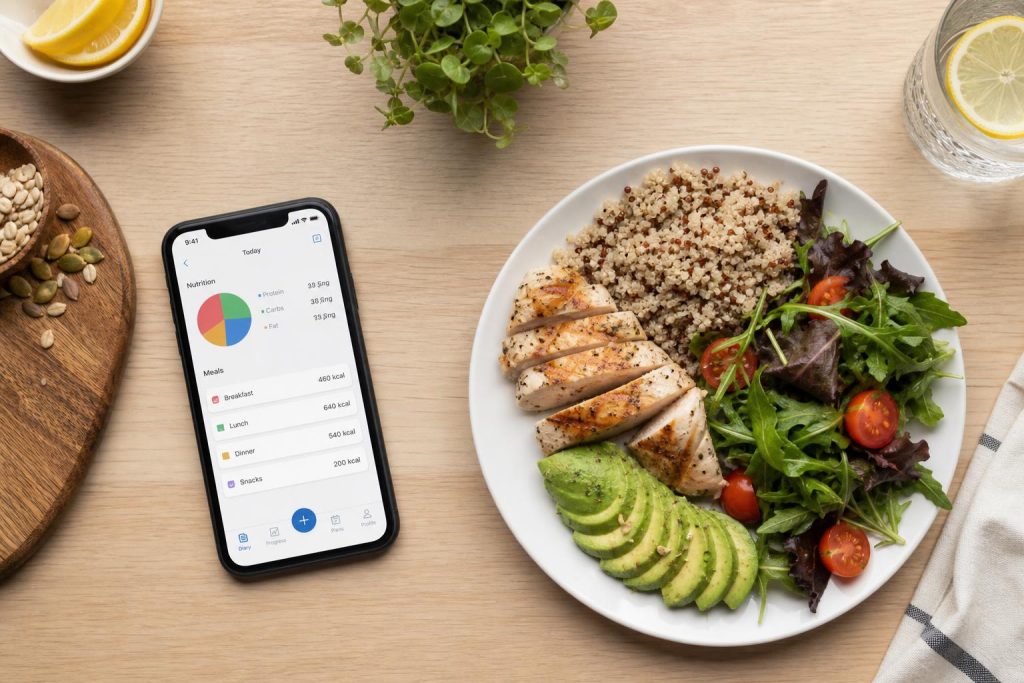
When researchers followed GLP-1 receptor agonist users over 68 weeks in the landmark STEP 1 trial, they found that participants lost an average of 14.9% of their body weight on semaglutide. Impressive — until you look closer at what was lost. Data from body composition studies suggest that without deliberate dietary strategy, a significant portion of weight lost during aggressive caloric restriction comes from lean muscle mass — not just fat. For men on Ozempic or any GLP-1 medication, this is the detail that changes everything about how you need to eat.
Semaglutide (sold as Ozempic for type 2 diabetes and Wegovy for weight loss) works by mimicking the GLP-1 hormone, slowing gastric emptying, reducing appetite, and triggering satiety signals in the brain. The result is that most men eat substantially less — sometimes dramatically less — without feeling like they’re dieting. But here’s the metabolic problem nobody talks about loudly enough: when you’re eating 30 to 50 percent fewer calories than before, the quality of what you eat becomes exponentially more important. And the macronutrient that suffers most from reduced intake — and whose deficiency carries the steepest consequences — is protein.
Why Protein Becomes Critical During GLP-1-Driven Caloric Restriction
The body requires adequate dietary protein not only to build muscle, but to maintain it under physiological stress — and aggressive caloric restriction is exactly that kind of stress. Research published in the American Journal of Clinical Nutrition found that higher protein intakes during caloric restriction preserve lean mass significantly better than standard protein recommendations, even when total calories are matched. This matters enormously for men on Ozempic, whose appetite suppression may lead them to eat too little of everything — including the one macronutrient that protects their physique and metabolism.
Muscle tissue is metabolically expensive. Your body burns calories just to maintain it. Lose it during a period of weight loss, and you’ve effectively lowered your metabolic floor — meaning you’ll burn fewer calories at rest going forward, making future fat loss harder and weight regain more likely. This phenomenon, sometimes called adaptive thermogenesis, has been well documented in weight loss research and is compounded when protein intake is insufficient. For a man in his 40s or 50s already contending with age-related muscle loss (sarcopenia), the stakes are even higher.
The current Recommended Dietary Allowance for protein is 0.8 grams per kilogram of body weight — a figure most researchers in sports nutrition and metabolic health consider woefully inadequate for active men or those in a caloric deficit. Leading protein researchers like Stuart Phillips at McMaster University have repeatedly demonstrated that intakes of 1.6 to 2.2 grams per kilogram of body weight are more appropriate for preserving or building lean mass, particularly during periods of energy restriction. For a 200-pound man (about 91 kg), that translates to roughly 145 to 200 grams of protein per day — a target that becomes genuinely challenging when Ozempic has blunted your appetite to the point where finishing a chicken breast feels like a feat.
How to Hit Your Protein Targets When You Barely Feel Like Eating
This is the practical challenge that GLP-1 users rarely get enough guidance on. The medication does its job almost too well for some men — food simply loses its appeal, and the default response is to eat whatever is easiest and smallest, which often means crackers, toast, or small amounts of whatever requires the least preparation. Protein-dense foods tend to be more satiating and require more eating effort, which means they often get displaced by lower-quality, easier-to-tolerate options. The result is accelerated muscle loss masquerading as successful weight loss.
Prioritizing protein at the start of every meal — before anything else touches your plate — is one of the most effective strategies here. Because GLP-1 medications slow gastric emptying, the window before you feel full closes faster than it would under normal conditions. Getting your protein in first ensures that your limited appetite is being used to meet your most critical nutritional need. Studies have consistently shown that protein consumed early in a meal increases satiety and total protein synthesis outcomes relative to end-of-meal consumption.
Liquid protein sources deserve serious consideration for men who struggle with solid food tolerance on GLP-1 therapy. A high-quality whey isolate or casein shake can deliver 25 to 40 grams of protein with minimal digestive burden and negligible volume — important when fullness arrives quickly and lingers. Whey protein in particular has been shown to stimulate muscle protein synthesis more acutely than other protein sources due to its leucine content and rapid absorption kinetics, making it an excellent tool for men trying to hit aggressive targets on a compressed eating window. Greek yogurt, cottage cheese, and eggs are similarly efficient whole-food sources that pack protein into relatively small servings.
Distributing protein intake across multiple meals — rather than concentrating it in one or two — also maximizes the muscle-preserving signal throughout the day. Research suggests that muscle protein synthesis is optimized when protein is spread across three to four meals of roughly 30 to 40 grams each, rather than consumed in one large bolus. This aligns well with the eating pattern of most men who are able to manage smaller, more frequent meals on GLP-1 therapy — even if the total volume of food consumed each day has dropped considerably.
Resistance training remains non-negotiable in this conversation. Protein alone preserves muscle; protein combined with a progressive resistance stimulus actively builds it, even in a caloric deficit. A 2017 study published in the American Journal of Clinical Nutrition showed that men in a caloric deficit who combined high protein intake with resistance training not only preserved lean mass but added muscle while losing fat — a dual outcome that should be the explicit goal of every man using Ozempic. The medication handles appetite; you handle training. That division of labor is what separates men who come out of a GLP-1 cycle leaner and stronger from those who come out lighter but metabolically worse off.
The Takeaway
Ozempic can be a powerful tool for reducing body weight, improving insulin sensitivity, and resetting metabolic health. But the medication does not care whether the weight you lose is fat or muscle — that part is entirely up to you. Meeting a daily protein target of 1.6 to 2.2 grams per kilogram of body weight, prioritizing protein at every meal, leveraging efficient sources like whey protein and Greek yogurt, distributing intake across the day, and pairing all of it with consistent resistance training is not optional for men who want to come out the other side of this process with a physique and metabolism worth keeping. The science is clear. Now the execution is yours.