For decades, the fitness world treated fat loss and muscle gain as mutually exclusive goals — bulk first, cut later, repeat. But a growing body of research is rewriting that script. A 2017 review published in the Journal of Strength and Conditioning Research confirmed that simultaneous fat loss and lean mass gain — what researchers call body recomposition — is not only possible but measurable, particularly in individuals who are resistance training consistently. The mechanism that makes it work more efficiently than most men realize? Strategic manipulation of macronutrients across the week — a practice known as macro cycling.
Macro cycling isn’t a fad. It’s a structured nutritional approach where you deliberately adjust your intake of protein, carbohydrates, and fat based on your activity demands on any given day. High-output training days get more fuel. Rest days get less. The result is a metabolic environment that supports muscle protein synthesis when it matters most, while encouraging fat oxidation during recovery windows. Whether you’re a seasoned lifter, someone using a GLP-1 medication to manage appetite and insulin response, or a man who’s simply dialing in his diet after years of inconsistency — macro cycling offers a flexible, evidence-aligned framework worth understanding.
The Science of Cycling Your Macros
At its core, macro cycling leverages the body’s sensitivity to energy availability. On days when you train hard, muscle glycogen demand is elevated and your cells are primed to uptake carbohydrates for recovery and growth. Research on nutrient timing published in the Journal of the International Society of Sports Nutrition supports the idea that carbohydrate consumption around resistance training enhances glycogen replenishment and blunts cortisol-driven muscle breakdown. On rest days, that same carbohydrate load serves little performance purpose — and keeping it lower shifts the body toward fat as a primary fuel source.
Protein, however, stays elevated every single day. This is non-negotiable. A landmark 2017 meta-analysis in the British Journal of Sports Medicine analyzed 49 studies and found that protein intakes of approximately 1.6 grams per kilogram of body weight per day maximized lean mass gains in men performing resistance training. During a caloric deficit — which is often the reality for men pursuing recomposition — some researchers argue that needs may rise to 2.0–2.4 g/kg to protect against muscle catabolism. The practical takeaway: anchor your protein high and consistent, then cycle your carbs and fats around it.
A basic macro cycling structure for a man training four days per week might look like this: on training days, carbohydrates sit between 2.5–3.5 g/kg while dietary fat is kept moderate (0.8–1.0 g/kg); on rest days, carbohydrates drop to 0.5–1.5 g/kg while dietary fat increases to fill the caloric gap and support testosterone production and joint health. Protein remains constant at or above 2.0 g/kg throughout. This creates a weekly average caloric intake that can sit at maintenance or a slight deficit — enough to drive fat loss without signaling starvation to your body’s muscle-preserving systems.
Applying Macro Cycling to Real-World Fat Loss and Muscle Building
The practical application matters as much as the theory. One of the most common mistakes men make when attempting body recomposition is applying blanket calorie restriction without accounting for training intensity. Eating the same macros every day in a deficit might produce weight loss on the scale, but a significant portion of that loss can come from lean tissue — especially without adequate protein and strategic carbohydrate placement. A 2019 study in Nutrients found that resistance-trained men in a caloric deficit preserved significantly more lean mass when protein was distributed across multiple meals and carbohydrate intake was timed around training compared to untimed, uniform intake.
For men using GLP-1 receptor agonists like semaglutide or tirzepatide, macro cycling takes on added relevance. These medications suppress appetite meaningfully, which can make hitting adequate protein targets genuinely difficult — and inadequate protein during a GLP-1-driven caloric deficit is one of the fastest routes to muscle loss. The framework of macro cycling provides structure: even when overall appetite is suppressed, knowing that protein is the immovable anchor helps prioritize nutrient quality over simply responding to hunger cues. The carbohydrate and fat adjustments then fall into place around that foundation.
Men pursuing recomposition through traditional diet and training alone face a different but related challenge — consistency fatigue. Eating the same foods in the same amounts every day becomes monotonous, and adherence breaks down. Macro cycling introduces intentional variation that can actually make the process more sustainable. Higher-carb training days feel like a reward. Lower-carb rest days feel purposeful rather than restrictive. This psychological dimension of flexible dieting is supported by research showing that dietary flexibility — rather than rigidity — is associated with lower rates of disordered eating and better long-term weight management outcomes.
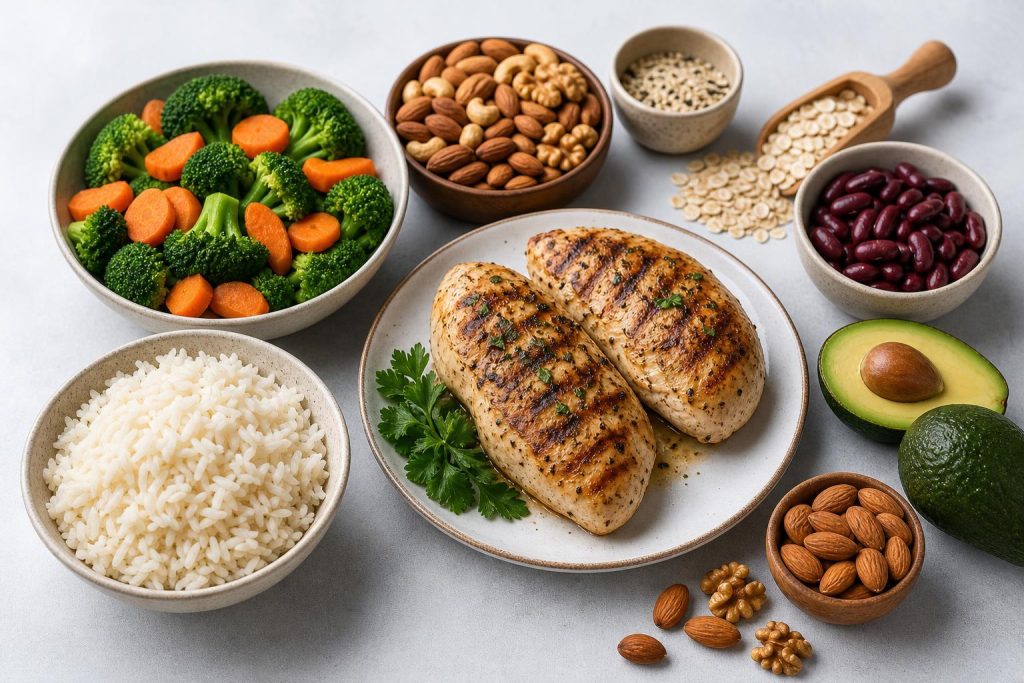
Food quality within the cycling framework still matters significantly. Higher-carb training days should draw from whole food sources — oats, rice, potatoes, fruit — rather than processed carbohydrates that spike blood glucose and crash energy. On higher-fat rest days, lean into sources like avocado, olive oil, eggs, and fatty fish, which provide the dietary fat needed for hormone production without displacing protein targets. Think of macro cycling not as permission to eat whatever fits your numbers, but as a purposeful framework built on quality inputs.
The Takeaway
Body recomposition is a realistic goal for most men — not a genetic privilege reserved for elite athletes. Macro cycling provides a research-supported structure to make it happen: high protein every day, strategic carbohydrates on training days to fuel performance and recovery, and deliberate fat adjustment on rest days to support hormonal health while encouraging fat oxidation. Whether you train four days a week and track everything in a food app, or you use a GLP-1 medication and need structure to hit your protein minimums, the principles translate. Start with your protein floor, build your carb and fat strategy around your weekly training schedule, and give it at least eight weeks of consistent execution before adjusting. The research supports the approach — your results will follow the effort you bring to it.