Most men have heard of GLP-1 by now — usually in the context of Ozempic or Wegovy. But here’s what often gets buried in the headlines: your body is already making glucagon-like peptide-1 every time you eat. This gut-derived hormone plays a central role in appetite regulation, blood sugar control, and even — according to emerging research published in the Journal of Affective Disorders — protecting cognitive function over time. The pharmaceutical versions are simply mimicking something your biology was already designed to do. The real question is: can you push your natural GLP-1 output higher through diet, exercise, and lifestyle? The evidence suggests yes — and meaningfully so.
GLP-1 is secreted by L-cells in the small intestine and colon in response to food. It signals the pancreas to release insulin, slows gastric emptying so you feel full longer, and communicates directly with your brain’s hunger centers. When GLP-1 signaling is working well, appetite is easier to manage, blood sugar stays stable after meals, and energy is more consistent. When it’s blunted — as it often is in men with obesity, insulin resistance, or poor diet quality — hunger becomes harder to control and metabolic dysfunction compounds over time. Boosting it naturally isn’t about hacking your hormones with a magic supplement. It’s about stacking the right inputs consistently.
The Foods That Drive the Biggest GLP-1 Response
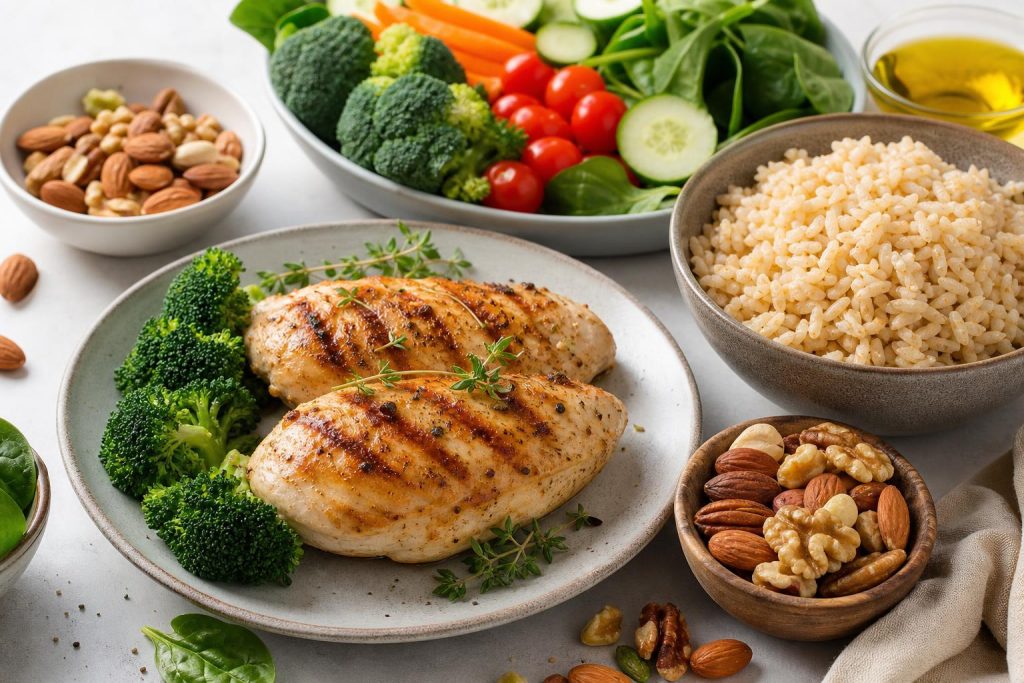
If there’s one macronutrient that consistently triggers strong GLP-1 secretion, it’s protein — particularly high-quality animal protein. Studies using whey protein, eggs, and lean meat have all demonstrated robust postprandial GLP-1 elevations compared to matched carbohydrate or fat meals. The mechanism likely involves direct stimulation of intestinal L-cells by amino acids and small peptides. Practically, this is one more reason why prioritizing protein at every meal — aiming for 30 to 50 grams per sitting — pays metabolic dividends beyond just building muscle.
Dietary fat also stimulates GLP-1 release, especially long-chain fatty acids that reach the distal small intestine. Foods like olive oil, avocado, and fatty fish appear to have a meaningful effect here. But the context matters — combining fat with high-glycemic refined carbohydrates can blunt the overall metabolic response, so the quality of the full meal pattern is what drives outcomes over time, not any single food eaten in isolation.
Fermentable fiber deserves a special mention. Short-chain fatty acids (SCFAs) produced when gut bacteria ferment fiber — particularly butyrate and propionate — are among the strongest known stimulators of colonic L-cell GLP-1 secretion. Foods like oats, legumes, cooked and cooled potatoes, green bananas, and Jerusalem artichokes feed the bacterial populations that produce these SCFAs. This is also one of the most compelling reasons why gut health and metabolic health are so deeply intertwined. A depleted microbiome produces fewer SCFAs, which means less GLP-1 stimulation from the colon, which means weaker satiety signaling — a cycle that quietly makes fat loss harder for a lot of men.
Polyphenol-rich foods — think berries, dark chocolate, green tea, and extra virgin olive oil — have shown GLP-1-enhancing effects in clinical research as well, likely through both direct L-cell stimulation and microbiome modulation. These aren’t miracle foods, but at the margin, swapping processed snacks for polyphenol-dense options is a no-cost intervention with meaningful upside.
Exercise, Sleep, and the Lifestyle Levers That Matter
Exercise is one of the most underappreciated drivers of GLP-1 sensitivity and output. Acute bouts of aerobic exercise — moderate intensity cardio for 30 to 60 minutes — have been shown to elevate circulating GLP-1 levels both during and after the session. Resistance training appears to improve the tissue-level sensitivity to GLP-1 signaling even when absolute hormone levels don’t spike dramatically. In practical terms, this means combining both training modalities gives you the best of both worlds: more hormone output from cardio, better receptor response from lifting.
The timing of exercise relative to meals also appears to matter. Research suggests that exercising before a meal or shortly after may potentiate the GLP-1 response to food, creating a compounding effect on satiety and blood sugar regulation. This is one reason post-meal walks — even just 10 to 15 minutes — have such a disproportionate effect on glucose control. The barrier to entry is low. The metabolic return is real.
Sleep deprivation suppresses GLP-1 and amplifies ghrelin — the hunger hormone that works in direct opposition to satiety. A single night of poor sleep measurably shifts hormonal balance toward increased appetite, reduced impulse control around food, and blunted insulin sensitivity. For men who are grinding hard at work or training and chronically underslept, no amount of dietary optimization fully compensates. Seven to nine hours of quality sleep isn’t a lifestyle luxury — it’s a metabolic necessity.
Chronic stress compounds the problem through elevated cortisol, which interferes with GLP-1 signaling and promotes visceral fat accumulation — the exact tissue environment that further suppresses metabolic hormone function. Stress management isn’t soft science. It’s endocrinology. Practices that demonstrably lower cortisol — structured breathing, time outdoors, adequate rest days between hard training sessions — all feed back into better hormonal function including GLP-1.
What This Means For You
You don’t need a prescription to meaningfully influence your GLP-1 system. The inputs that drive natural GLP-1 secretion — high-protein meals, fermentable fiber, polyphenol-rich whole foods, consistent exercise, quality sleep, and managed stress — are the same inputs that produce better body composition, metabolic health, and long-term performance. The science connecting GLP-1 to cognitive protection, as highlighted in recent systematic reviews, only adds to the case for keeping this system well-supported across the lifespan.
Whether you’re on a GLP-1 medication or going the entirely natural route, the lifestyle fundamentals aren’t optional — they’re the foundation. Medications can amplify a signal your body is already equipped to send. But the signal itself? That’s built in the gym, at the dinner table, and in eight hours of solid sleep. Start there, and the biology follows.
Scientific References
-
Ballum, Dri, Liao et al. (2026).
The effect of glucagon-like peptide 1 (GLP-1) receptor agonists on cognition: A systematic review of systematic reviews and meta-analyses..
Journal of affective disorders.
View on PubMed → -
Hunt, Yassin, Olsen et al. (2021).
Intestinal Growth in Glucagon Receptor Knockout Mice Is Not Associated With the Formation of AOM/DSS-Induced Tumors..
Frontiers in endocrinology.
View on PubMed → -
Sun, Yao, Zuo et al. (2025).
Tirzepatide improves neutrophilic inflammation in obese asthmatic mice by downregulating Th17 cell differentiation..
Molecular biology reports.
View on PubMed →