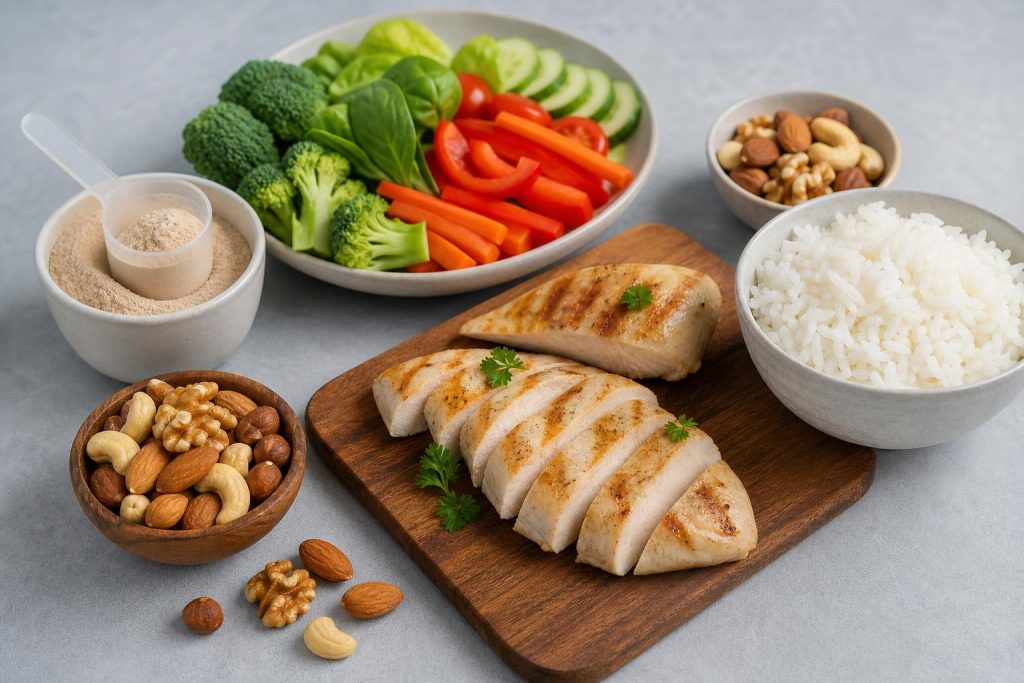
When researchers at the University of Copenhagen tracked body composition changes in people using semaglutide, they found something that should concern every man serious about his physique: roughly 40% of the weight lost came from lean mass, not fat. That’s not a rounding error — that’s a significant chunk of metabolically active tissue walking out the door along with the body fat you’re actually trying to lose. Whether you’re on Wegovy, dieting hard through calorie restriction, or cutting for a competition, this is the core problem every man in a caloric deficit faces. And whey protein is one of the most well-validated tools in existence for solving it.
The conversation about whey protein doesn’t begin and end with GLP-1 medications. It belongs to a much broader story about how men preserve muscle during any phase of aggressive fat loss — and why dietary protein, particularly fast-digesting whey, deserves its place at the center of that strategy.
Why Muscle Loss During a Deficit Is the Real Enemy
Your body doesn’t distinguish between “intentional” and “unintentional” calorie restriction. When energy intake drops — whether from appetite suppression triggered by semaglutide, a disciplined low-carb approach, or intermittent fasting — the body begins pulling from both fat stores and lean tissue for fuel. The degree to which it cannibalizes muscle depends largely on two factors: how much protein you’re eating and whether you’re giving those muscles a reason to stay.
The research on this is consistent and compelling. A landmark meta-analysis published in the British Journal of Sports Medicine confirmed that protein supplementation significantly increased muscle mass and strength gains in individuals engaged in resistance training. But protein’s role isn’t limited to building — it’s equally critical for preserving what you already have when calories drop. High protein intakes during a caloric deficit have been shown to attenuate lean mass losses compared to lower protein approaches, even when total calorie intake is matched.
Whey protein specifically earns its reputation because of its amino acid profile and kinetics. It’s rich in leucine — the branched-chain amino acid that acts as the primary trigger for muscle protein synthesis — and it’s absorbed rapidly, creating a sharp spike in plasma amino acids that potently stimulates anabolic signaling. Studies comparing whey to other protein sources, including casein and soy, consistently show whey produces a greater acute muscle protein synthetic response, making it particularly useful around training and in situations where muscle preservation is the priority.
The Specific Challenge for Men Using Wegovy — and What to Do About It
For men on semaglutide or other GLP-1 receptor agonists, the muscle loss risk is amplified for a straightforward reason: appetite suppression is powerful and sometimes indiscriminate. Men on these medications often drop total food intake dramatically, which means protein intake frequently falls well below what’s needed to maintain lean mass — not because they’re ignoring nutrition advice, but because eating feels genuinely difficult. A man eating 1,200 calories a day because food sounds unappealing is almost certainly under-eating protein, regardless of his best intentions.
This is where a high-quality whey protein supplement becomes a practical, low-volume solution. A single 25–30g scoop of whey delivers roughly 25 grams of complete protein with minimal volume, minimal prep, and high palatability — even when solid food feels like a burden. Current evidence supports targeting at least 1.6 grams of protein per kilogram of body weight per day to maximize muscle retention during caloric restriction, with some research suggesting benefits up to 2.2g/kg for leaner individuals or those training hard. For a 200-pound man, that’s somewhere between 145 and 200 grams of protein daily — a target that becomes genuinely difficult to hit through food alone when appetite is suppressed.
Timing still matters. While the old “anabolic window” mythology has been largely debunked, consuming protein near resistance training sessions does appear to meaningfully support muscle protein synthesis. For men who are exercising — which should be non-negotiable during any fat loss phase — having a whey shake within a couple of hours of training is a simple, evidence-supported practice. This is true whether you’re on a GLP-1 medication or not.
It’s also worth addressing the concern some men have about combining whey protein with a GLP-1 medication from a gastrointestinal standpoint. Semaglutide slows gastric emptying, which can make some foods and supplements harder to tolerate early in treatment. Whey protein isolate — which is lower in lactose and fat compared to whey concentrate — tends to be better tolerated in this context. Mixing it with water rather than milk, keeping the serving moderate, and avoiding consumption immediately before or after meals when GI discomfort is already present are practical adjustments that most men find sufficient.
Building Your Protein Strategy Around Real Goals
Whether or not you’re using any medication, the framework for using whey protein intelligently comes down to the same fundamentals. First, treat protein as a non-negotiable floor in your nutrition — not an optional supplement on top of an otherwise random diet. Whole food protein sources like eggs, chicken, beef, Greek yogurt, and fish should make up the majority of your daily intake. Whey protein fills the gaps, not the foundation.
Second, resistance training is what gives dietary protein a destination. Without a mechanical stimulus, elevated protein intake has a diminished effect on lean mass preservation during a deficit. This is one of the most important — and most ignored — pieces of the fat loss puzzle. Men who combine high protein intake with consistent strength training retain dramatically more muscle during weight loss than those who rely on diet alone, regardless of what their calorie deficit looks like. Whey protein amplifies the benefits of a training program; it doesn’t replace one.
Third, not all whey is equal. Whey protein isolate offers higher protein content per serving and lower residual fat and carbohydrate than concentrate. For men who are lactose sensitive or are trying to keep calories tight during a cut, isolate is generally the smarter choice. Third-party tested products — those certified by NSF, Informed Sport, or Labdoor — are worth the marginal premium, particularly for men who compete in any tested sport or simply want confidence that what’s on the label is what’s in the tub.
The Takeaway
The body doesn’t care whether you lost 40 pounds on Wegovy, through keto, or through years of disciplined training and clean eating. If you weren’t eating enough protein and lifting heavy things throughout that process, a meaningful portion of what you lost wasn’t fat — it was muscle. Whey protein is one of the most thoroughly researched, practically accessible tools available to prevent exactly that outcome. Use it to hit your protein targets, time it around your training, choose a quality isolate if tolerance is a concern, and treat it as one well-placed piece in a larger strategy built on real food, hard training, and sustainable habits. That approach works for every man — on medication or not.