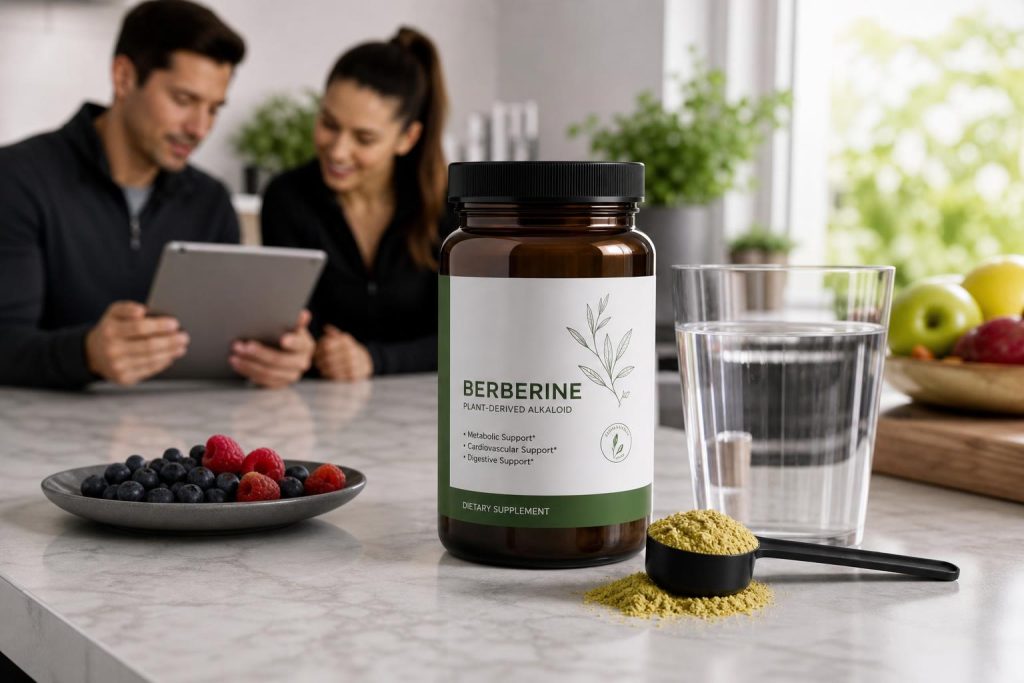
In 2023, a meta-analysis published in Frontiers in Pharmacology compared berberine head-to-head with metformin across multiple trials and found comparable reductions in fasting blood glucose, HbA1c, and triglycerides — a finding that sent the supplement world into a frenzy. Headlines called berberine “nature’s metformin.” But that framing, while catchy, misses the nuance that actually matters if you’re a man trying to lose fat, improve insulin sensitivity, or decide whether a supplement belongs in your stack.
Berberine is an alkaloid extracted from plants like barberry and goldenseal. It’s been used in traditional Chinese medicine for centuries, but its metabolic mechanisms are genuinely interesting by modern standards. The primary pathway is AMPK activation — the same energy-sensing enzyme that metformin targets. When AMPK is activated, your cells become more efficient at burning glucose, suppressing hepatic glucose production, and improving insulin signaling. Research published in Nature Medicine confirmed this mechanism and helped legitimize berberine as more than a folk remedy.
For men who aren’t diabetic but are dealing with insulin resistance, pre-diabetes, or stubborn abdominal fat — the population most likely reading this — berberine offers a meaningful lever. A randomized controlled trial in Metabolism found that 500mg of berberine three times daily reduced fasting glucose by 20%, postprandial glucose by 26%, and HbA1c by 0.9 points over three months in type 2 diabetic patients. Triglycerides dropped 35.9% and LDL fell 13.4%. Those are pharmaceutical-level numbers from a $30 supplement.
How Berberine Stacks Up Against Metformin and GLP-1 Medications
Metformin has decades of safety data, a well-understood side effect profile, and costs nearly nothing as a generic. It also reduces all-cause mortality in long-term observational data — something no supplement can currently claim. Berberine’s comparison studies are promising but shorter in duration, smaller in sample size, and predominantly conducted in Chinese diabetic populations, which limits generalizability. The honest take: berberine and metformin are mechanistically similar, but metformin has a dramatically stronger evidence base. If you’re diabetic or pre-diabetic and your doctor recommends metformin, don’t swap it for berberine based on a supplement review.
GLP-1 receptor agonists like semaglutide operate through an entirely different mechanism — stimulating insulin secretion in a glucose-dependent manner, suppressing glucagon, slowing gastric emptying, and powerfully reducing appetite through central nervous system pathways. The SUSTAIN trials showed semaglutide producing 15% or greater body weight reductions — outcomes berberine cannot match. These are different tools solving different problems at different magnitudes. Comparing berberine to semaglutide is like comparing a resistance band to a barbell. Both are valid. Neither replaces the other.
Where berberine earns its place is as an accessible, over-the-counter metabolic support tool for men who are already doing the work — eating well, training consistently, managing sleep — and want to sharpen insulin sensitivity at the margins. It may also be useful for men who don’t qualify for or don’t want prescription medications but are managing elevated blood sugar or post-meal glucose spikes. One practical consideration: berberine has poor bioavailability on its own. Dihydroberberine, a reduced form, absorbs approximately five times more efficiently and may be worth the premium for men who’ve tried standard berberine without noticeable effect.
Practical Dosing and What to Watch For
The standard research dose is 500mg taken two to three times daily with meals — timing matters because berberine blunts postprandial glucose spikes most effectively when consumed just before eating. GI side effects including bloating, cramping, and loose stools are the most common complaints, and they’re dose-dependent. Starting at 500mg once daily and titrating up over two weeks tends to improve tolerability significantly. Berberine also inhibits CYP3A4 and CYP2D6 enzyme pathways, meaning it can interact with certain medications including statins, cyclosporine, and some antidepressants. If you’re on any prescription drugs, that conversation with your doctor is non-negotiable before adding berberine.
Long-term use beyond six months is understudied, so cycling — 8 to 12 weeks on, four weeks off — is a reasonable precaution until more data exists. Pairing berberine with lifestyle fundamentals like strength training, a protein-forward diet, and adequate sleep will always outperform the supplement used alone. Berberine is not a shortcut. It’s a tool that works better when your other tools are already in motion.
The Takeaway
Berberine is one of the more legitimately interesting metabolic supplements available without a prescription, and the metformin comparison isn’t pure marketing fiction — the mechanistic overlap is real. But it’s not a substitute for prescription medications when those are clinically indicated, and it’s not in the same category as GLP-1 medications when it comes to magnitude of effect. What it is, for the man already invested in his health, is a credible addition to a stack built on training, nutrition, and recovery. Use it strategically, dose it correctly, and don’t let the “nature’s metformin” branding inflate your expectations beyond what the evidence supports.