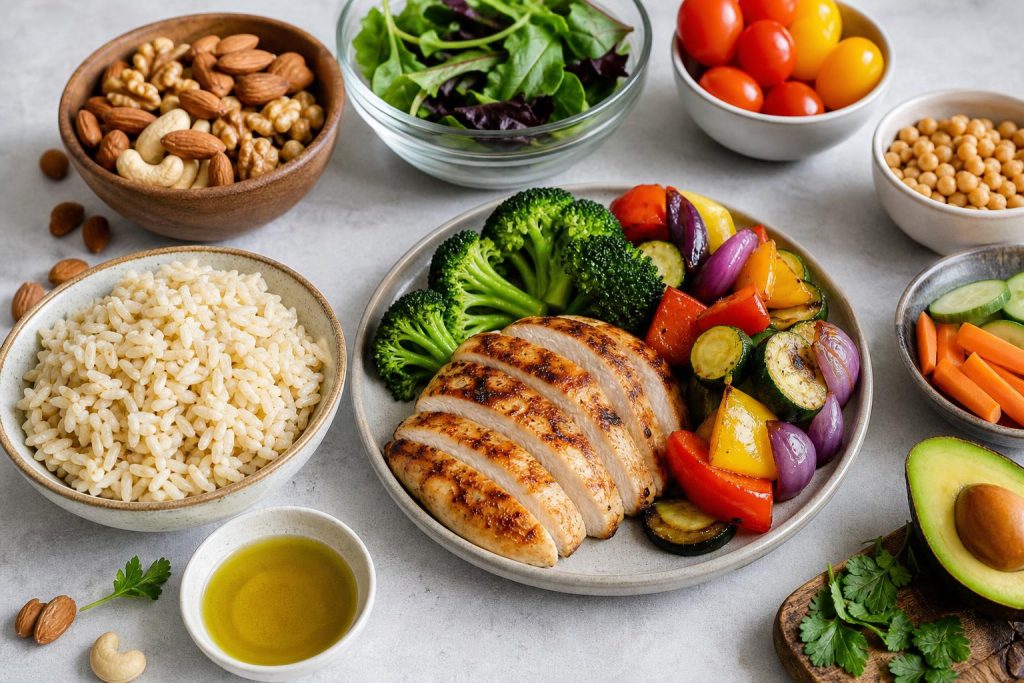
GLP-1 receptor agonists like semaglutide and tirzepatide have changed the conversation around weight loss — but the medication itself is only half the equation. What you eat while taking it may determine whether you lose fat and keep muscle, or simply lose weight and end up metabolically worse off than when you started. A 2023 study published in The New England Journal of Medicine found that participants on semaglutide lost an average of 15% of body weight — but a significant portion of that loss came from lean mass. That’s the part nobody puts in the headline, and it’s exactly why what you put on your plate matters more than ever when your appetite is being pharmacologically suppressed.
GLP-1 medications work by slowing gastric emptying, reducing appetite, and improving insulin sensitivity. The result is that most men simply eat less — sometimes dramatically less. That caloric deficit is the mechanism driving fat loss. But when calories drop sharply without a deliberate nutritional strategy, the body doesn’t just burn fat. It burns muscle too. For men who want to come out the other side of this leaner, stronger, and metabolically healthier — not just lighter on the scale — the nutrition framework you follow during treatment is non-negotiable.
Protein Is the Most Important Variable in Your Diet
If there is a single dietary lever that separates men who thrive on GLP-1 therapy from those who lose muscle and regain weight, it’s protein intake. Research consistently shows that higher protein diets during caloric restriction preserve lean mass better than low-protein approaches, even when total calories are identical. For men on GLP-1 medications — where appetite suppression can make it genuinely hard to eat enough — hitting adequate protein requires intentional planning.
The target most clinicians and sports nutrition researchers converge on during weight loss phases is 1.6 to 2.2 grams of protein per kilogram of body weight per day. For a 200-pound man, that’s roughly 145 to 200 grams of protein daily. On a GLP-1 medication, where you might feel satisfied after half a chicken breast, this isn’t going to happen by accident. It means prioritizing protein at every meal, eating it first, and choosing the most protein-dense foods available — eggs, Greek yogurt, cottage cheese, lean meats, fish, and protein shakes when whole foods fall short.
Protein also does something else that’s critical during this phase: it keeps you full. Studies show that protein is the most satiating macronutrient, which means on days when your medication-driven appetite suppression is lighter, protein-rich meals will help maintain the deficit without relying solely on the drug to do the work. Think of protein as the structural foundation of your entire eating strategy — everything else is built around it.
Choosing the Right Carbohydrates and Fats to Support Metabolic Health
GLP-1 medications improve insulin sensitivity, which means your body becomes more efficient at processing carbohydrates. That’s a meaningful physiological change, and the foods you pair with that shift will either accelerate your metabolic recovery or undermine it. Refined carbohydrates — white bread, sugary drinks, ultra-processed snacks — spike blood glucose rapidly and can still provoke insulin dysregulation even on medication. More practically, they’re calorically dense and nutritionally empty, which is a dangerous combination when your total food intake is already reduced.
Whole food carbohydrate sources — oats, legumes, sweet potatoes, fruit, and vegetables — deliver fiber alongside glucose, which slows absorption and blunts glycemic spikes. A large meta-analysis in The Lancet found that higher dietary fiber intake was associated with significantly lower rates of type 2 diabetes, cardiovascular disease, and all-cause mortality. For men already dealing with metabolic dysfunction, this isn’t a minor detail — it’s foundational. Aim for at least 25 to 35 grams of fiber per day, which becomes easier when your diet is built around vegetables, legumes, and whole grains rather than processed alternatives.
Dietary fat often becomes a problem on GLP-1 therapy for a specific reason: high-fat foods are harder to digest, and because GLP-1 medications already slow gastric emptying, meals heavy in fat can worsen nausea, bloating, and GI discomfort — the most common side effects men report in the early weeks of treatment. This doesn’t mean avoiding fat entirely; healthy fats from olive oil, avocado, nuts, and fatty fish are important for testosterone production, joint health, and fat-soluble vitamin absorption. Research supports omega-3 fatty acids specifically for their anti-inflammatory effects and cardiovascular benefit. The practical strategy is to moderate fat portions during the adaptation period and spread fat intake across meals rather than loading it into one sitting.
Hydration deserves a mention here because it is chronically underestimated on GLP-1 therapy. Reduced food intake means less water from food sources, and many men on these medications don’t compensate by drinking more. Mild dehydration amplifies fatigue, impairs cognitive function, and can exacerbate constipation — another common complaint on these drugs. A practical minimum is three liters of water daily, more if you’re training.
Structuring Your Meals When Your Appetite Has Changed
One of the most disorienting aspects of GLP-1 medications for men who have spent years tracking macros or following structured meal plans is that appetite — historically the signal they were fighting against — almost disappears. That’s useful for breaking compulsive eating patterns, but it creates a new problem: men stop eating enough of the right things and start grazing on whatever is convenient or tolerable.
The most effective approach is to eat structured, intentional meals rather than waiting for hunger signals that may not come. Two to three protein-anchored meals per day is a framework that works well for most men on GLP-1 therapy — it ensures consistent protein delivery, keeps total calories in a productive deficit without going dangerously low, and reduces the GI burden compared to larger, less frequent meals. A meal built around 40 to 50 grams of protein, a serving of vegetables, and a moderate portion of whole food carbohydrates is the template to repeat.
What to avoid is equally important. Alcohol becomes a more significant issue on GLP-1 medications because reduced food intake means alcohol is absorbed faster, amplifying its effects. Evidence also suggests alcohol blunts muscle protein synthesis and disrupts sleep quality — both of which are already under pressure during active weight loss. Highly processed foods — even in small quantities — tend to displace the nutrient-dense calories you actually need, leaving you undersupplied on vitamins, minerals, and protein despite feeling full. When total food volume is reduced, food quality becomes the most important variable you control.
The Takeaway
GLP-1 medications are a powerful tool, but they are not a nutritional strategy. The drug reduces appetite — it does not ensure you’re eating enough protein to protect muscle, enough fiber to support gut and metabolic health, or enough micronutrients to sustain energy and hormonal function. Men who treat the medication as a substitute for smart eating tend to lose weight but end up weaker, more fatigued, and often regain the weight when they stop. Men who use the medication as leverage — eating less, but eating better — come out the other side with a genuinely improved body composition and the metabolic infrastructure to maintain it. The food choices are yours. Make them count.