There is a number every man trying to build or preserve muscle should know: 2.5 grams. That is the approximate amount of leucine — a single amino acid — required to flip the anabolic switch in human muscle tissue. Miss that threshold and your meal, regardless of how much total protein it contains, may fail to meaningfully stimulate muscle protein synthesis. Hit it consistently across the day, and you create the biochemical conditions for muscle growth or preservation that no training program alone can replicate.
This is not theoretical. Research published in the Journal of Nutrition by Norton and Layman established that leucine acts as a primary nutrient signal for initiating translation of muscle protein synthesis through the mTORC1 pathway — functioning less like a building block and more like a molecular trigger. The other essential amino acids still matter for actual tissue construction, but leucine is the key that starts the engine. Understanding this distinction changes how you should think about every protein-containing meal you eat.
Why Leucine Works Differently From Every Other Amino Acid
Muscle protein synthesis is not a continuous process. It is episodic — turned on and off in response to mechanical stimulus (training) and nutritional stimulus (amino acid availability, particularly leucine). The mTORC1 signaling complex sits at the center of this regulation, and leucine directly activates it through a cascade involving sensors called Sestrins, which release mTORC1 from its inhibited state once leucine concentrations rise above a specific threshold in plasma and within the muscle cell itself.
A landmark study by Churchward-Venne and colleagues demonstrated that a suboptimal dose of whey protein (6.25 grams) supplemented with additional leucine to reach threshold levels produced a muscle protein synthetic response comparable to 25 grams of whey protein alone. The implication is striking: the total protein amount matters, but leucine content is the rate-limiting variable. You can engineer a synthetic response with far less total protein if leucine is sufficient — or completely blunt one with adequate total protein if leucine falls short.
This threshold is not a fixed number carved into biology. It shifts based on age, body mass, training status, and the speed at which amino acids are digested and absorbed. Older men experience what researchers call “anabolic resistance” — a blunted mTORC1 response to the same leucine dose that effectively stimulates younger muscle. This is why protein recommendations for men over 50 are consistently higher, and why leucine-enriched protein sources become especially important with age. A 25-year-old might hit threshold with a moderate meal containing 30 grams of protein from chicken breast; a 60-year-old may need closer to 40 grams from the same source to generate a comparable anabolic response.
Training status adds another layer. Resistance-trained men have greater muscle mass and, in the acute post-exercise window, significantly upregulated anabolic sensitivity. Phillips and Van Loon’s work on post-exercise protein metabolism confirms that the window of enhanced sensitivity following resistance training amplifies the muscle protein synthetic response to leucine-containing protein — meaning the same dose of leucine is more effective consumed around training than at a random point in the day.
What This Means for How You Structure Your Protein Intake
The practical architecture of optimal protein intake flows directly from leucine threshold biology. You are not trying to maximize the total grams of protein you consume in 24 hours as the only variable — you are trying to create multiple, distinct, threshold-crossing leucine pulses distributed across the day. Moore and colleagues showed that muscle protein synthesis was maximized with 20 grams of egg protein consumed every three hours compared to larger boluses consumed less frequently or smaller amounts consumed more frequently. The frequency of threshold-crossing events — not just total daily intake — determines the cumulative anabolic stimulus.
In practical terms, this means three to four protein-anchored meals per day, each designed to exceed the leucine threshold, outperforms both grazing on small amounts of protein throughout the day and eating one or two massive protein meals. A 175-pound man targeting roughly 0.7–1.0 grams of protein per pound of body weight should divide that intake across meals that each contain at least 30–40 grams of quality protein from leucine-rich sources — not snacks containing 10–15 grams.
Leucine content varies substantially between protein sources, and this matters when you are planning meals. Animal proteins — particularly whey, eggs, beef, and fish — are naturally leucine-dense, typically providing 8–11% of their amino acid content as leucine. A 35-gram serving of whey protein isolate delivers approximately 3–3.5 grams of leucine, comfortably clearing the threshold. The same weight of chicken breast delivers around 2.5–3 grams. Plant proteins present a more complex picture: soy protein is the most leucine-complete plant option, while wheat protein, pea protein, and rice protein are lower in leucine per gram and often require higher total doses or strategic combination to hit threshold. Van Vliet and colleagues reviewed the anabolic properties of plant versus animal protein and found that the differences in muscle protein synthetic response largely trace back to leucine content and overall essential amino acid profile — not some mysterious quality inherent to animal foods.
For men on GLP-1 medications like semaglutide or tirzepatide, this leucine threshold concept becomes particularly critical. GLP-1 receptor agonists reduce appetite dramatically, meaning many users naturally reduce their total caloric intake by 20–30% or more — and protein intake often drops alongside calories. When you are eating significantly less food, you must be intentional about hitting leucine threshold at each meal, because the risk of losing muscle mass alongside fat is real. Research on caloric restriction and muscle loss consistently shows that inadequate protein — specifically insufficient essential amino acids — during aggressive weight loss accelerates lean mass catabolism. On a GLP-1, you may feel full on a 300-calorie meal that contains 8 grams of protein. That is a problem if it is happening three times a day. The fix is not to force more food volume; it is to prioritize protein-first eating at each meal and supplement strategically with leucine-rich protein sources like whey or a quality essential amino acid product when appetite is low.
But this advice is equally relevant for any man in a caloric deficit — whether the deficit comes from a medication, a disciplined cut, or an intermittent fasting protocol. Muscle is expensive tissue that the body is prepared to sacrifice when caloric and amino acid availability drops. The leucine threshold is your metabolic defense against that outcome.
Protein Quality, Timing, and the Leucine-Optimized Approach in Practice
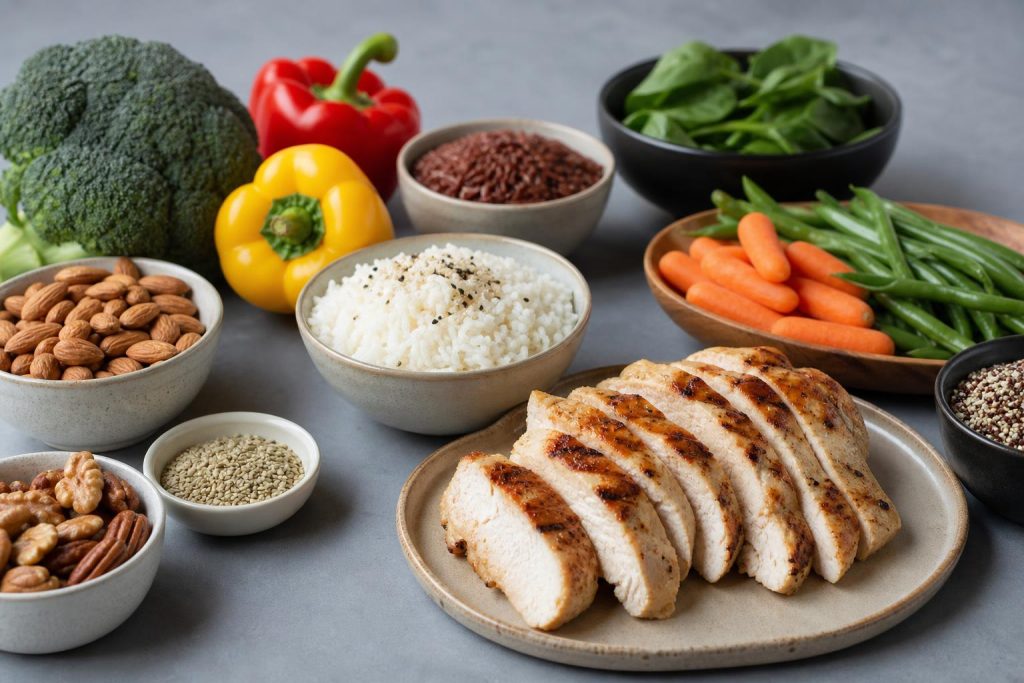
Applying leucine threshold science does not require obsessive tracking, but it does require a coherent framework. The first principle is source selection. Build meals around proteins that are naturally leucine-dense: whole eggs, Greek yogurt, cottage cheese, salmon, beef, chicken, and whey-based protein supplements. These sources reliably deliver 2.5 grams or more of leucine in a reasonable serving size. If your diet is predominantly plant-based, increase your total protein target — research supports aiming for the higher end of recommendations, roughly 1.6–2.2 grams per kilogram of body weight — and consider leucine-fortified protein blends or supplemental leucine to reliably hit threshold.
Timing around resistance training is the second principle. The post-exercise period represents your highest-value anabolic window. A meta-analysis by Schoenfeld and Aragon found that total daily protein intake was the dominant variable for hypertrophy, but that consuming protein within approximately two hours of training was associated with greater gains — likely because the exercise-induced upregulation of mTORC1 sensitivity makes leucine more potent at that time. A post-workout shake containing 25–40 grams of whey protein is not bro-science; it is leucine threshold delivery timed to maximum anabolic receptivity.
The third principle concerns older men specifically. Bauer and colleagues demonstrated that leucine supplementation in older adults with anabolic resistance meaningfully improved muscle protein synthetic responses when added to meals that would otherwise fail to cross the threshold. If you are over 50 and concerned about sarcopenia — the progressive loss of muscle mass that accelerates after middle age — adding 2–3 grams of free-form leucine to a protein meal containing only moderate protein content is a documented strategy for compensating for age-related anabolic resistance. This is where targeted supplementation earns its place: not as a replacement for whole food protein, but as a precision tool for overcoming a physiological limitation.
Finally, consider the relationship between leucine, insulin, and fat loss. Leucine stimulates not only mTORC1 but also a modest insulinotropic response that is entirely compatible with fat loss when protein intake is protein-derived rather than carbohydrate-driven. Research by Layman and colleagues established that high-leucine, higher-protein diets improve body composition outcomes during caloric restriction — preserving lean mass while accelerating fat loss compared to lower-protein diets with the same caloric content. The leucine threshold is not a bodybuilding concept reserved for men chasing aesthetics; it is a metabolic health tool applicable to anyone trying to lose fat without sacrificing the muscle tissue that drives long-term metabolic rate and physical function.
What This Means For You
The leucine threshold reframes protein from a macronutrient you track in aggregate to a molecular signal you need to trigger deliberately at each meal. Aim for 30–40 grams of high-quality, leucine-rich protein three to four times daily, prioritize your heaviest protein feeding within two hours of resistance training, and if you are over 50 or eating in a significant caloric deficit, take anabolic resistance seriously enough to supplement strategically. Whether you are training hard and eating clean, managing your intake on a GLP-1, or somewhere in between, the biochemistry is the same: hit the threshold, preserve the muscle, protect the metabolism. Everything else in your nutrition plan is secondary to getting this right.