GLP-1 — glucagon-like peptide-1 — has become one of the most talked-about molecules in metabolic health, and for good reason. It regulates appetite, controls blood sugar, slows gastric emptying, and plays a significant role in how your body handles food. The pharmaceutical versions — semaglutide, tirzepatide, liraglutide — have made headlines for delivering dramatic results in weight loss and metabolic disease. But your body was making GLP-1 long before any of those drugs existed. The real question is: can you meaningfully raise your own levels through diet, exercise, and lifestyle? The answer, backed by a growing body of research, is yes — and the strategies are more straightforward than you might expect.
GLP-1 is secreted by L-cells lining your small intestine and colon in response to food, particularly certain macronutrients and fiber types. Its half-life in circulation is brutally short — around two minutes — which is part of why pharmaceutical versions were engineered to last days at a time. But the fact that natural GLP-1 is transient doesn’t mean your lifestyle has no influence. Chronically stimulating those L-cells more effectively, reducing the rate at which GLP-1 is broken down, and improving gut health can all shift your metabolic baseline in meaningful ways. And the benefits extend well beyond appetite — emerging research shows that GLP-1 receptor activation is associated with improvements in cognitive function, including in populations with type 2 diabetes and early Alzheimer’s disease, suggesting the molecule’s reach goes far beyond the gut.
What You Eat Determines How Much GLP-1 You Make
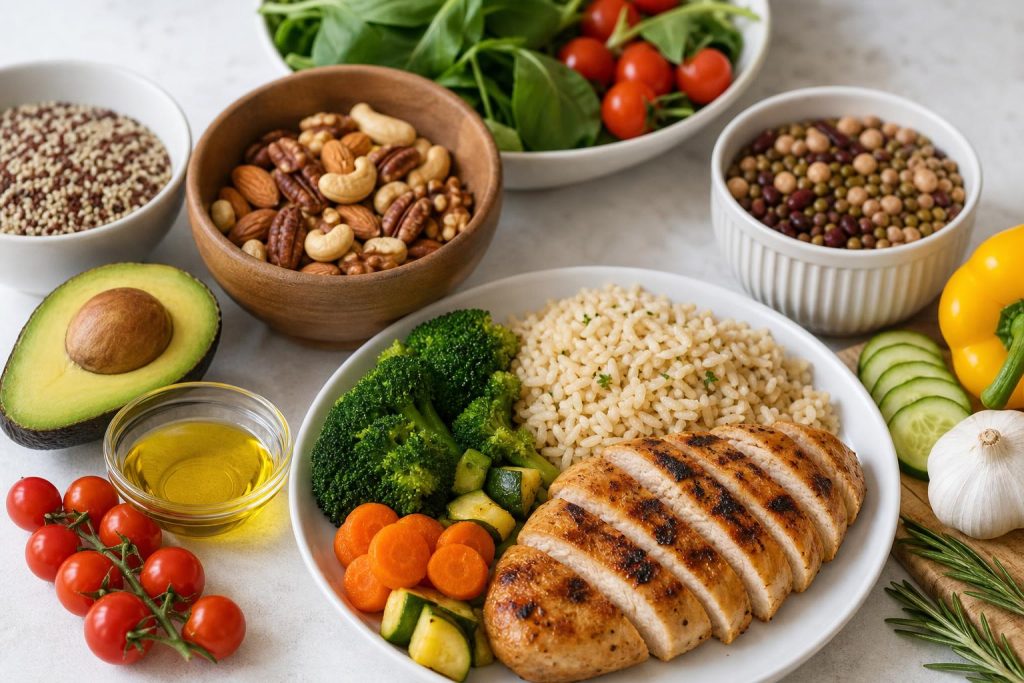
The single most powerful lever you have over natural GLP-1 production is your diet — specifically, the types of carbohydrates and fats you consume. Fermentable dietary fiber is the heavy hitter here. When soluble fiber from foods like oats, legumes, leeks, garlic, and chicory root reaches your colon, gut bacteria ferment it into short-chain fatty acids (SCFAs) — primarily butyrate, propionate, and acetate. These SCFAs directly stimulate L-cells to secrete GLP-1. This is one of the most well-documented pathways in nutritional science, and it’s the mechanistic backbone behind why high-fiber diets consistently show improvements in insulin sensitivity and satiety.
Protein is similarly potent. Whey protein in particular has been shown to stimulate GLP-1 release more robustly than most other protein sources, likely due to its high concentration of leucine and rapid digestion rate. Consuming a whey-based shake or a high-protein meal before carbohydrates — a strategy sometimes called protein preloading — has been demonstrated to blunt post-meal glucose spikes and increase GLP-1 output. Eggs, lean meats, Greek yogurt, and legumes also contribute. The practical takeaway: prioritizing protein at the start of your meals, rather than treating it as an afterthought, works with your gut’s own hormone machinery.
Healthy fats, particularly from olive oil and avocado, stimulate GLP-1 via fat sensors in the gut. Unsaturated fats appear to be more effective at this than saturated fats. Meanwhile, ultra-processed foods, high in refined carbohydrates and industrial seed oils, tend to blunt GLP-1 response and accelerate intestinal transit in ways that reduce L-cell exposure time. If you’re eating to optimize your metabolic hormones, the shift from processed to whole foods isn’t just about calories — it’s about fundamentally changing the hormonal signals your gut sends to your brain.
Exercise, Sleep, and the Lifestyle Factors That Move the Needle
Exercise has a measurable effect on GLP-1. Aerobic training — particularly moderate-to-vigorous cardio — has been shown to acutely raise GLP-1 levels post-exercise, and regular training appears to sensitize GLP-1 receptors over time, meaning your body becomes more responsive to whatever GLP-1 you do produce. Resistance training contributes by improving insulin sensitivity and body composition, which in turn creates a more favorable hormonal environment overall. There’s also evidence that exercise reduces fasting insulin and increases the density of GLP-1 receptors in key tissues — a compounding benefit that goes beyond any single workout session.
Sleep is underrated in this context. Poor sleep — defined in most studies as less than six hours or fragmented sleep — elevates cortisol, drives up ghrelin (your hunger hormone), and suppresses GLP-1 secretion. If you’re doing everything right nutritionally and still finding your appetite hard to manage, disrupted sleep may be undermining your body’s own appetite-regulation system at the hormonal level. Prioritizing seven to nine hours isn’t optional for metabolic health — it’s infrastructure.
Intermittent fasting and time-restricted eating have also shown promise for optimizing GLP-1 dynamics. While fasting itself reduces GLP-1 levels during the fasted state, the post-fast meal tends to elicit a stronger GLP-1 response, particularly when that first meal is high in protein and fiber. The net effect in research participants has been improved satiety and better glycemic control across the day.
It’s also worth noting what GLP-1 receptor agonist medications are revealing about the broader biology. Research on tirzepatide — a dual GIP and GLP-1 receptor agonist — has demonstrated anti-inflammatory effects in obese animal models, including reduced airway inflammation and suppression of inflammatory immune cell activity. While this was studied in the context of obesity-related asthma, it points toward the broader systemic inflammation-lowering potential of sustained GLP-1 pathway activation. Diet and lifestyle interventions that reduce chronic inflammation — omega-3 intake, reducing ultra-processed food, regular exercise — may support this same pathway naturally.
The Takeaway
You don’t need a prescription to start working with your body’s GLP-1 system. High-fiber whole foods, adequate protein at every meal, regular aerobic and resistance training, quality sleep, and reducing ultra-processed food intake are not new advice — but understanding that they work partly by optimizing your gut’s own hormone output gives them a sharper edge. If you’re on a GLP-1 medication, these same habits amplify its effects and protect your lean mass. If you’re not, they give your body’s own system the best possible environment to do its job. Either way, the biology rewards consistency.
Scientific References
-
Ballum, Dri, Liao et al. (2026).
The effect of glucagon-like peptide 1 (GLP-1) receptor agonists on cognition: A systematic review of systematic reviews and meta-analyses..
Journal of affective disorders.
View on PubMed → -
Hunt, Yassin, Olsen et al. (2021).
Intestinal Growth in Glucagon Receptor Knockout Mice Is Not Associated With the Formation of AOM/DSS-Induced Tumors..
Frontiers in endocrinology.
View on PubMed → -
Sun, Yao, Zuo et al. (2025).
Tirzepatide improves neutrophilic inflammation in obese asthmatic mice by downregulating Th17 cell differentiation..
Molecular biology reports.
View on PubMed →