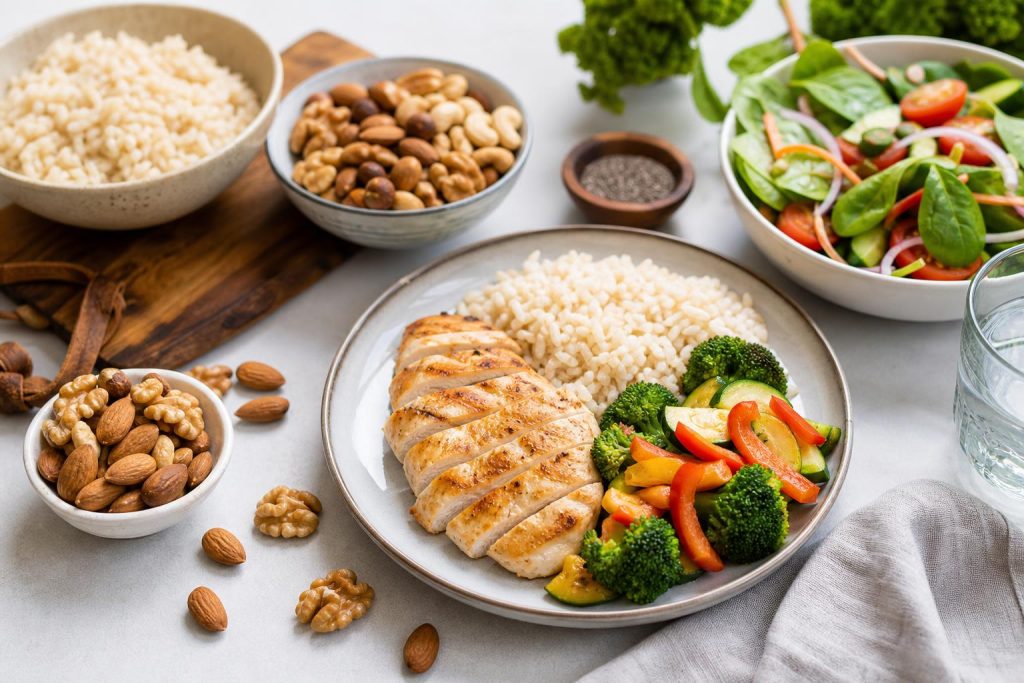
There’s a quiet revolution happening at the dinner table. Men on GLP-1 receptor agonists like semaglutide or tirzepatide are eating less — sometimes dramatically less — and the question that follows is no longer how do I eat less? but how do I eat smarter? Because when your stomach empties more slowly and your appetite drops by half, every single bite has to earn its place on the plate. The stakes for nutrition quality have never been higher.
Research published in The New England Journal of Medicine demonstrated that semaglutide users lost an average of 14.9% of body weight over 68 weeks — but critically, a meaningful portion of that weight loss included lean muscle mass, not just fat. That’s the hidden cost of appetite suppression without deliberate nutritional strategy. Eating less is easy on a GLP-1. Eating right is the discipline that separates men who come out leaner and stronger from those who simply come out lighter.
This guide is built around recipes and meal structures that solve the core problem: maximizing protein, micronutrients, and metabolic benefit in small-volume, easy-to-digest meals. Whether you’re on a GLP-1 medication, running a caloric deficit the old-fashioned way, or simply trying to clean up your diet and support muscle retention, these principles apply equally to every man working toward better body composition.
Why Protein Density Is the Non-Negotiable Foundation
When calories shrink — whether by medication, discipline, or a combination of both — protein requirements don’t shrink with them. A systematic review in the British Journal of Nutrition confirmed that higher protein intakes during caloric restriction preserve lean mass significantly better than standard protein recommendations, with benefits beginning to emerge at intakes around 1.2 grams per kilogram of bodyweight and amplifying toward 1.6 to 2.2 grams per kilogram in men engaged in resistance training. For a 200-pound man on a GLP-1, eating only 1,200 to 1,500 calories per day, hitting 160 to 180 grams of protein becomes a precise engineering problem.
The solution is protein-first meal design — building every recipe around a dense protein anchor and adding everything else around it. This isn’t a trendy concept; it’s metabolic arithmetic. Greek yogurt parfaits, cottage cheese bowls, egg-based dishes, and high-quality animal proteins like salmon, ground turkey, and lean beef all provide substantial protein in compact, manageable volumes. A single cup of full-fat cottage cheese delivers roughly 25 grams of protein in a format most men can comfortably eat even when appetite is suppressed.
The GLP-1 meal plan recipes that actually work in practice share three traits: they’re easy to prepare, they don’t require large portions to hit nutritional targets, and they taste good enough that eating them doesn’t feel like a clinical obligation. Palatability matters more on a reduced-appetite diet than almost any other context, because if a food doesn’t appeal to you, you simply won’t eat it — and on a GLP-1, there’s nothing pushing you to try.
The Recipes That Earn Their Place in a GLP-1 Meal Plan
Start breakfast with a two-egg scramble made with one whole egg and two egg whites, folded with half a cup of low-fat ricotta cheese, a handful of spinach, and cherry tomatoes cooked down in a teaspoon of olive oil. This produces roughly 35 grams of protein in a small, warm, highly digestible format. The ricotta adds creaminess without volume bloat, and the spinach brings iron, folate, and magnesium — nutrients that tend to get depleted during weight loss phases. Pair it with four to six ounces of cold brew or black coffee and you have a morning meal that fuels muscle protein synthesis without triggering the nausea some GLP-1 users experience with larger early meals.
For lunch, the Greek-style ground turkey bowl has become something of a staple for men eating in this framework. Cook four ounces of 93% lean ground turkey with garlic, oregano, lemon zest, and a pinch of cinnamon — a spice combination that mirrors traditional Mediterranean lamb preparations and, not coincidentally, carries real metabolic benefit. Research in Nutrients has associated Mediterranean dietary patterns with improved insulin sensitivity, reduced visceral fat, and better cardiovascular outcomes — all relevant targets for men in active fat loss phases. Serve the turkey over half a cup of cooked farro or chickpeas, topped with two tablespoons of full-fat Greek yogurt in place of tzatziki. Total protein lands around 42 grams, and the whole meal fits comfortably in a single bowl without demanding a large appetite to finish.
Salmon deserves a dedicated mention here. A six-ounce filet of wild-caught salmon provides roughly 34 grams of protein alongside a clinically meaningful dose of EPA and DHA omega-3 fatty acids. A randomized controlled trial in the American Journal of Clinical Nutrition showed that omega-3 supplementation combined with caloric restriction produced greater reductions in body fat and better preservation of lean mass compared to caloric restriction alone. Cooking salmon doesn’t require culinary skill — a filet brushed with Dijon mustard and lemon juice, roasted at 400 degrees for 12 minutes, produces a reliable, protein-dense dinner in less time than most drive-throughs. Serve alongside roasted asparagus or broccolini, both of which are high in fiber and micronutrients while being low in fermentable carbohydrates that can cause GI discomfort in some GLP-1 users.
Smoothies and liquid meals occupy an interesting niche in GLP-1 nutrition. For men who struggle with solid food tolerance, particularly in the first several weeks on a new medication or after a dose increase, a well-constructed protein smoothie can be the difference between meeting nutritional targets and falling short. Two scoops of a high-quality whey or casein protein isolate, one cup of unsweetened almond milk, half a frozen banana, a tablespoon of almond butter, and a handful of frozen spinach yields a meal with 50 or more grams of protein that most men can consume even when solid foods feel unappealing. The key is avoiding excessive sugar or fruit loading — a common smoothie mistake that turns a protein vehicle into a glucose spike.
Cottage cheese has enjoyed a well-deserved renaissance in fitness nutrition circles, and for GLP-1 meal planning, its compact protein density makes it indispensable. Half a cup of low-fat cottage cheese topped with sliced cucumber, cherry tomatoes, a drizzle of extra virgin olive oil, cracked black pepper, and everything bagel seasoning becomes a light but protein-rich snack or small meal delivering around 14 grams of protein in a format that requires almost no preparation. For men managing tight eating windows — whether from medication-induced appetite suppression or time-restricted eating — this kind of flexible, no-cook option fills gaps without triggering fullness signals that prevent subsequent eating.
Evening meals for men on reduced-calorie plans benefit from including slow-digesting proteins to support overnight muscle protein synthesis. Cottage cheese again qualifies, as does casein-based protein, but whole food options like ground bison, beef tenderloin, or chicken thighs provide a satisfying, nutrient-dense dinner anchor. A simple approach: six ounces of 90% lean ground bison, pan-seared with garlic and Italian herbs, served over a bed of arugula with shaved parmesan and a balsamic reduction. This hits roughly 40 grams of protein, provides iron and zinc — two minerals critical for testosterone production and immune function that are commonly depleted in men eating restrictive diets — and delivers enough flavor complexity that eating it feels like a choice rather than a compromise.
Hydration deserves specific attention in GLP-1 meal planning because the medication slows gastric emptying and can suppress the thirst drive alongside appetite. Research published in Obesity found that drinking 500 mL of water before meals enhanced weight loss outcomes and improved satiety signaling — a finding relevant not just to GLP-1 users but to any man managing caloric intake. Aim for water, mineral water, or electrolyte-enhanced water between meals rather than with meals, which can worsen the bloating and early satiety that some users experience when food and fluid compete for stomach space.
Structuring a Weekly Plan That Actually Holds
A functional GLP-1 meal plan isn’t about eating six carefully portioned meals at regimented intervals. It’s about building a small repertoire of high-protein, high-nutrient recipes you can rotate without decision fatigue or prep burden. Men who succeed long-term on appetite-suppressing protocols tend to cook in batches — preparing a pound of ground turkey, a sheet pan of roasted vegetables, and a batch of hard-boiled eggs at the start of the week — and assemble meals from components rather than cooking fresh each time.
Aim for three to four structured eating occasions per day, each built around a protein anchor of at least 30 grams. Fill remaining caloric space with non-starchy vegetables, a modest serving of complex carbohydrates if training volume warrants it, and healthy fats from olive oil, avocado, or fatty fish. Avoid the trap of relying on protein bars and processed meal replacements as primary nutrition sources — while convenient, they consistently underdeliver on micronutrient density and satiety compared to whole food options.
A 2020 review in Advances in Nutrition reinforced that whole food dietary patterns produce superior metabolic outcomes compared to nutrient-equivalent processed food diets, even when macronutrient composition is held constant. The food matrix matters. For men eating 1,200 to 1,600 calories, that means every food source needs to work hard — providing not just protein and calories, but fiber, vitamins, minerals, and phytonutrients that support hormonal health, gut function, and inflammation regulation.
The Takeaway
Appetite suppression — whether from a GLP-1 medication, a disciplined caloric deficit, or a strategic dietary shift — creates both an opportunity and a responsibility. The opportunity is significant caloric reduction without the constant hunger that has historically derailed fat loss efforts. The responsibility is ensuring that the food you do eat is dense enough in protein and nutrients to preserve muscle, support hormonal function, and sustain the energy systems that make training, recovery, and daily performance possible.
The recipes and frameworks outlined here aren’t complicated. They don’t require expensive ingredients, culinary training, or hours in the kitchen. What they require is intentionality — the decision to treat every meal as a tool for body composition rather than simply a response to hunger. Whether you’re on a GLP-1 or simply eating with more discipline than you were six months ago, that intention is what separates men who transform their physique from those who just lose weight.