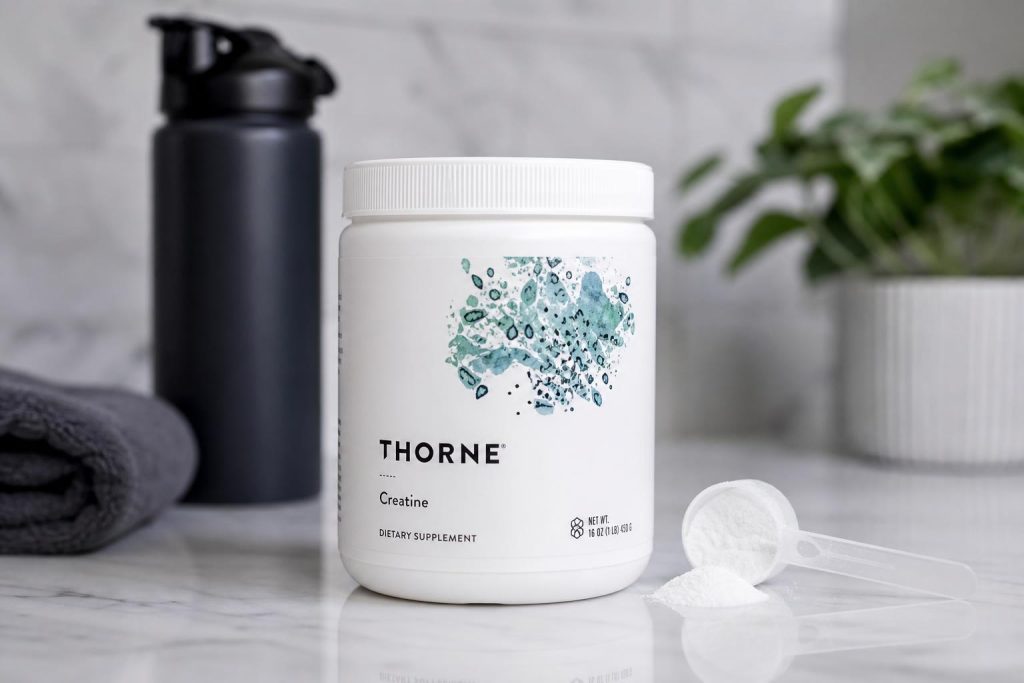
Creatine is one of the most studied ergogenic compounds in sports science — and one of the most misunderstood by the general public. Decades of research have confirmed its ability to increase phosphocreatine stores in muscle, enhance high-intensity performance, and support lean mass retention during caloric deficits. A landmark meta-analysis published in the Journal of Strength and Conditioning Research found that creatine supplementation produced an average 8% increase in strength and a 14% increase in power output across multiple exercise modalities. The problem isn’t whether creatine works — it does. The real question is whether the creatine you’re buying is actually what the label says it is.
Supplement purity in the United States is largely an honor system. The FDA does not require pre-market testing of dietary supplements, which means brands self-regulate. Independent audits have found significant label inaccuracy across the supplement industry — including products that contain heavy metals, undisclosed fillers, or measurably less of the active ingredient than claimed. For creatine specifically, the concern isn’t just potency but the presence of creatinine, dicyandiamide, and dihydrotriazine — manufacturing byproducts that can appear in lower-grade raw material. That’s where Thorne enters the conversation.
What Makes Thorne’s Creatine Different
Thorne Research has built a reputation in the practitioner supplement space by emphasizing manufacturing standards that go beyond the minimum legal requirement. Their creatine monohydrate uses Creapure — a patented, German-manufactured creatine that is produced by AlzChem Group AG and widely regarded as the benchmark for purity in the industry. Creapure undergoes rigorous in-process quality control and third-party verification to confirm it is free from common contaminants. Independent analytical studies comparing creatine sources have documented meaningful variation in impurity profiles between generic and pharmaceutical-grade raw materials — which is precisely why sourcing matters.
Thorne itself holds NSF Certified for Sport certification on this product, which is among the most rigorous third-party testing frameworks available to American consumers. NSF Certified for Sport tests for over 270 substances banned by major athletic organizations, verifies label accuracy, and conducts ongoing audits of manufacturing facilities. This matters not just for competitive athletes subject to drug testing, but for any man who wants to know that what he’s swallowing actually matches what he paid for. When you’re supplementing consistently — day after day, often for months — purity isn’t a luxury concern, it’s basic due diligence.
The formula itself is notable for what it doesn’t contain. No artificial flavors, no proprietary blends, no unnecessary additives. One ingredient: creatine monohydrate. Each serving delivers five grams — the clinically validated dose used in the majority of published research. Research confirms that creatine monohydrate at this dose saturates muscle phosphocreatine stores over approximately 28 days of consistent supplementation without a loading phase, making simplicity not just aesthetic but functional.
What the Research Actually Says About Creatine’s Benefits
For men focused on body composition — losing fat while preserving or building muscle — creatine’s utility extends well beyond the gym floor. A randomized controlled trial in older men found that creatine supplementation combined with resistance training produced significantly greater gains in lean mass and strength compared to placebo, even when caloric intake was controlled. This matters because muscle preservation during a deficit is one of the most metabolically important outcomes a man can pursue — higher lean mass correlates directly with resting metabolic rate, insulin sensitivity, and long-term weight maintenance.
There is also emerging evidence for cognitive benefits. A double-blind, placebo-controlled trial published in Psychopharmacology found that creatine supplementation improved working memory and processing speed in healthy adults — effects hypothesized to arise from increased cerebral phosphocreatine availability. For men managing demanding work schedules alongside their training, this is a notable secondary benefit that rarely appears on supplement marketing materials.
Creatine also shows meaningful benefit for recovery. Research has demonstrated that creatine supplementation reduces markers of muscle damage and inflammation following eccentric exercise, potentially allowing for higher training frequency over time. This is relevant whether you’re a competitive lifter, someone returning to training after time off, or a man using diet and exercise to manage metabolic health. The mechanism is straightforward: faster phosphocreatine resynthesis between sets allows for more total work done per session, which compounds over weeks and months into meaningfully greater adaptations.
For men on GLP-1 medications like semaglutide or tirzepatide who are in aggressive caloric deficits, creatine becomes particularly strategic. These medications can suppress appetite significantly, making it harder to consume adequate protein and maintain training intensity. Supplementing with creatine during this period helps maintain strength output and may attenuate lean mass loss — an important consideration given that GLP-1-induced weight loss can include a significant muscle component if resistance training and adequate protein are not prioritized alongside the medication.
Practical Considerations: Dosing, Timing, and Value
The honest answer on timing is that it matters less than consistency. Some research suggests post-workout creatine may have a marginal advantage for muscle creatine uptake due to the insulin response following training, but the practical difference is small compared to simply taking it daily without interruption. Pick a time that fits your routine and stay consistent. Five grams per day — Thorne’s serving — is the dose supported by the longest evidence base, and there is no established benefit to taking more unless you’re in a formal loading phase, which research suggests is optional anyway.
On value: Thorne Creatine is not the cheapest option on the market. A 90-serving container typically retails between $40 and $45, placing it at roughly $0.45 to $0.50 per serving compared to generic creatine monohydrate products that run as low as $0.10 to $0.15 per serving. Whether that premium is worth it comes down to what you’re buying. You’re paying for Creapure raw material, NSF Certified for Sport verification, and Thorne’s manufacturing oversight — a bundle that generic brands making no third-party claims simply cannot match. For men who are already spending significant money on food quality, gym memberships, or other health investments, the marginal cost of verified supplementation is small relative to the confidence it provides.
One practical note: creatine monohydrate draws water into muscle cells, which can cause a transient increase in scale weight of one to three pounds during the first week of supplementation. This is intramuscular water — not fat gain — and is actually a marker that the product is working. Men tracking body weight closely should account for this at the outset rather than misinterpreting it as a negative response.
The Takeaway
Thorne Creatine is a straightforward product that earns its reputation through substance rather than marketing. The combination of Creapure raw material and NSF Certified for Sport verification gives it a credibility profile that most creatine products simply cannot claim. The underlying compound is one of the most evidence-backed supplements in existence — supporting strength, power output, lean mass retention, recovery, and potentially cognitive function. If you’re going to use creatine consistently, which the evidence strongly supports doing, you might as well use one you can trust. Thorne makes that decision easy.