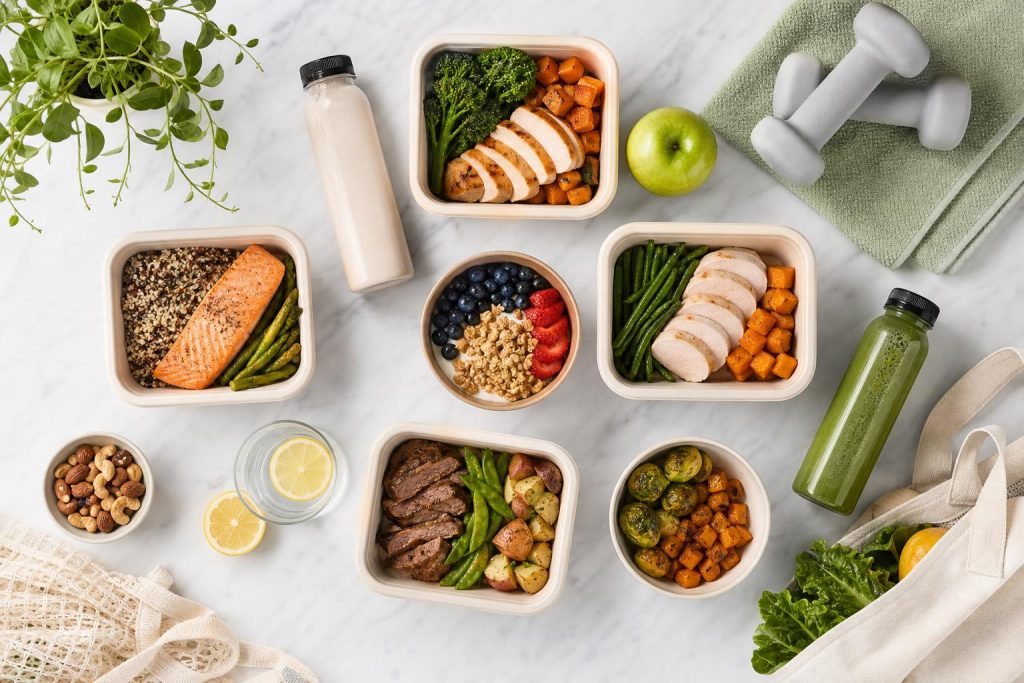
There’s a quiet revolution happening at the dinner table. Men on GLP-1 medications like semaglutide and tirzepatide are losing significant weight — clinical trials show up to 15–20% body weight reduction over 68 weeks — but many are running into a problem nobody warned them about: when you’re only hungry for a few bites at a time, eating enough of the right foods becomes surprisingly hard. That’s where GLP-1 meal plan delivery services enter the picture, and whether you’re on medication or not, the nutritional strategy behind them is worth understanding.
GLP-1 receptor agonists work by slowing gastric emptying, amplifying satiety signals, and dialing down appetite-driving hormones. The result is that most men eat far less than they used to — sometimes dangerously little. The real risk isn’t eating too much anymore. It’s eating too little of the nutrients that protect muscle mass, support metabolic function, and keep energy levels from cratering. Research published in Diabetes, Obesity and Metabolism confirmed that a significant portion of weight lost on GLP-1 medications can come from lean muscle mass, not just fat — a metabolic trade-off that has long-term consequences if nutrition isn’t deliberately managed.
This is why structured meal delivery isn’t just a convenience play for men on GLP-1s — it’s a clinical strategy. When your appetite is suppressed, the last thing you want to spend energy on is planning, shopping, and cooking. But what arrives in that box matters enormously.
What GLP-1 Meal Plans Actually Need to Deliver
The nutritional priorities for someone on a GLP-1 medication are not dramatically different from those of any man trying to lose fat while preserving muscle — they’re just more compressed. Smaller meals mean every bite has to count. Studies consistently show that protein intakes of 1.6 to 2.2 grams per kilogram of body weight are optimal for maintaining lean mass during caloric restriction. If you’re eating two small meals a day because that’s all your appetite allows, those meals need to be anchored by high-quality protein — think grilled salmon, chicken breast, Greek yogurt, eggs, or lean beef.
The best meal delivery services for men on GLP-1s — or frankly, for any man in a caloric deficit — prioritize protein density over caloric volume. Factor, Trifecta, and Territory Foods are among the more popular options that offer high-protein, dietitian-formulated meals with macro transparency. When evaluating any service, look for meals that deliver at least 30–40 grams of protein per serving, use whole food ingredients rather than ultra-processed fillers, and keep sodium reasonable to prevent water retention masking actual fat loss progress.
Fiber is the second pillar. GLP-1 medications already slow gastric motility, and research shows that inadequate dietary fiber during GLP-1 therapy can compound GI side effects like constipation, which affects a significant percentage of users. Well-designed meal plans should incorporate vegetables, legumes, and whole grains — not just lean protein on a plate. Aim for at least 25–35 grams of fiber per day distributed across meals, and prioritize soluble fiber sources like oats, lentils, and Brussels sprouts that support gut motility without adding unnecessary bulk that further suppresses appetite.
Micronutrient sufficiency is the piece most men overlook entirely. Eating in a significant caloric deficit — whether medication-induced or self-imposed — creates real risk of inadequate intake of zinc, magnesium, vitamin D, and B12. Zinc and magnesium deficiencies are independently associated with impaired testosterone production and reduced muscle protein synthesis, making them especially critical for men trying to hold onto muscle while losing fat. Premium meal delivery services that incorporate diverse whole foods — leafy greens, shellfish, seeds, fortified grains — will naturally cover more of these bases than services that lean on ultra-processed convenience items.
How to Choose a Service That Actually Fits Your Goals
Not all meal delivery services are built for metabolic optimization. Many are built for convenience and broad palatability, which means they often skew toward carbohydrate-heavy dishes with modest protein. Your job is to filter ruthlessly. Before subscribing to any service, pull up the nutritional information for at least five of their most popular meals. If the average protein per meal sits below 25 grams, keep looking. If the ingredients list reads like a chemistry textbook, keep looking. If there’s no flexibility to customize macros or swap items, keep looking.
For men on GLP-1 medications specifically, portion size flexibility matters. Some services like Trifecta and Green Chef allow you to select meal plans by dietary philosophy — keto, paleo, high-protein — which makes it easier to align delivery meals with whatever nutritional framework your physician or dietitian has recommended. If you’re not on GLP-1s and simply want cleaner eating without the planning overhead, the same criteria apply: prioritize protein, whole foods, and macro transparency.
Hydration is a legitimate logistics challenge that meal delivery doesn’t solve but deserves mention alongside it. Research shows that GLP-1-induced appetite suppression can also blunt thirst perception, increasing dehydration risk — which independently impairs performance, cognition, and metabolic rate. Set hydration reminders separately from meals, and treat water intake as part of your daily protocol, not an afterthought.
The Takeaway
GLP-1 meal plan delivery services are most valuable when treated as a nutritional infrastructure tool, not a passive subscription. Whether you’re on semaglutide navigating a 600-calorie appetite or a man simply optimizing his diet without any medication, the principles are identical: maximize protein per meal, prioritize fiber and micronutrient density, choose whole foods over processed convenience, and track what’s arriving in that box the same way you’d track anything else that affects your results. The medication — if you’re using one — handles the appetite side of the equation. The meal plan handles the quality side. Both have to be dialed in for the outcome to be worth the effort.