Here’s a number that should get your attention: in clinical trials, roughly 25 to 40 percent of weight lost on semaglutide was lean mass, not fat. That’s muscle walking out the door alongside the pounds you’re trying to shed. For men whose long-term metabolic health, strength, and body composition depend on holding onto that tissue, the implications are serious — and they point directly to one nutritional lever that can change the outcome: protein.
GLP-1 receptor agonists like semaglutide (Ozempic, Wegovy) are genuinely powerful tools for appetite suppression and fat loss. But the same mechanism that makes them effective — dramatically reducing hunger and overall caloric intake — also creates a nutritional blind spot. When you’re eating significantly less, you’re often eating significantly less protein, and that shortfall accelerates the muscle loss that comes with any aggressive calorie deficit. The medication doesn’t cause the muscle loss directly; the insufficient protein intake does.
Why Protein Is Non-Negotiable During a Caloric Deficit
This isn’t unique to GLP-1 users. Any man in a meaningful calorie deficit — whether from medication, dieting, intermittent fasting, or simply cleaning up his eating — faces the same physiological reality. Muscle protein synthesis requires adequate dietary protein as a substrate. When protein drops too low and calories are restricted, the body increasingly turns to muscle tissue for gluconeogenesis, accelerating the breakdown of lean mass. Research consistently shows that higher protein intakes during energy restriction preserve significantly more lean mass compared to moderate or low protein approaches.
The current evidence supports a target of at least 1.2 to 1.6 grams of protein per kilogram of body weight daily for men in a deficit — and some data pushes that closer to 2.2 grams per kilogram for those actively resistance training. For a 200-pound man, that translates to roughly 110 to 200 grams of protein per day. On a medication that blunts your appetite to the point where eating feels optional, hitting those numbers requires deliberate, strategic effort.
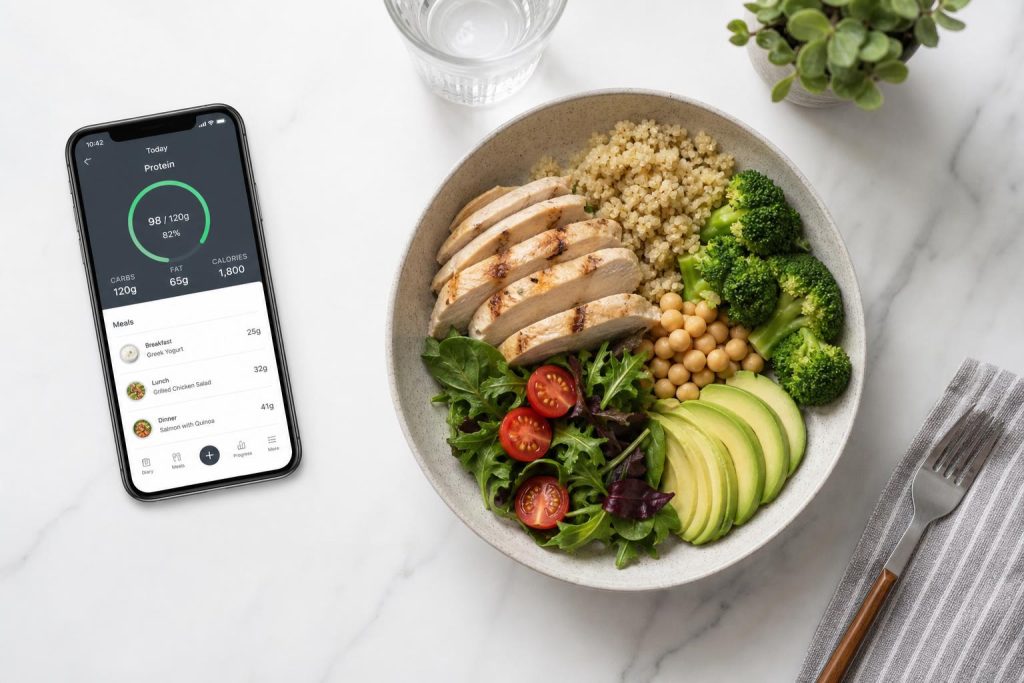
The practical solution is prioritizing protein at every meal rather than hoping it adds up by default. That means building meals around a dense protein source first — chicken breast, eggs, Greek yogurt, cottage cheese, lean beef, fish — and treating carbohydrates and fats as secondary additions. A high-quality whey or casein protein supplement can close the gap on days when appetite suppression makes whole food consumption difficult. Whey protein in particular has been shown to robustly stimulate muscle protein synthesis, making it a practical insurance policy for men who struggle to eat enough on low-appetite days.
Resistance Training Completes the Picture
Protein alone isn’t enough. The stimulus to retain muscle has to come from somewhere, and that stimulus is resistance training. Studies have demonstrated that combining adequate protein intake with progressive resistance exercise substantially reduces lean mass loss during caloric restriction compared to diet alone. For men on GLP-1 medications or simply pursuing fat loss through diet, lifting weights two to four times per week isn’t optional if preserving muscle is the goal — it’s the mechanism.
The combination of sufficient protein and consistent resistance training essentially sends competing signals to the body: yes, we’re in a deficit, but no, we are not available to be cannibalized for fuel. That anabolic resistance signal, driven by mechanical load and amino acid availability, is what separates men who come out of a cut leaner and stronger from those who emerge lighter but metabolically weaker.
Spacing protein across three to four meals also matters. Research on muscle protein synthesis shows that distributing protein intake evenly throughout the day optimizes anabolic signaling better than front- or back-loading. Aim for 30 to 50 grams per meal rather than skimping at breakfast and trying to recover at dinner.
The Takeaway
Whether you’re using a GLP-1 medication, running a traditional calorie deficit, or simply trying to stay lean and strong as you age, protein is the nutritional variable with the most direct impact on whether you lose fat or lose muscle. Hit your numbers deliberately, train with weights consistently, and treat protein not as an afterthought but as the foundation every meal is built around. The scale will move either way — protein determines what’s actually moving with it.