When researchers published results from the STEP 1 trial in the New England Journal of Medicine, the numbers were hard to ignore: participants taking semaglutide lost an average of 14.9% of their body weight over 68 weeks. But buried in the fine print was a detail that often gets skipped in the headlines — a meaningful portion of that weight loss included lean muscle mass, not just fat. What you eat while on semaglutide doesn’t just influence how fast the scale moves — it determines what kind of body you end up with when the medication does its job.
Semaglutide works by mimicking GLP-1, a gut-derived hormone that signals satiety, slows gastric emptying, and dampens appetite at the brain level. The result is that most men eat significantly less — sometimes without even trying. That’s the mechanism. But eating less is not the same as eating well, and on a drug that can cut your caloric intake by 30% or more, the nutritional quality of every bite you take becomes exponentially more important.
The challenge isn’t motivation. Most men on semaglutide are highly motivated. The challenge is that appetite suppression removes one of your primary hunger cues, and if you’re not deliberate, you can slide into a pattern of eating very little of the wrong things — soft processed foods that go down easy, skipping meals entirely, or avoiding protein because it feels too heavy. That’s a fast track to muscle loss, micronutrient deficiency, and a metabolism that’s slower coming off the medication than when you started.
Protein Is Non-Negotiable — And Most Men Aren’t Getting Enough Of It
The most important dietary variable while taking semaglutide is protein intake, and the research supports a higher target than most people expect. Studies on caloric restriction consistently show that higher protein intakes preserve lean mass during weight loss, and this becomes especially critical when appetite suppression is driving your deficit rather than willful calorie counting. When your body is in an energy deficit, it will cannibalize muscle tissue for fuel if protein availability is insufficient — semaglutide doesn’t change that physiology.
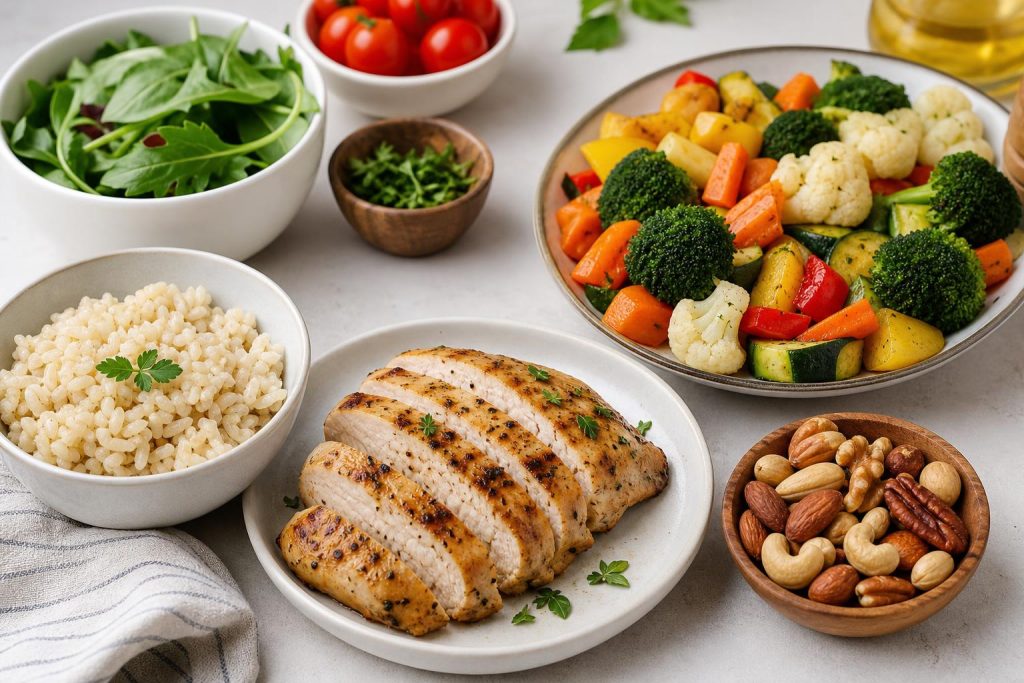
A practical target for men on semaglutide is 1.6 to 2.2 grams of protein per kilogram of body weight daily — or roughly 0.7 to 1 gram per pound. If you’re eating significantly less food overall, you may need to prioritize protein at the front of every meal before appetite shuts the window. Lean animal proteins — chicken breast, eggs, Greek yogurt, cottage cheese, salmon, lean beef — are your highest-leverage options because they deliver complete amino acid profiles with relatively low caloric density. Research on leucine, the key anabolic amino acid, shows it plays a critical role in triggering muscle protein synthesis, which is why whole food protein sources and quality protein supplements can both serve a real function here — not as a gimmick, but as a practical tool for hitting your numbers on a compressed appetite.
If nausea is an issue — a common side effect, particularly in the dose escalation phase — focus on cold or room-temperature proteins, which tend to be better tolerated than hot, aromatic dishes. Greek yogurt, cold chicken, hard-boiled eggs, and protein shakes can all deliver high protein loads without triggering the GI sensitivity many men experience early on.
What to Actually Eat: Food Quality, Fiber, and the Foods to Limit
Beyond protein, the dietary framework that produces the best outcomes on semaglutide looks a lot like what works for metabolic health in general: whole foods, adequate fiber, micronutrient density, and minimal ultra-processed carbohydrates. Ultra-processed foods are independently associated with overeating, poor satiety signaling, and weight gain — ironically, they’re also the foods that go down easiest when appetite is blunted, because they’re engineered to require minimal digestive effort. Crackers, chips, soft bread, and sweetened beverages can slip through even a suppressed appetite because they don’t trigger the stretch receptors and hormonal satiety signals that whole foods do.
Fiber deserves specific attention. Dietary fiber supports gut microbiome diversity, improves insulin sensitivity, and enhances feelings of fullness — all relevant goals for men using semaglutide for metabolic improvement. Aim for 25 to 35 grams daily through vegetables, legumes, whole grains, and fruits. Vegetables like broccoli, spinach, zucchini, and cabbage are particularly high in fiber and micronutrients relative to their caloric load, making them ideal when total food volume is lower than usual.
Healthy fats from sources like avocado, olive oil, nuts, and fatty fish serve a dual role: they support hormonal health — including testosterone production, which can be affected by rapid weight loss — and they slow gastric emptying further, which can help extend satiety between meals. Research has consistently linked dietary fat adequacy to maintained testosterone levels in men during caloric restriction, making this a non-trivial consideration for any man pursuing body composition goals alongside weight loss.
Two categories of food are worth actively minimizing: alcohol and high-glycemic refined carbohydrates. Alcohol interacts with the nausea profile of GLP-1 medications in ways that most men find unpleasant, and it delivers empty calories that displace protein and micronutrients. High-glycemic carbohydrates — white bread, sugary drinks, pastries — cause rapid blood glucose spikes followed by crashes that can paradoxically increase hunger signals even when the drug is suppressing appetite centrally. Neither is forbidden, but the return on investment is poor when you’re eating less food overall.
Hydration also matters more than most people realize. Semaglutide slows gastric motility, and inadequate fluid intake compounds the risk of constipation — one of the more commonly underreported side effects. Aim for at least 2.5 to 3 liters of water daily, and consider electrolytes if you’re eating significantly less sodium due to reduced food intake.
The Takeaway
Semaglutide is a powerful metabolic tool, but it doesn’t make dietary choices for you — it just narrows the window in which you make them. The men who get the best outcomes from this medication are the ones who treat the reduced appetite as an opportunity to eat better, not just less. That means leading with protein at every meal, building your plate around whole foods and vegetables, supporting gut health with adequate fiber, and keeping healthy fats in rotation for hormonal support. The drug does the heavy lifting on appetite. Your job is to make sure that the food you do eat is doing meaningful work for your muscle mass, your metabolism, and your long-term health. What goes on your plate still matters — maybe more than ever.