Here’s a number that should get your attention: after age 30, men lose roughly 3–8% of their muscle mass per decade — and that rate accelerates dramatically after 60. But age isn’t the only threat. Aggressive calorie restriction, extended cardio phases, poor sleep, and inadequate protein all trigger the same cascade of muscle breakdown. Research published in the Journal of Cachexia, Sarcopenia and Muscle confirms that sarcopenia — the clinical term for age-related muscle loss — is accelerated by lifestyle factors that are largely within your control. That’s the good news. Muscle is not simply something that disappears. It’s something you have to fail to protect.
Understanding what actually drives muscle loss — and what stops it — is one of the most valuable things you can do for your long-term health, metabolism, and physical function. Whether you’re cutting body fat, training hard, navigating a caloric deficit, or just trying to hold onto what you’ve built, the same fundamental principles apply.
Protein and Training: The Two Pillars You Cannot Negotiate
The most consistently supported intervention against muscle loss is resistance training — not cardio, not stretching, not general activity, but progressive overload with weights. When you subject muscle tissue to mechanical tension, you trigger a signaling cascade involving mTOR (mechanistic target of rapamycin) that tells your body to synthesize new muscle protein rather than break it down. A landmark study in the Journal of Applied Physiology demonstrated that even two sessions of resistance training per week are sufficient to significantly blunt muscle loss during a caloric deficit. Three to four sessions per week, with progressive overload built in, is where most men will see optimal preservation.
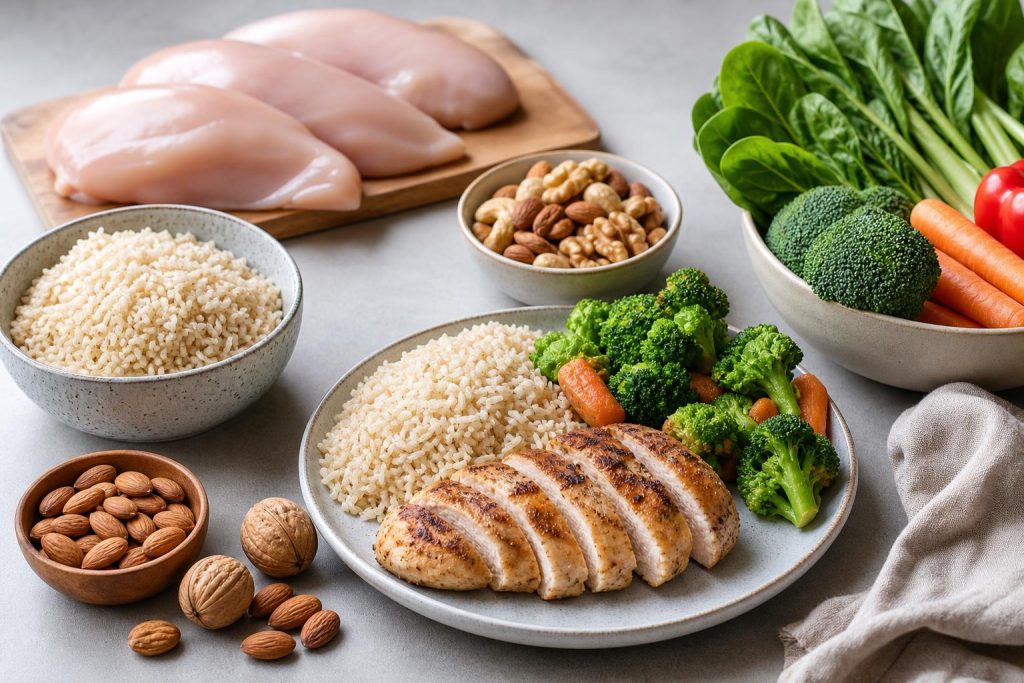
Protein intake is the other non-negotiable. Muscle protein synthesis requires an adequate supply of amino acids — specifically leucine, which acts as a metabolic trigger for the anabolic response. The old RDA of 0.8 grams per kilogram of body weight was designed to prevent deficiency, not preserve muscle during a cut or support an active lifestyle. Current evidence puts the optimal range for muscle preservation closer to 1.6 to 2.2 grams per kilogram of body weight per day. A comprehensive meta-analysis in the British Journal of Sports Medicine found that protein intakes above 1.62 g/kg/day provided the greatest benefit for muscle mass and strength during resistance training. Hitting that target consistently — spread across three to four meals — is more important than any supplement on the market.
Meal timing matters more than most people expect. Research from the American Journal of Clinical Nutrition shows that distributing protein evenly across meals — rather than eating most of it at dinner — results in significantly greater muscle protein synthesis over a 24-hour period. Practically, this means aiming for 30–50 grams of high-quality protein at each meal, with leucine-rich sources like eggs, chicken, beef, Greek yogurt, or whey protein anchoring each sitting.
The Hidden Drivers of Muscle Breakdown Most Men Ignore
Training and protein get most of the attention, but the variables operating in the background often determine whether all that effort sticks. Sleep is the most underrated one. During deep sleep, your body releases the majority of its daily growth hormone — a primary anabolic signal. Studies have shown that even one week of sleep restriction to five hours per night significantly reduces anabolic hormone levels and accelerates muscle protein catabolism. Seven to nine hours of sleep isn’t a luxury for recovery — it’s a biochemical requirement for muscle preservation.
Chronic stress is another quiet saboteur. Elevated cortisol — the body’s primary stress hormone — directly activates proteolytic pathways that break muscle down into amino acids for energy. Clinical data confirms that chronically elevated cortisol is associated with accelerated muscle wasting, increased visceral fat, and impaired recovery from exercise. Stress management isn’t soft advice — it’s muscle-preserving physiology. Whether that’s structured breathing, reduced caffeine, better sleep hygiene, or cutting back on training volume during high-stress periods, cortisol control belongs in your preservation strategy.
Caloric deficit severity is also worth discussing directly. Many men pursuing fat loss cut calories too aggressively, which forces the body to cannibalize muscle tissue for fuel when protein intake or training stimulus is insufficient. A moderate deficit of 300–500 calories per day — paired with high protein and resistance training — has been shown to preserve lean mass while reducing fat. Crash diets and extreme restriction do the opposite. If you’re using a GLP-1 medication or any other appetite-suppression strategy to reduce intake, keeping protein high and continuing to lift becomes even more critical, since the caloric environment is already primed for muscle loss if you’re not actively defending against it.
Creatine monohydrate deserves a mention as one of the few supplements with robust evidence behind it. Research consistently shows that creatine supplementation — 3 to 5 grams daily — enhances strength output, supports muscle protein synthesis, and helps preserve lean mass during caloric restriction. It’s inexpensive, well-tolerated, and backed by decades of research. Consider it a foundation supplement, not an afterthought.
The Takeaway
Muscle loss is not inevitable — it’s the result of specific, addressable failures in training, nutrition, recovery, and stress management. Lift heavy and progressively. Eat enough protein, distributed across the day. Sleep like your muscle mass depends on it, because it does. Manage your stress, control the size of your deficit, and consider creatine as a daily baseline. These aren’t hacks or shortcuts — they’re the fundamentals that the research keeps coming back to, regardless of what approach you’re taking to your health. The men who keep their muscle are the ones who protect it on purpose.