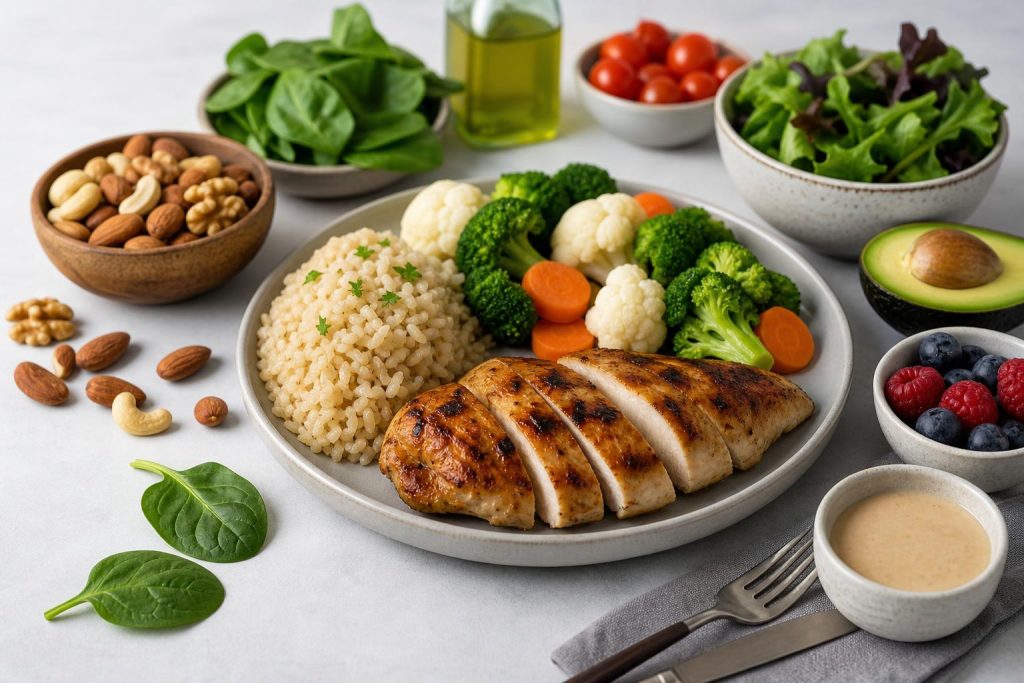
GLP-1 receptor agonists like semaglutide and tirzepatide have changed the weight loss landscape dramatically. But here’s what most men don’t hear when they pick up their first prescription: the medication does not do the work alone. What you eat — and how you eat — while on these drugs determines whether you lose fat and preserve muscle or simply lose weight the wrong way.
The appetite suppression is real. Research on oral semaglutide confirms significant improvements in both HbA1c and body weight, but those results depend heavily on behavioral factors — including the timing of meals relative to medication. The drug gives you a window. Your nutrition strategy determines what you build inside it.
Protein First, Every Single Meal
When your appetite tanks on a GLP-1, the biggest risk isn’t overeating — it’s under-eating protein. If you’re consuming 1,200 calories a day but only hitting 60 grams of protein, your body starts cannibalizing muscle tissue for fuel. On a GLP-1, that process accelerates because caloric intake drops sharply and most men don’t compensate by prioritizing high-density protein sources.
The target is straightforward: aim for 0.7 to 1 gram of protein per pound of bodyweight daily, distributed across meals. That means every time you sit down to eat — even if you’re not hungry — you lead with protein. Eggs, Greek yogurt, cottage cheese, chicken breast, canned fish, lean beef. These aren’t glamorous foods, but they’re the ones that protect the muscle you’ve spent years building. Think of protein as your non-negotiable insurance policy on this medication.
Equally important is resistance training alongside your nutrition strategy. GLP-1s reduce overall intake, but exercise signals to the body that muscle tissue is worth keeping. These two levers — high protein intake and strength training — work together to shift the composition of weight lost toward fat rather than lean mass.
What to Emphasize, What to Avoid
Beyond protein, the quality of your food choices has a direct impact on how well the medication works and how you feel on it. GLP-1 medications slow gastric emptying, which means high-fat, greasy, or heavily processed meals sit in your stomach longer and frequently cause nausea, reflux, or discomfort. This isn’t just a comfort issue — it’s a compliance issue. Men who eat poorly on GLP-1s often reduce their dose or quit entirely because they feel miserable, not because the medication failed them.
Prioritize foods that are nutrient-dense but easy to digest: cooked vegetables, whole grains like oats and quinoa, legumes, fruit, and lean proteins. Fiber matters here too — it supports gut motility and keeps blood sugar stable, which complements the glucose-regulating mechanism of the drug. Studies on gut hormones and weight loss show that dietary composition influences the hormonal environment beyond just calorie counts, affecting signals like GLP-1, GIP, and peptide YY — all of which interact with satiety and metabolism.
Alcohol deserves specific attention. Research examining predictors of semaglutide effectiveness found that current alcohol consumption was associated with poorer outcomes in achieving glycemic targets — a finding that translates directly to weight loss goals as well. Alcohol adds empty calories, disrupts sleep, lowers testosterone, and interferes with the metabolic benefits you’re trying to create. If you’re serious about your results on a GLP-1, alcohol should be minimized or eliminated.
Stress-driven eating is another practical concern. Research on weight gain during acute stress found that roughly a quarter of individuals with obesity gained significant weight within two months of a major stressor, with poor eating behaviors identified as a key modifiable risk factor. GLP-1 medications reduce physical hunger, but emotional and stress-driven eating operates through different neural pathways. Building structure around your meals — consistent timing, pre-planned options, minimal decision fatigue — reduces the chance that stress overrides the medication’s appetite effects.
The Takeaway
A GLP-1 medication gives you leverage. It lowers the appetite signal, improves insulin sensitivity, and creates the caloric deficit that makes fat loss possible. But leverage only works if you apply it correctly. Eat enough protein at every meal, choose whole foods over processed ones, minimize alcohol, manage stress, and keep lifting. The men who get the best results on these medications aren’t the ones who eat the least — they’re the ones who eat the smartest.
Scientific References
-
Hirotsu, Taniguchi, Nishimura et al. (2025).
Exploring factors predicting the effectiveness of oral semaglutide in Japanese individuals with type 2 diabetes switching from dipeptidyl peptidase 4 inhibitors: a pilot study..
Frontiers in clinical diabetes and healthcare.
View on PubMed → -
Siegel, Mumford, Kresovich et al. (2026).
Eating Disorder Screen Results and GLP-1 Awareness, Interest, and Use in a Nationally Representative Sample of Adults in U.S. Households..
The International journal of eating disorders.
View on PubMed → -
Jensen, Nguo, Baxter et al. (2015).
Fasting gut hormone levels change with modest weight loss in obese adolescents..
Pediatric obesity.
View on PubMed → -
Minsky, Robinson, Alon et al. (2026).
Determinants of acute weight gain during regional conflict among individuals with overweight and obesity receiving targeted multidisciplinary care..
Eating and weight disorders : EWD.
View on PubMed →