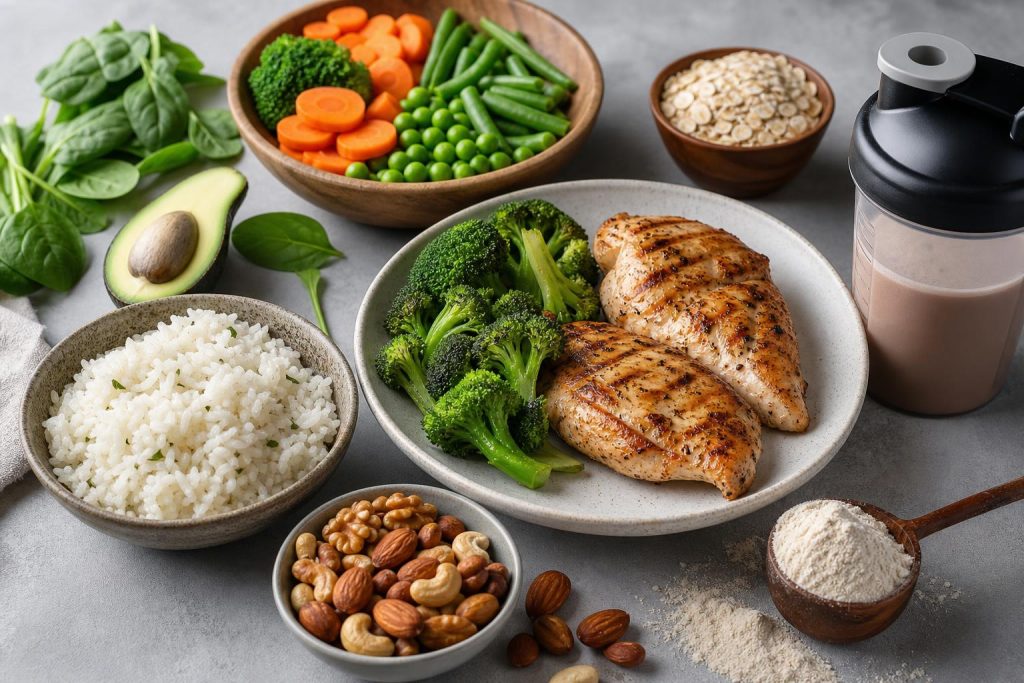
When researchers tracked protein intake in adults using GLP-1 receptor agonists like semaglutide, they found something worth paying attention to: caloric restriction was working almost too well. Appetite suppression was driving food intake so low that many participants weren’t consuming enough protein to protect their lean mass — and studies confirm that inadequate protein during weight loss accelerates muscle loss, undermining the very results these men were working toward. Whether you’re on a GLP-1 medication, running a caloric deficit through discipline alone, or deep in a body recomposition phase, the protein math matters enormously — and protein powder is often the most practical tool to close the gap.
This isn’t a niche issue for GLP-1 users. It’s a universal challenge for any man trying to lose fat without losing the muscle he’s worked hard to build. The core problem is this: when calories drop, protein intake tends to drop with them — and muscle protein synthesis doesn’t care about your intentions, only your inputs. Understanding how to use protein supplements strategically, and what the macros actually look like, is one of the highest-leverage things you can do for your physique and metabolic health.
How Much Protein You Actually Need — and Why Most Men Fall Short
The old RDA of 0.8 grams of protein per kilogram of bodyweight was never designed for men in a fat-loss phase trying to hold onto muscle. It was a minimum threshold for sedentary adults to avoid deficiency. For men who train, a landmark meta-analysis published in the British Journal of Sports Medicine found that muscle gains plateau around 1.62 grams per kilogram of bodyweight per day, while men in a caloric deficit likely benefit from going higher — up to 2.4 grams per kilogram — to offset the muscle-sparing challenge of eating less. For a 200-pound man, that translates to roughly 160 to 220 grams of protein daily.
Hitting that target through whole foods alone is achievable, but genuinely difficult — especially for men with reduced appetites, busy schedules, or restricted calorie budgets. A chicken breast gives you roughly 35 grams of protein with about 165 calories. A quality whey isolate shake delivers 25 to 30 grams of protein for 110 to 130 calories with minimal fat and carbohydrate. When every calorie needs to work hard, that efficiency matters. Research comparing whey protein supplementation to whole food protein sources during hypocaloric diets found equivalent preservation of lean mass, confirming that the source matters far less than the total daily intake.
For men on GLP-1 medications specifically, the challenge intensifies. Appetite suppression can reduce daily intake to 1,200–1,500 calories, making it genuinely hard to reach protein targets without prioritizing high-protein, low-volume foods. A single well-formulated shake — consumed as a meal replacement or post-workout — can deliver 30 grams of protein in under 200 calories, protecting muscle tissue during the rapid weight loss these medications produce.
Reading Protein Powder Labels: What the Macros Actually Tell You
Not all protein powders are created equal, and the label is where the difference lives. The three numbers that matter most are protein grams per serving, total calories per serving, and the protein-to-calorie ratio. A high-quality whey isolate will typically show 25–30 grams of protein in a 110–130 calorie serving — a ratio of roughly 1 gram of protein per 4–5 calories. A mass gainer or lower-quality blend might show 25 grams of protein in 300 or more calories, padded with carbohydrates and fats that may not serve your goals during a cut.
Whey isolate is the gold standard for men focused on fat loss and muscle preservation. The filtration process removes most of the lactose and fat, leaving a concentrate of fast-digesting protein with a complete amino acid profile, including leucine — the amino acid that directly triggers muscle protein synthesis. Research has demonstrated that leucine content is a primary driver of the anabolic response to protein feeding, which is why whey outperforms plant proteins gram-for-gram in most muscle-building studies.
That said, plant-based options have improved dramatically. A blended plant protein — typically pea combined with rice — achieves a complete amino acid profile that approaches whey in practical terms. A randomized trial published in the Journal of the International Society of Sports Nutrition found no significant difference in muscle thickness or strength gains between rice protein and whey protein supplementation when doses were matched. Men who avoid dairy or prefer plant-based nutrition don’t need to sacrifice results — they just need to choose a blended formula rather than a single-source plant protein.
Casein protein occupies its own useful niche. As a slow-digesting protein, it sustains amino acid release over four to seven hours, making it an intelligent option before sleep when the body enters an extended fasting window. Studies show that pre-sleep casein protein supplementation significantly increases overnight muscle protein synthesis — a finding relevant to any man serious about maximizing recovery regardless of what dietary approach he follows during the day.
Watch for added sugars, artificial fillers, and inflated serving sizes. Some products list a serving as 60 grams of powder when 40 grams would deliver comparable protein — artificially making the product appear more macro-efficient. Third-party testing certifications from organizations like NSF Certified for Sport or Informed Sport indicate the product contains what the label claims, which matters particularly for men who compete in tested sports or simply want to avoid contaminated supplements.
The Takeaway
Protein powder isn’t a magic product, but it is a practical one. For men in a caloric deficit — whether that deficit is driven by a GLP-1 medication, disciplined dieting, or clean eating — getting enough protein is non-negotiable for preserving the muscle mass that drives long-term metabolic health. Aim for 1.6 to 2.4 grams of protein per kilogram of bodyweight daily, prioritize high-protein-to-calorie ratios when selecting a supplement, choose whey isolate or a quality blended plant protein based on your dietary preferences, and consider casein before bed if recovery is a priority. Read the label critically, verify third-party testing, and use protein powder as what it is — a tool to make hitting your numbers easier, not a replacement for a well-structured diet.