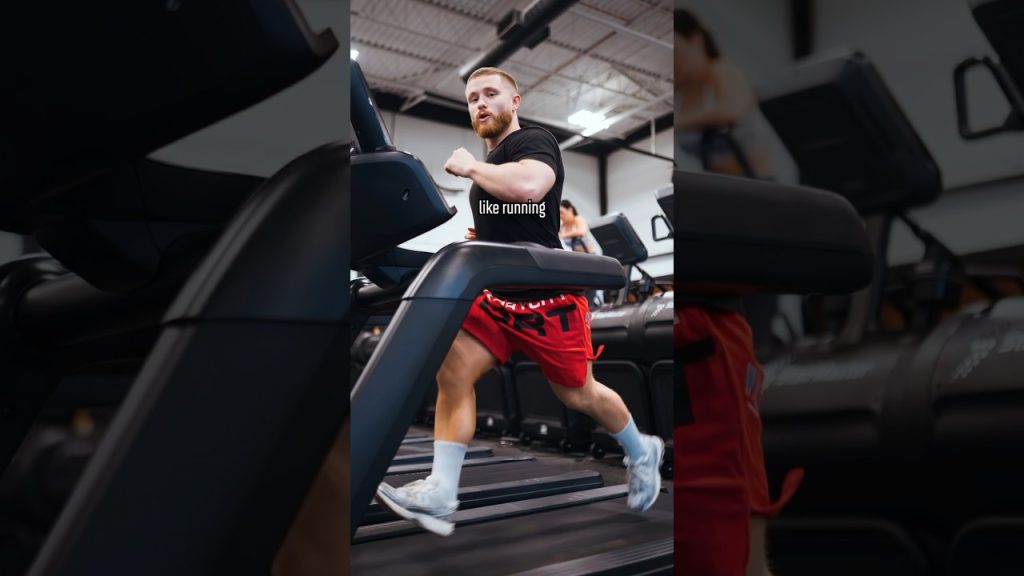
Video by Jeff Nippard on YouTube
If you’re on semaglutide, tirzepatide, or any GLP-1 receptor agonist and you’re not lifting weights, you may be winning the scale battle while quietly losing the war. A 2024 narrative review in Diabetes Care laid out something that should be required reading for every prescribing clinician and every man starting one of these medications: GLP-1 receptor agonists cause roughly 10% loss of lean mass — approximately 6 kilograms — during treatment. To put that in biological terms, that’s comparable to more than a decade of age-related muscle loss, compressed into about 16 months. That’s not a minor side effect. That’s a physiological shift with real consequences for your metabolism, your strength, and your long-term health.
The conversation around GLP-1 medications has been dominated by impressive weight loss numbers — 15% to 24% reductions in body weight depending on the agent — and rightfully so. These are genuinely effective tools for obesity treatment. But weight loss and fat loss are not the same thing, and this distinction matters enormously. Research published in the Journal of the Endocrine Society makes this point explicitly: fat-free mass and skeletal muscle mass are often conflated, but they’re distinct body components. When the scale drops, not everything you’re losing is fat. Some of it is the muscle tissue you’ve spent years building — or need to build to stay metabolically healthy as you age.
What’s Actually Happening to Your Muscle on GLP-1 Medications
The mechanism is relatively straightforward. GLP-1 receptor agonists work in part by suppressing appetite and slowing gastric emptying, which leads to significant caloric restriction. That caloric deficit drives weight loss, but it also creates the conditions for muscle catabolism. When your body is in an extended energy deficit without adequate protein intake and anabolic stimulus from exercise, it turns to lean tissue as a fuel source. This isn’t unique to GLP-1 medications — it happens with any aggressive caloric restriction — but the speed and magnitude of weight loss with these drugs can accelerate lean mass losses faster than many men anticipate.
A 2025 review in Obesity Reviews found that clinical trial participants on incretin-mimetic drugs lost 10% or more of their muscle mass during 68 to 72-week interventions — roughly equivalent to 20 years of age-related muscle loss. The authors were direct about what this means in practice: loss of skeletal muscle during pharmacological weight reduction can lead to reduced functional health, compromised metabolic outcomes, weight cycling when medications are discontinued, and a diminished quality of life. This isn’t hypothetical risk — it’s a pattern emerging clearly in the clinical literature.
The concern extends beyond aesthetics or gym performance. Skeletal muscle is metabolically active tissue. It’s your primary site of glucose disposal, a major driver of resting metabolic rate, and a protective factor against sarcopenia and frailty as you age. Lose enough of it during rapid weight loss and you can end up lighter on the scale but metabolically worse off — and far more vulnerable to weight regain once you stop the medication. A 2025 review in Current Opinion in Clinical Nutrition and Metabolic Care noted that up to 40% of total weight loss on GLP-1 receptor analogs can come from fat-free mass, underscoring just how significant the lean tissue toll can be.
The Case for Resistance Training — Backed by the Evidence
Here’s where the good news enters the picture. Resistance training is the single most effective countermeasure available for preserving muscle mass during caloric restriction. The Diabetes Care review cited above found that supervised resistance exercise programs lasting more than 10 weeks produce lean mass increases of approximately 3 kilograms and strength gains of around 25% in both men and women. That’s not a marginal effect — that’s the difference between losing muscle on GLP-1 therapy and actually holding your ground, or improving, while the fat comes off.
A 2025 joint advisory from four major clinical organizations — the American College of Lifestyle Medicine, the American Society for Nutrition, the Obesity Medicine Association, and The Obesity Society — identified resistance training as a clinical priority for all patients on GLP-1 therapy. Their guidance calls for comprehensive baseline assessment of muscle strength, function, and body composition, followed by an ongoing lifestyle program that includes strength training throughout treatment. This isn’t a soft recommendation buried in a footnote — it’s positioned alongside protein adequacy and micronutrient management as a foundational pillar of responsible GLP-1 prescribing.
In practical terms, what does the evidence support? Two to three resistance training sessions per week, sustained for at least 10 weeks, appear to be the threshold at which meaningful lean mass preservation occurs. Compound movements — squats, deadlifts, rows, presses — that recruit large muscle groups should form the foundation of any program. Progressive overload matters: you need to be adding challenge over time for the adaptive signal to remain strong. If you’re new to lifting, starting with a structured beginner program and building consistency is more important than optimizing every variable. The key is simply that you’re training with load, consistently, throughout the period of caloric restriction induced by your medication.
Protein intake works synergistically with resistance training. The Obesity Reviews research emphasizes that nutrition therapy must ensure adequate intake of high-quality protein — and given the appetite suppression common with GLP-1 medications, many men will need to be intentional about hitting their targets even when they’re not hungry. Aim for a minimum of 1.6 grams of protein per kilogram of body weight daily, with some evidence supporting higher intakes during active weight loss phases. Leucine-rich protein sources — whey, eggs, meat, fish — provide the amino acid signal most strongly associated with muscle protein synthesis. The Current Opinion review also noted potential supporting roles for creatine, branched-chain amino acids, omega-3 fatty acids, and vitamin D in the context of muscle preservation, though these remain secondary to the fundamentals of training and dietary protein.
The Takeaway
GLP-1 medications are a legitimate and powerful tool for men managing obesity and metabolic disease. But they are not a complete solution on their own, and the muscle loss data is clear enough that treating resistance training as optional during GLP-1 therapy is a clinical mistake. Whether you’re on semaglutide, tirzepatide, or simply navigating fat loss through traditional diet and exercise, the physiology is the same: preserving lean mass requires an anabolic stimulus. That stimulus is resistance training. Pick up the weights, eat enough protein, and let the medication do what it’s designed to do — without sacrificing the muscle that underpins your long-term metabolic health.
Scientific References
-
Mozaffarian, Agarwal, Aggarwal et al. (2025).
Nutritional priorities to support GLP-1 therapy for obesity: A joint Advisory from the American College of Lifestyle Medicine, the American Society for Nutrition, the Obesity Medicine Association, and The Obesity Society..
Obesity (Silver Spring, Md.).
View on PubMed → -
Locatelli, Costa, Haynes et al. (2024).
Incretin-Based Weight Loss Pharmacotherapy: Can Resistance Exercise Optimize Changes in Body Composition?.
Diabetes care.
View on PubMed → -
Mechanick, Butsch, Christensen et al. (2025).
Strategies for minimizing muscle loss during use of incretin-mimetic drugs for treatment of obesity..
Obesity reviews : an official journal of the International Association for the Study of Obesity.
View on PubMed → -
Tinsley, Heymsfield et al. (2024).
Fundamental Body Composition Principles Provide Context for Fat-Free and Skeletal Muscle Loss With GLP-1 RA Treatments..
Journal of the Endocrine Society.
View on PubMed → -
Chavez, Carrasco Barria, León-Sanz et al. (2025).
Nutrition support whilst on glucagon-like peptide-1 based therapy. Is it necessary?.
Current opinion in clinical nutrition and metabolic care.
View on PubMed →