Here is a number worth sitting with: in clinical trials, GLP-1 receptor agonists like semaglutide drive total body weight reductions of 5% to 18%. But buried inside that headline figure is a harder truth. Research published in Metabolism: Clinical and Experimental found that over 25% of the total weight lost during GLP-1 therapy — and bariatric surgery — typically comes from fat-free mass, including the skeletal muscle you worked to build. For men who care about staying strong, functional, and metabolically healthy, that statistic demands a strategy.
This is not a reason to avoid GLP-1 medications. The cardiovascular benefits, metabolic improvements, and the sheer scale of fat loss these drugs produce are clinically significant. But was direct about the tradeoffs: adverse effects from GLP-1 receptor agonists may include loss of muscle and bone mass, and questions remain about the functional implications of that loss over the long term. If you’re on semaglutide or tirzepatide, or considering either, understanding what drives muscle loss — and what stops it — isn’t optional. It’s the difference between emerging leaner and stronger versus lighter but depleted.
Why GLP-1 Medications Put Muscle at Risk
The mechanism behind GLP-1-induced weight loss is fundamentally about energy restriction. These medications reduce gastric emptying, suppress glucagon secretion, act on hypothalamic nuclei to enhance satiety, and ultimately drive a sustained caloric deficit that the body cannot easily override. That deficit is powerful for fat loss. But the human body, when faced with prolonged negative energy balance, does not exclusively burn fat. It draws on lean tissue as well — and for men on GLP-1 therapy who are eating significantly less without a targeted plan, muscle becomes collateral damage.
At the molecular level, the problem involves a signaling axis most men have never heard of: the myostatin-activin-follistatin system. Researchers from Harvard and Boston Medical Center describe how myostatin and activin A — proteins that signal through activin type II receptors — actively promote muscle degradation during states of negative energy balance. Follistatin acts as a natural brake on this process, but during severe caloric restriction, the balance can tip toward breakdown. This is the biological machinery that makes calorie-deficit muscle loss more than just a matter of not eating enough protein. It is a regulated catabolic process, and GLP-1 therapy accelerates the caloric deficit that triggers it.
A 2025 narrative review in Diabetes Research and Clinical Practice acknowledged this complexity directly: some studies link GLP-1 receptor agonists and dual GLP-1/GIP agonists like tirzepatide with significant reductions in lean mass and clinically meaningful sarcopenia risk, particularly in older adults. Yet preclinical evidence also suggests these agents may have direct protective effects on muscle — improving mitochondrial health and attenuating atrophy under certain conditions. The difference between those two outcomes likely comes down to what the patient is doing outside the medication: how they’re eating, how they’re training, and whether they’re being supported by a clinical team that understands body composition.
The Evidence-Based Protocol for Preserving Muscle on GLP-1s
The most authoritative guidance on this question came in 2025, when the American College of Lifestyle Medicine, the American Society for Nutrition, the Obesity Medicine Association, and The Obesity Society issued a joint advisory published in Obesity specifically addressing nutritional priorities for men and women on GLP-1 therapy. Their conclusion was unambiguous: preserving muscle and bone mass during GLP-1 treatment requires resistance training and appropriate dietary strategies — and their widespread use alongside these medications is currently insufficient.
Protein intake is the nutritional non-negotiable. When you are in a significant caloric deficit, dietary protein becomes the primary substrate for muscle protein synthesis — the anabolic process that offsets breakdown. Because GLP-1 medications suppress appetite substantially, many users inadvertently cut protein alongside calories, which compounds the muscle loss problem. The advisory recommends patients prioritize protein at every meal even when overall food volume is reduced. In practical terms, this means anchoring meals around high-quality protein sources — eggs, Greek yogurt, cottage cheese, lean meats, fish, whey or casein protein — before filling in carbohydrates and fats around them. Current evidence supports a target of at least 1.2 to 1.6 grams of protein per kilogram of body weight daily for men in a caloric deficit, with higher intakes warranted for those who train hard or are older.
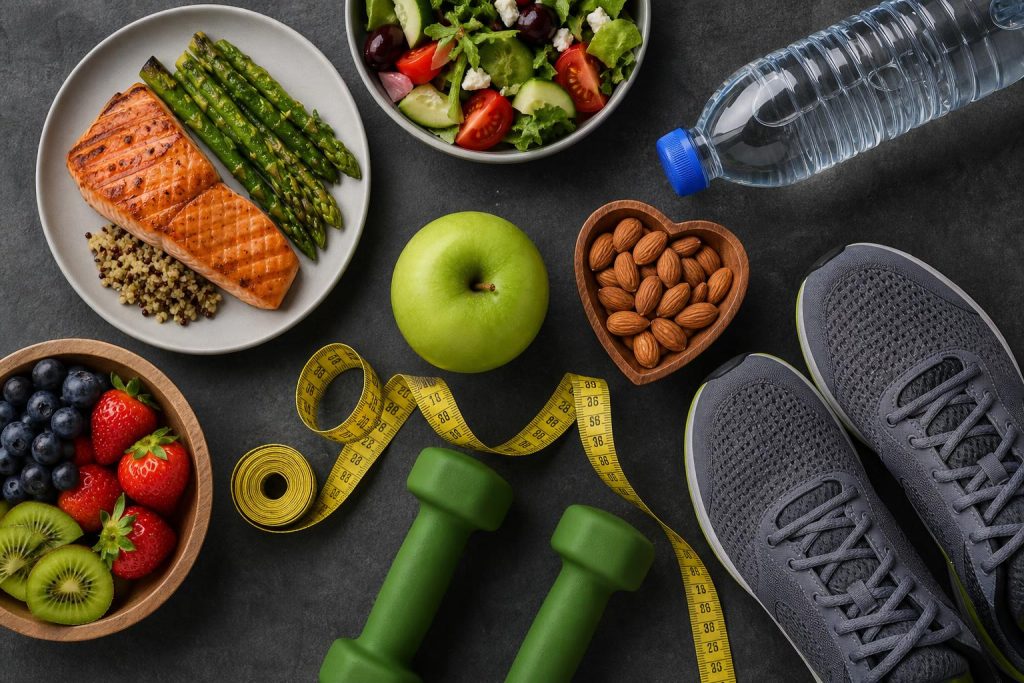
Resistance training is the other pillar — and it is non-negotiable regardless of whether a man is on GLP-1 therapy or losing weight through diet and exercise alone. The joint advisory explicitly calls out strength training as a core component of GLP-1 treatment, not a supplementary add-on. The mechanistic reason is straightforward: progressive resistance exercise is the most powerful known stimulus for muscle protein synthesis in humans. It counteracts the catabolic myostatin-activin signaling that caloric restriction promotes, and it provides the anabolic signal that tells the body muscle tissue is necessary and worth preserving. Men on GLP-1 therapy should be lifting weights at least three times per week, prioritizing compound movements — squats, deadlifts, rows, presses — and progressively increasing load over time. This is not about aesthetics alone. Muscle mass is directly tied to metabolic rate, insulin sensitivity, and long-term physical function.
For men at higher risk of significant muscle loss — older adults, those with pre-existing low muscle mass, or those who have lost weight rapidly — emerging pharmacological approaches may eventually become relevant. A 2024 study in Molecular Metabolism examined bimagrumab, a monoclonal antibody that blocks activin type II receptors — the same receptors through which myostatin and activin A drive muscle breakdown. In diet-induced obese mice treated with semaglutide, adding bimagrumab not only preserved lean mass but enhanced fat loss simultaneously. Treatment with bimagrumab alone increased lean mass by approximately 10% while simultaneously decreasing fat mass. The combination with semaglutide produced superior fat loss outcomes alongside muscle preservation despite reduced food intake. Additional research points to other pipeline compounds — trevogrumab and garetosmab — targeting the same myostatin-activin pathway. These are not yet standard clinical options, but they signal where the field is heading: toward combination therapies that deliver dramatic fat loss without sacrificing the lean tissue that underpins metabolic health and physical performance.
Beyond protein and resistance training, the joint advisory emphasizes baseline body composition assessment before starting GLP-1 therapy, ongoing monitoring of muscle strength and function, screening for nutritional deficiencies that caloric restriction can accelerate — including vitamin D, calcium, and B12 — and behavioral support through registered dietitian counseling. Sleep quality and stress management also factor into the equation, as both chronically elevated cortisol and poor sleep independently promote muscle catabolism. Men who address these variables comprehensively are far better positioned to exit a weight loss phase with their muscle mass intact and their metabolic health improved, rather than diminished.
What This Means For You
GLP-1 medications are a legitimate and powerful tool for men dealing with obesity and its downstream health consequences. But the research is clear: the medication does the heavy lifting on caloric restriction, and you have to do the heavy lifting in the gym. Protein first at every meal, resistance training at least three days a week, and consistent monitoring of body composition are not optional extras — they are the difference between losing fat and losing yourself. Whether you are on semaglutide, tirzepatide, or simply grinding through a traditional caloric deficit, the biology of muscle preservation during weight loss is the same. The men who come out the other side of a fat loss phase stronger, leaner, and more metabolically resilient are the ones who treated training and nutrition with the same seriousness they brought to the scale.
Scientific References
-
Mozaffarian, Agarwal, Aggarwal et al. (2025).
Nutritional priorities to support GLP-1 therapy for obesity: A joint Advisory from the American College of Lifestyle Medicine, the American Society for Nutrition, the Obesity Medicine Association, and The Obesity Society..
Obesity (Silver Spring, Md.).
View on PubMed → -
Nunn, Jaiswal, Gavin et al. (2024).
Antibody blockade of activin type II receptors preserves skeletal muscle mass and enhances fat loss during GLP-1 receptor agonism..
Molecular metabolism.
View on PubMed → -
Rosen, Ingelfinger et al. (2026).
GLP-1 Receptor Agonists..
The New England journal of medicine.
View on PubMed → -
Stefanakis, Kokkorakis, Mantzoros et al. (2024).
The impact of weight loss on fat-free mass, muscle, bone and hematopoiesis health: Implications for emerging pharmacotherapies aiming at fat reduction and lean mass preservation..
Metabolism: clinical and experimental.
View on PubMed → -
Pantazopoulos, Gouveri, Papazoglou et al. (2025).
GLP-1 receptor agonists and sarcopenia: Weight loss at a cost? A brief narrative review..
Diabetes research and clinical practice.
View on PubMed →