Most men have heard of GLP-1 by now — it’s the hormone behind Ozempic, Wegovy, and the broader weight-loss revolution that’s reshaped conversations around metabolic health. But here’s what often gets buried in the headlines: your body already makes GLP-1. Every time you eat, your gut releases it. The question isn’t whether you have it — it’s whether you’re doing enough to optimize it. And the research suggests that food, exercise, sleep, and a handful of strategic lifestyle choices can meaningfully move the needle on your natural GLP-1 output.
GLP-1 — glucagon-like peptide-1 — is a hormone secreted primarily by L-cells in your small intestine and colon. It signals fullness to your brain, slows gastric emptying so you feel satisfied longer, stimulates insulin release in a glucose-dependent manner, and suppresses glucagon to keep blood sugar stable after meals. Beyond metabolic control, emerging research suggests GLP-1 receptor activation is associated with improvements in cognitive function, including reductions in overall cognitive decline in adults with type 2 diabetes — a finding that has researchers reconsidering just how far-reaching this hormone’s effects really are. Whether you’re on a GLP-1 medication or not, understanding how to stimulate this system naturally is one of the smartest things you can do for your metabolic health.
What You Eat Has the Biggest Influence
The single most powerful lever you have for natural GLP-1 secretion is diet — not in the vague, eat-your-vegetables sense, but in specific, mechanistic ways that the research has begun to map out clearly.
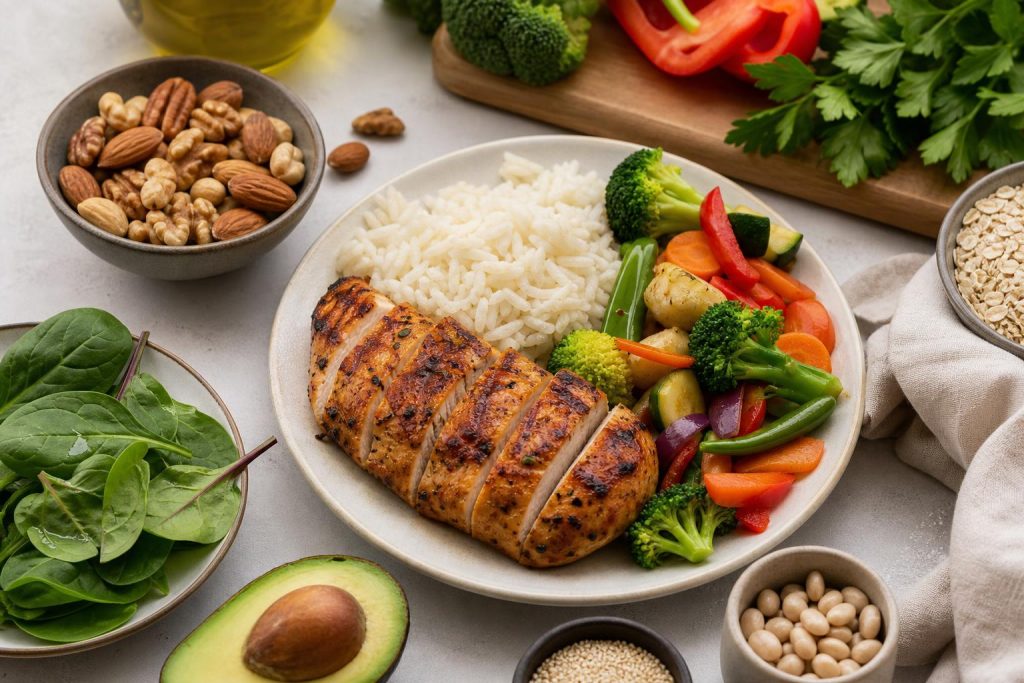
Protein is arguably the most potent macronutrient for GLP-1 stimulation. Studies using whey protein, in particular, show robust post-meal GLP-1 responses — one reason a high-protein breakfast tends to dramatically reduce hunger for hours afterward. Leucine-rich proteins, whether from eggs, Greek yogurt, lean meats, or a quality whey shake, appear especially effective at triggering L-cell secretion. For men focused on fat loss or body recomposition, this is a two-for-one: high protein preserves muscle mass and simultaneously amplifies satiety signaling through GLP-1 pathways.
Dietary fiber is the other major player, and it works through a different but complementary mechanism. Fermentable fibers — found in foods like oats, legumes, chicory root, garlic, and green bananas — are fermented by gut bacteria into short-chain fatty acids (SCFAs), particularly butyrate and propionate. These SCFAs directly stimulate L-cells to secrete GLP-1. This is one reason gut health and metabolic health are so deeply intertwined: a diverse, fiber-fed microbiome isn’t just good for digestion — it actively drives hormonal signaling that helps regulate appetite and blood sugar. Aim for 30 or more grams of fiber daily, prioritizing variety over any single source.
Certain fats also play a role. Monounsaturated and polyunsaturated fats — olive oil, avocados, fatty fish, nuts — have been shown to stimulate GLP-1 secretion more effectively than saturated fats. This doesn’t mean avoiding saturated fat entirely, but it does suggest that the Mediterranean-style eating pattern that keeps showing up in longevity research has legitimate mechanistic advantages at the hormonal level.
Perhaps most underappreciated: bitter compounds. Bitter melon, bitter greens like arugula and radicchio, and even black coffee appear to activate bitter taste receptors in the gut that trigger GLP-1 release. Curcumin — the active compound in turmeric — has also shown promise in preliminary research for enhancing GLP-1 secretion, as has berberine, a plant compound with a long history in traditional medicine that has attracted serious scientific attention for its metabolic effects. Neither is a magic bullet, but both are worth incorporating if you’re building a comprehensive strategy.
Exercise, Sleep, and the Lifestyle Factors That Move the Needle
Diet does the heavy lifting, but the rest of your lifestyle either amplifies or undermines what you eat. Physical activity is a meaningful driver of GLP-1 — not just during exercise, but through longer-term adaptations that improve your gut’s sensitivity and secretory capacity. Both aerobic training and resistance training have demonstrated favorable effects on GLP-1 signaling. For men who lift, this is further validation that the gym isn’t just about aesthetics — consistent resistance training improves insulin sensitivity and appears to enhance gut hormone function in ways that translate into better appetite regulation and metabolic efficiency over time.
Sleep deprivation is one of the fastest ways to undermine your GLP-1 system. Even a single night of poor sleep disrupts appetite-regulating hormones — ghrelin rises, GLP-1 output is blunted, and the result is predictable: increased hunger, worse food choices, and compromised metabolic control. Seven to nine hours of quality sleep isn’t a lifestyle luxury for men focused on performance and body composition — it’s a physiological requirement for the hormonal environment that supports your goals.
Intermittent fasting and time-restricted eating have also shown some promise in this area. There is evidence that structured eating windows can improve GLP-1 pulsatility — meaning the hormone is released more effectively in response to meals — though the research is still maturing. The mechanism likely involves improved gut microbiome composition and enhanced L-cell sensitivity over time. For men who find compressed eating windows sustainable, the metabolic benefits extend well beyond simple caloric restriction.
Stress management is easy to dismiss, but chronic psychological stress elevates cortisol, which directly impairs gut function and can blunt the normal GLP-1 response to meals. Men who train hard but sleep poorly, skip recovery, and run on stress hormones are working against their own metabolic machinery. Practices like structured breathing, adequate rest between training sessions, and genuinely prioritizing recovery aren’t soft additions to a health protocol — they’re mechanistically relevant to how your gut hormones function.
It’s also worth noting that obesity itself creates a degree of GLP-1 resistance, much like insulin resistance — your body secretes the hormone, but cells respond less effectively to it. This is one reason why the metabolic benefits of GLP-1 medications are so pronounced in men with significant excess body fat: the pharmaceutical doses overcome that blunted response. But it also means that losing body fat through any sustainable method — calorie deficit, resistance training, dietary quality improvements — directly restores your sensitivity to the GLP-1 you’re already producing naturally.
The Takeaway
You don’t need a prescription to start working with your GLP-1 system. High-protein meals, fermentable fiber, regular exercise, quality sleep, and a gut microbiome you actually invest in — these are the inputs that drive natural GLP-1 output. The pharmaceutical versions of this hormone are remarkable tools for men who need them, and the science continues to reveal benefits that extend well beyond weight loss. But the lifestyle levers are available to everyone, and they work through the same biological pathways. Build the foundation first. The results — better appetite control, improved blood sugar, more sustained energy, and a metabolic environment that supports fat loss and muscle retention — are the same regardless of how you get there.
Scientific References
-
Ballum, Dri, Liao et al. (2026).
The effect of glucagon-like peptide 1 (GLP-1) receptor agonists on cognition: A systematic review of systematic reviews and meta-analyses..
Journal of affective disorders.
View on PubMed → -
Hunt, Yassin, Olsen et al. (2021).
Intestinal Growth in Glucagon Receptor Knockout Mice Is Not Associated With the Formation of AOM/DSS-Induced Tumors..
Frontiers in endocrinology.
View on PubMed → -
Sun, Yao, Zuo et al. (2025).
Tirzepatide improves neutrophilic inflammation in obese asthmatic mice by downregulating Th17 cell differentiation..
Molecular biology reports.
View on PubMed →