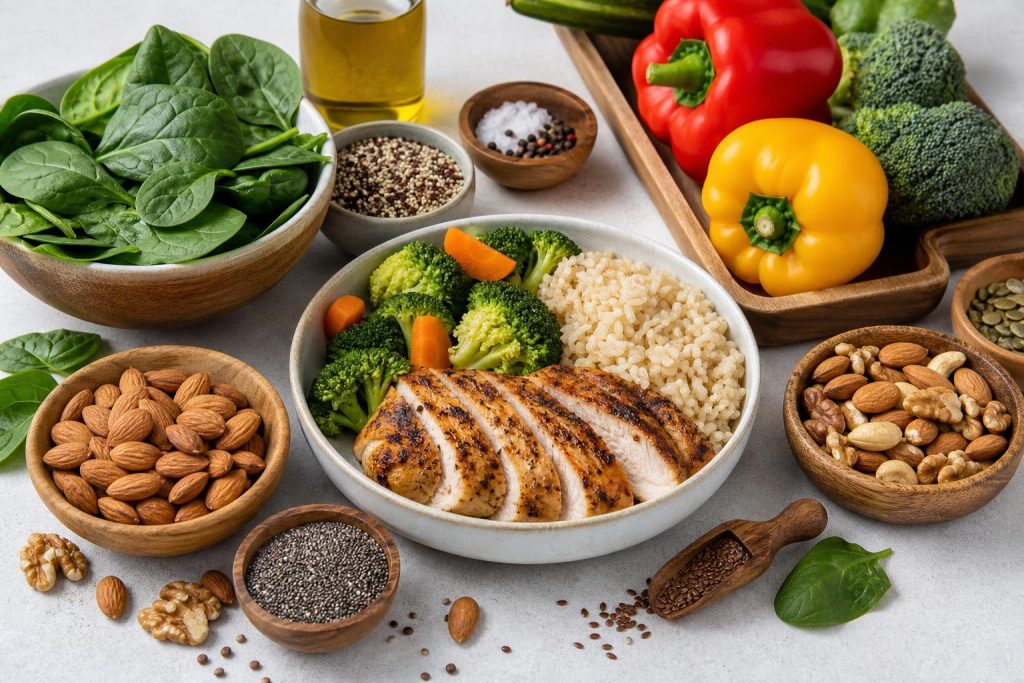
Ozempic — and its higher-dose sibling Wegovy — have changed the way millions of people experience hunger. But here’s what most men don’t realize when they start semaglutide: the medication does the heavy lifting on appetite suppression, but what you actually put on your plate determines whether you lose fat and keep muscle or simply eat less of the wrong things and end up lighter but metabolically worse off. The food choices you make on Ozempic matter more than the drug’s label suggests.
Research from the STEP 5 trial — a two-year randomized study published in Obesity — found that semaglutide 2.4 mg significantly improved control of eating across multiple domains, including reduced cravings for savory, sweet, starchy, and salty foods, along with better hunger regulation and fullness signaling. Participants on semaglutide lost an average of 14.8% of body weight compared to 2.4% in the placebo group. That’s a powerful pharmacological assist. But a suppressed appetite is a double-edged sword: eat less of the right foods and you accelerate fat loss while preserving lean mass. Eat less of the wrong foods — or barely eat at all — and you risk muscle loss, micronutrient deficiencies, and long-term metabolic consequences that outlast your prescription.
The goal isn’t just to eat less. It’s to eat smarter within a reduced caloric window. Here’s how to do that.
Prioritize Protein Above Everything Else
When semaglutide blunts your appetite, your total calorie intake drops — sometimes significantly. That’s the mechanism driving weight loss. The danger is that in a caloric deficit, your body doesn’t exclusively burn fat. Without adequate dietary protein and resistance to muscle breakdown, it will cannibalize lean tissue as well. For men especially, preserving muscle mass isn’t just an aesthetic concern — it’s central to metabolic health, insulin sensitivity, and long-term weight maintenance.
The target most sports nutrition researchers support is somewhere between 1.6 and 2.2 grams of protein per kilogram of body weight per day for men in a caloric deficit. On Ozempic, where total food intake often drops dramatically, hitting that number requires intentionality. It means making protein the anchor of every meal rather than a side consideration. Think eggs and Greek yogurt at breakfast, grilled chicken breast or canned salmon at lunch, and a substantial serving of lean beef, turkey, or cottage cheese at dinner. Protein also has a high thermic effect — your body burns roughly 20–30% of protein calories just digesting it — and it’s the most satiating macronutrient, which works synergistically with semaglutide’s fullness-enhancing effects.
Practically speaking, prioritize animal proteins for their complete amino acid profiles and high leucine content, which directly stimulates muscle protein synthesis. Whey protein is a useful tool when solid food feels unappealing, which is common during the early weeks on Ozempic. A shake with 30 grams of whey, a handful of frozen berries, and some full-fat Greek yogurt gives you a nutrient-dense, low-volume meal that won’t trigger nausea.
Build Your Plate Around Foods That Slow Digestion and Stabilize Blood Sugar
Semaglutide works in part by slowing gastric emptying — the rate at which food leaves your stomach. That’s a key reason it promotes fullness. But this same mechanism means that certain foods can worsen nausea, bloating, and GI discomfort, particularly in the first few months of treatment. The practical answer isn’t to avoid eating; it’s to favor foods that are easier to digest while still delivering meaningful nutrition.
Non-starchy vegetables — leafy greens, zucchini, cucumber, broccoli, bell peppers — should be a cornerstone of your eating pattern. They’re low in calories, high in fiber and micronutrients, and provide volume without overwhelming a stomach that already empties more slowly than usual. Fiber also feeds beneficial gut bacteria and helps regulate blood glucose, which matters whether you’re on Ozempic for diabetes management or purely for weight loss.
Whole food carbohydrate sources like oats, sweet potatoes, lentils, and quinoa are far better choices than processed grains, white bread, and sugary foods. The STEP 5 data showed that cravings for starchy and sweet foods were significantly reduced with semaglutide, which actually creates a window of opportunity: when your brain is less hijacked by cravings, making the switch to whole food carbohydrates is genuinely easier. Use that window. Replace refined carbs with fiber-rich alternatives that digest slowly, blunt post-meal blood sugar spikes, and keep you full longer without stressing your digestive system.
Healthy fats belong in this picture too — avocado, olive oil, nuts, fatty fish like salmon and sardines. These foods are calorically dense, so portion awareness matters, but they’re essential for hormone production, fat-soluble vitamin absorption, and cardiovascular health. Omega-3 fatty acids from fatty fish have independent anti-inflammatory benefits that complement the metabolic improvements semaglutide drives.
What to actively minimize: fried foods, heavily processed snacks, alcohol, and carbonated drinks. Fried and greasy foods are notorious for worsening nausea in GLP-1 users, and alcohol is both calorically empty and potentially more intoxicating on a significantly reduced food intake. Carbonated drinks can increase bloating and discomfort given the slowed gastric emptying semaglutide causes.
Eating Disorders, Restriction, and Knowing When Less Is Not More
There’s an important clinical dimension to the Ozempic nutrition conversation that rarely gets discussed in listicles and social media content. A 2026 clinical spotlight published in The International Journal of Eating Disorders raised a critical concern: the same mechanisms that reduce appetite and food preoccupation in GLP-1 users may also reinforce restriction, avoidance of regular eating, and compulsive weight control in vulnerable individuals. The authors argued that prescribing pathways often lack systematic eating disorder screening and multidisciplinary monitoring — and that distinguishing medically appropriate appetite modulation from an emerging or worsening eating disorder is not always straightforward.
For most men, this isn’t a pressing concern. But it’s worth naming clearly: if you find yourself regularly skipping meals entirely, feeling anxious about eating, or using the drug as an excuse to eat as little as possible rather than as well as possible, that’s a pattern worth examining with a clinician. Ozempic is a tool to support a healthy eating pattern, not a replacement for one. Eating too little on semaglutide — particularly getting under 1,000–1,200 calories per day consistently — risks muscle loss, nutrient deficiencies including inadequate B12, iron, zinc, and magnesium, and a rebound effect if medication is discontinued without sustainable dietary habits in place. The research is clear that lifestyle modification alongside GLP-1 therapy produces substantially better outcomes than medication alone.
Set a meal schedule and keep it. Even if hunger is blunted, eating three structured meals a day — built around protein, vegetables, and whole food carbohydrates — gives your body the raw materials it needs to function optimally. Consider working with a registered dietitian who has experience with GLP-1 medications if you’re unsure how to structure your intake, especially if you’re losing weight quickly.
The Takeaway
Semaglutide gives you a biochemical edge — reduced cravings, better fullness, and measurably improved control of eating as confirmed by two years of clinical trial data. But the medication doesn’t choose your food for you. The men who get the best outcomes — meaningful fat loss, preserved muscle, sustained metabolic improvement — are the ones who use the appetite suppression as leverage to build genuinely better eating habits, not just smaller portions of the same poor choices. Lead with protein at every meal. Stack your plate with vegetables and fiber-rich carbohydrates. Keep healthy fats in the rotation. Avoid the processed foods and alcohol that worsen GI side effects and undermine your progress. And eat enough — because the goal is a leaner, stronger, healthier body, not just a lighter one.
Scientific References
-
Wharton, Batterham, Bhatta et al. (2023).
Two-year effect of semaglutide 2.4 mg on control of eating in adults with overweight/obesity: STEP 5..
Obesity (Silver Spring, Md.).
View on PubMed → -
Škudar et al. (2026).
Eating Disorders in the GLP-1 Era: A Spotlight on Emerging Clinical Risks, Research Gaps, and Practice Priorities..
The International journal of eating disorders.
View on PubMed →