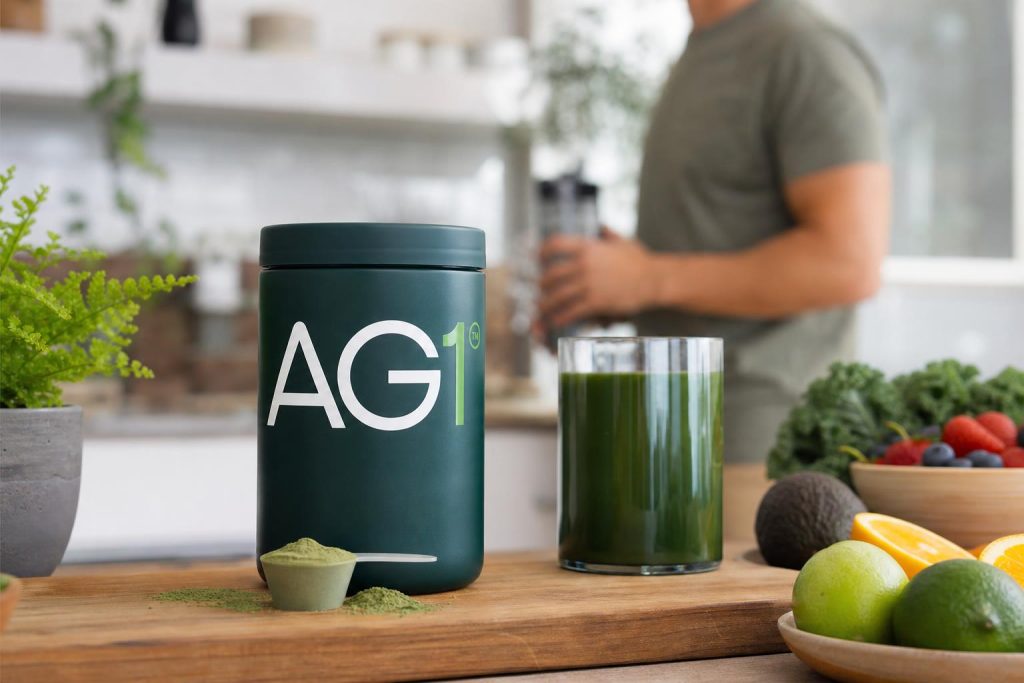
Most men eating a reasonably healthy diet still fall short on key micronutrients. A landmark analysis published in the American Journal of Clinical Nutrition found that over 90% of Americans don’t meet the estimated average requirement for vitamin D and E from food alone — and that’s before accounting for the additional demands placed on the body by intense training, caloric restriction, or metabolic stress. That nutritional gap is precisely the market AG1 Athletic Greens was built to fill. But does a $3-per-serving greens powder actually close it? Here’s an honest, research-informed look.
What AG1 Actually Contains — and What the Science Says
AG1 is a 75-ingredient blend that covers vitamins, minerals, adaptogens, probiotics, digestive enzymes, and phytonutrients in a single daily scoop. On paper, that’s impressive. In practice, the story gets more nuanced once you start cross-referencing the label against the research.
The vitamin and mineral profile is legitimately solid. AG1 delivers meaningful doses of zinc, magnesium, and B vitamins — all of which matter for men specifically. Research published in Nutrition has demonstrated that zinc deficiency directly suppresses testosterone production, and magnesium plays a documented role in over 300 enzymatic reactions including protein synthesis and glucose metabolism. For men who train regularly or eat in a caloric deficit, these aren’t trivial gaps to fill.
The probiotic component — 7.2 billion CFU from a Lactobacillus acidophilus-based blend — is where some of the more compelling science lives. A meta-analysis in the Journal of Clinical Gastroenterology found that multi-strain probiotics can meaningfully improve gut barrier function and reduce systemic inflammation. Gut health increasingly appears connected to metabolic efficiency, immune function, and even mood — so this isn’t just a wellness buzzword. That said, AG1 doesn’t disclose individual strain CFU counts, which makes it harder to evaluate against specific clinical doses used in trials.
The adaptogen blend — ashwagandha, rhodiola, and eleuthero among others — is where skepticism is warranted. Ashwagandha has legitimate evidence supporting reductions in cortisol and improvements in strength and recovery at doses of 300–600mg. The problem: AG1 uses proprietary blends that don’t disclose individual ingredient amounts, so you can’t confirm whether you’re getting a therapeutic dose or a sprinkle added for label appeal. This is a recurring criticism from researchers and formulators alike, and it’s a legitimate one.
The spirulina and chlorella base provides a small amount of plant-based protein, along with chlorophyll and phytonutrients. Spirulina has shown antioxidant and anti-inflammatory properties in clinical trials, and the inclusion here adds plausibility to the product’s general health claims even if the exact contribution at AG1’s doses remains unclear.
Who Actually Benefits — and Who’s Paying for Something They Don’t Need
The honest answer is that AG1 is not for everyone, and pretending otherwise would be intellectually dishonest. If you’re eating a varied whole-food diet rich in vegetables, lean protein, legumes, and fruit, your micronutrient baseline is probably in reasonable shape. Running a comprehensive blood panel — including vitamin D, B12, ferritin, magnesium, and zinc — before spending $99 a month on a greens powder is genuinely the smarter move.
That said, several groups of men stand to benefit more meaningfully. Men eating in a sustained caloric deficit — whether through traditional dieting, structured fat loss phases, or appetite suppression from GLP-1 medications like semaglutide or tirzepatide — are consuming less food overall, which means less micronutrient intake at a time when metabolic demands may actually be elevated. Studies on GLP-1 receptor agonists have noted concerns around nutritional adequacy during significant caloric restriction, making a comprehensive micronutrient supplement a reasonable consideration for this group — though not a substitute for working with a clinician.
High-volume trainers are another cohort worth considering. Intense exercise increases the turnover of B vitamins involved in energy metabolism, elevates zinc and magnesium losses through sweat, and generates oxidative stress that antioxidant-rich greens powders may help buffer. Research in the Journal of the International Society of Sports Nutrition has confirmed that micronutrient requirements for athletes consistently exceed general population recommendations. If you’re training five or more days a week and not eating 8–10 servings of vegetables daily — a standard most men don’t come close to — a product like AG1 provides reasonable nutritional insurance.
Men over 40 face additional considerations. Absorption efficiency for several key nutrients declines with age, including B12, magnesium, and vitamin D. Combined with the natural decline in testosterone and the increased importance of managing inflammation and metabolic health, the case for a comprehensive daily supplement strengthens somewhat — though again, food quality should always be the foundation, not the afterthought.
The men who probably don’t need AG1: anyone eating a genuinely diverse diet with adequate vegetables, who already takes a quality multivitamin and probiotic separately, and who has confirmed through bloodwork that their levels are adequate. For this person, AG1 is expensive redundancy. A solid multivitamin, a standalone probiotic, and a vitamin D3/K2 supplement could replicate most of what AG1 offers for a fraction of the cost.
The Takeaway
AG1 Athletic Greens is a well-formulated product built around real nutritional science — but its value depends entirely on what you’re comparing it to. For men eating clean, whole-food diets with no significant gaps, it’s an expensive convenience. For men in caloric restriction, high-volume training blocks, or those who simply struggle to eat enough vegetables consistently, it serves as meaningful nutritional insurance backed by a legitimate (if not perfect) ingredient profile.
The proprietary blends are a genuine weakness — you’re partly taking the company’s word that adaptogen doses are therapeutic — and the $99 monthly price point demands that you evaluate it honestly against your actual diet and bloodwork, not marketing copy. If you decide AG1 fits your situation, taking it consistently with a meal that includes some fat will optimize absorption of its fat-soluble vitamins. If it doesn’t fit, the money is almost certainly better spent on food quality, a comprehensive blood panel, and targeted single-ingredient supplements based on what you actually need.
No greens powder replaces a well-constructed diet. But for the right man in the right situation, AG1 is a reasonable tool — not a miracle, not a scam, just a product that works best when it’s filling a real gap rather than a marketing-manufactured one.