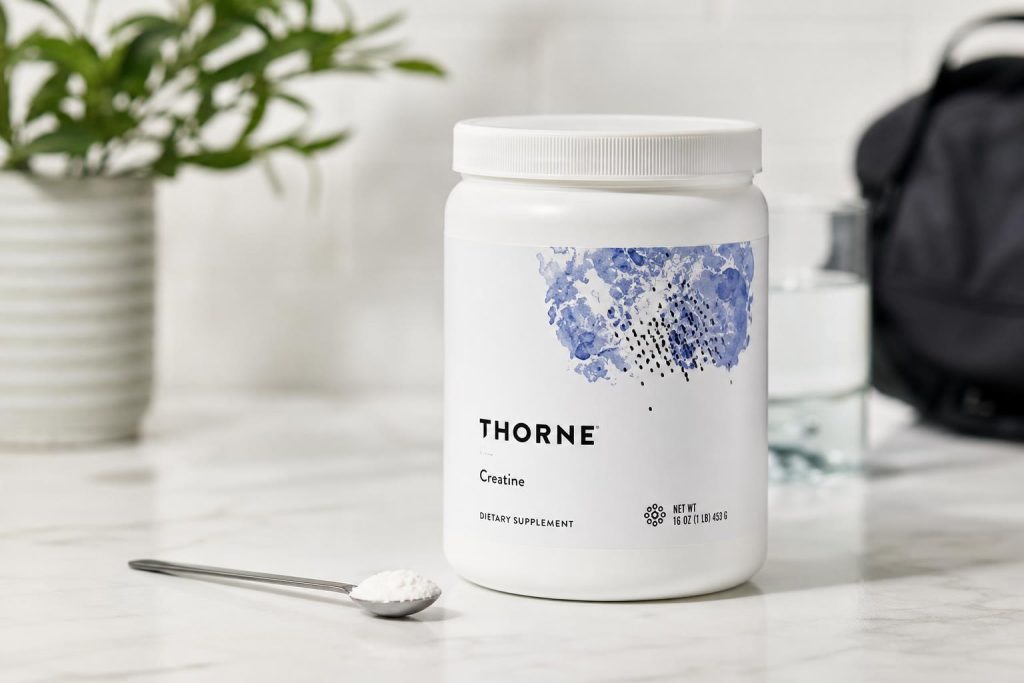
Creatine is one of the most studied performance supplements in existence. With over three decades of peer-reviewed research behind it, its ability to increase strength, support muscle mass, and enhance high-intensity output is essentially settled science. A 2017 position statement from the International Society of Sports Nutrition concluded that creatine monohydrate is the most effective ergogenic nutritional supplement available for increasing high-intensity exercise capacity and lean body mass. The question most men are now asking isn’t whether to take creatine — it’s which brand actually delivers what it promises on the label.
That’s where Thorne enters the conversation. In a market flooded with products making identical claims, Thorne has built a reputation for manufacturing rigor that most supplement companies simply don’t match. But reputation alone doesn’t fill a scoop. Here’s a detailed look at what Thorne Creatine actually is, how it’s made, what the third-party testing means in practice, and whether the premium price tag holds up under scrutiny.
What’s Actually Inside the Bottle
Thorne Creatine is a straightforward creatine monohydrate powder — no proprietary blends, no added sugars, no artificial flavors or fillers. Each serving delivers five grams of creatine monohydrate, which aligns with the dosing range consistently used in clinical research. Research published in the Journal of Athletic Training found that daily supplementation with three to five grams of creatine monohydrate effectively saturates muscle creatine stores without requiring a loading phase, making this dose both evidence-based and practical for long-term daily use.
The creatine Thorne uses is CreaPure, a German-manufactured creatine monohydrate produced by AlzChem Trostberg GmbH. This is a meaningful distinction. CreaPure is synthesized through a patented process that results in exceptionally high purity — typically 99.9% pure creatine monohydrate — with minimal levels of byproducts like creatinine, dicyandiamide, and dihydrotriazine, which are common impurities found in lower-quality creatine sourced from unvetted manufacturers. The raw material source matters considerably in a supplement category where the difference between a reputable and a disreputable product can come down entirely to what’s happening in the synthesis stage.
Thorne also manufactures its products in facilities that are NSF Certified for Sport and compliant with pharmaceutical-grade cGMP (current Good Manufacturing Practices) standards. This means the facilities undergo regular audits, equipment calibration, and contamination testing that go well beyond what the FDA requires of most dietary supplement manufacturers. For men who compete in tested sports or who simply want to know that their supplement contains exactly what the label says — nothing more, nothing less — this matters.
Third-Party Testing: What It Actually Means
The phrase “third-party tested” gets thrown around loosely in the supplement industry, so it’s worth being precise about what Thorne actually submits to. Thorne products are certified by NSF International through the NSF Certified for Sport program, which is one of the most rigorous and respected certification systems in the industry. A study published in the Journal of the International Society of Sports Nutrition found that a significant percentage of commercially available supplements contain unlabeled ingredients or inaccurate label claims — a problem that third-party certification programs like NSF specifically exist to address.
NSF Certified for Sport tests for over 270 substances banned by major athletic organizations including WADA, the NFL, MLB, and the NCAA. It also verifies that the product contains the ingredients listed on the label at the stated amounts, and that there are no undisclosed ingredients or unsafe levels of heavy metals and contaminants. This isn’t a rubber stamp — it’s an independent verification process conducted on actual production batches, not just a one-time facility review.
For the average man using creatine to support his training, the practical implication is this: when you open a container of Thorne Creatine, you are getting five grams of high-purity creatine monohydrate per serving, free from the heavy metal contamination and adulterants that have been documented in cheaper alternatives. Research analyzing creatine supplements found detectable levels of creatinine and other synthesis byproducts in numerous commercial products, with quality varying dramatically by country of manufacture and production process. Thorne’s sourcing from CreaPure eliminates most of this risk at the raw material stage, before any manufacturing even begins.
It’s also worth noting that Thorne is one of the few supplement companies that publishes Certificates of Analysis (COAs) for its products and maintains a transparent manufacturing infrastructure. This level of documentation is standard in pharmaceutical manufacturing but rare in the supplement world. Men who want to verify what they’re putting in their bodies — rather than simply trusting a label — can actually do so with Thorne in a way that isn’t possible with most other brands.
Performance, Dosing, and Who Benefits Most
The performance case for creatine is not subtle. A 2021 meta-analysis in the Journal of Strength and Conditioning Research confirmed that creatine supplementation significantly increases maximal strength, power output, and lean mass across a wide range of training protocols and populations. Effects are most pronounced in compound strength movements, sprint-based conditioning work, and any training that relies on the phosphocreatine energy system — which includes nearly everything in a serious gym program.
For men focused on body composition specifically, creatine provides an important advantage that often gets oversimplified. The lean mass gains associated with creatine aren’t just water weight retained in muscle cells — though that does occur initially. Research published in Medicine and Science in Sports and Exercise demonstrated that creatine supplementation combined with resistance training produces significantly greater gains in fat-free mass compared to training alone, suggesting a genuine anabolic stimulus beyond simple hydration effects. For men trying to hold onto or build muscle while in a caloric deficit, that’s a meaningful edge.
Dosing with Thorne Creatine is simple. Five grams daily, taken consistently, is all that’s needed. Timing is largely irrelevant — the research doesn’t support a strong advantage for pre- versus post-workout timing as long as daily intake is maintained. Mixing with water, a protein shake, or even just a glass of juice works equally well. Thorne’s unflavored powder dissolves cleanly without the gritty residue that some cheaper creatine products leave behind, which is a minor but genuine quality-of-life benefit for daily use.
Men who may benefit most from prioritizing a product like Thorne over a generic discount option include competitive athletes subject to drug testing, men who’ve had previous reactions to lower-quality supplements, and anyone who wants consistency in their supplement stack without the guesswork. If you’re already eating well, training hard, and being strategic about what you put in your body, using a cut-rate creatine sourced from an unverified manufacturer doesn’t make a lot of sense.
The Takeaway
Thorne Creatine isn’t revolutionary — it’s creatine monohydrate, and creatine monohydrate doesn’t need to be reinvented. What Thorne has done is execute on the fundamentals with a level of manufacturing integrity and third-party oversight that most of the market simply doesn’t match. CreaPure sourcing, NSF Certified for Sport status, pharmaceutical-grade manufacturing facilities, and transparent documentation combine to make this one of the most trustworthy options in a product category that genuinely matters for performance and body composition. For men who take their training seriously enough to care what they’re actually consuming, the premium over a generic tub is worth paying.