Whey Protein Isolate for Muscle Preservation: Evidence-Based Review for GLP-1 Users
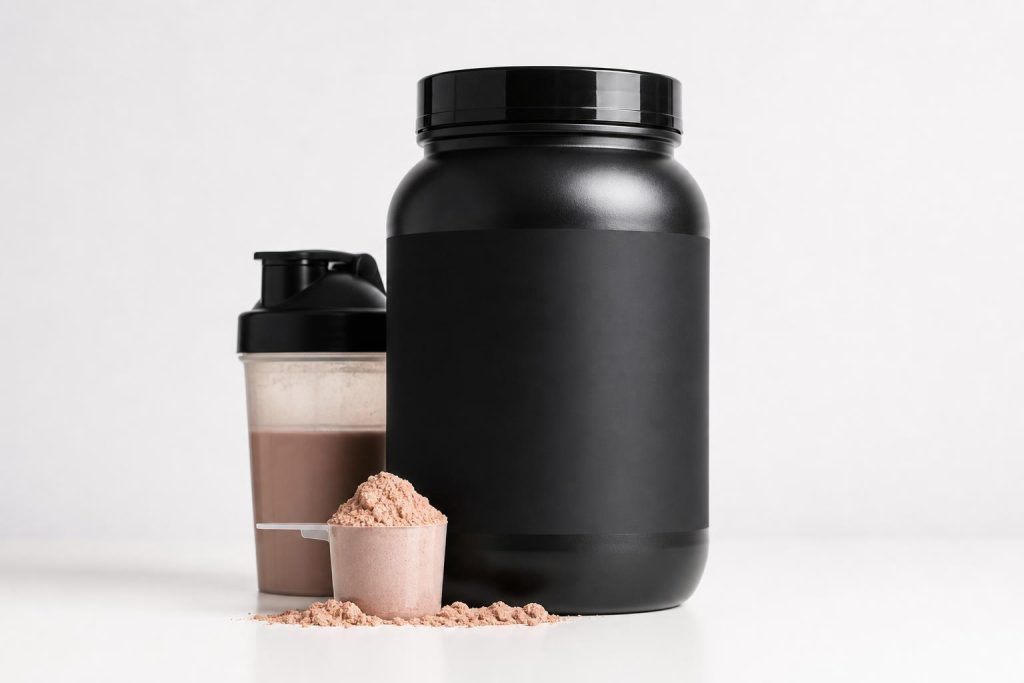
If you’re using GLP-1 medications like semaglutide or tirzepatide for metabolic health and weight loss, you’ve likely experienced one critical challenge: muscle loss during the caloric deficit. While these medications are powerful tools for fat loss, they create an environment where your body can catabolize lean tissue alongside fat—a risk that demands proactive nutritional intervention.
Research shows that whey protein isolate (WPI) effectively preserves muscle mass and strength during resistance training, making it one of the most evidence-backed supplements for GLP-1 users pursuing body recomposition. This guide breaks down the science and gives you actionable protocols.
Why Muscle Preservation Matters on GLP-1 Therapy
GLP-1 medications suppress appetite and accelerate fat loss—but they don’t discriminate between fat and muscle. Sarcopenia (age-related muscle loss) becomes a compounding risk when combined with caloric restriction, especially if protein intake falls below optimal levels.
On GLP-1s, your appetite is already suppressed. Many users struggle to consume enough total protein because eating feels difficult. This is where whey protein isolate becomes non-negotiable: it delivers high-quality amino acids in small, manageable volumes—perfect when appetite is compromised.
The stakes: Losing 10% of your muscle mass while on GLP-1 means you’ll regain fat faster when you transition off the medication and metabolic adaptation occurs. Strategic protein supplementation prevents this metabolic setback.
Whey Protein Isolate vs. Other Protein Sources: The Science
Not all protein is equal for muscle preservation. Whey protein isolate contains the full spectrum of essential amino acids (EAAs), with particularly high levels of leucine—the amino acid that directly triggers mTOR signaling and muscle protein synthesis.
Clinical studies on whey protein isolate demonstrate superior effects on strength gains and body composition when combined with resistance training compared to carbohydrate controls or lower-quality protein sources.
WPI also has practical advantages for GLP-1 users:
- Fast absorption: Leucine peaks in ~30 minutes, stimulating immediate protein synthesis
- Low volume: You get 25-30g protein in 6-8 oz liquid or shake—easier than eating chicken on a suppressed appetite
- Low calorie density: 120-130 kcal per serving with negligible carbs/fat (isolate form)
- Gut-friendly: Isolate removes lactose, which matters when GI tolerance is variable
Plant-based alternatives exist, but research continues to demonstrate that animal-derived proteins like whey offer superior amino acid profiles and bioavailability for muscle preservation—a critical distinction when you’re in a deficit.
Practical Protocol: WPI Dosing & Timing for GLP-1 Users
Daily protein target: On GLP-1 therapy with resistance training, aim for 1.6–2.2g per kg of body weight daily. For a 180 lb (82 kg) person, that’s 130–180g total protein.
WPI dosing strategy:
- Morning shake: 30g WPI + 8 oz unsweetened almond milk + greens (fast, appetite-friendly)
- Post-workout: 25–30g WPI within 1–2 hours of resistance training (maximizes MPS window)
- Flexible meal: Use WPI to bridge gaps between whole-food meals when appetite limits intake
Practical tip for GLP-1 users: Space protein intake throughout the day rather than loading one meal. On reduced appetite, 4–5 smaller doses (20–30g each) work better than 2–3 large meals.
Timing considerations: Unlike myths suggesting a “2-hour anabolic window,” the research window is broader—aim for protein distribution across waking hours. Post-resistance training intake (especially with carbs) does provide measurable benefit, but consistency matters more than perfect timing.
Common Questions GLP-1 Users Ask
Q: Will WPI suppress my appetite further?
A: Liquid protein causes less satiety than whole foods because it’s absorbed faster. This is a feature for GLP-1 users—you get amino acids without the fullness that prevents eating enough total calories and nutrients.
Q: Do I need WPI if I’m only doing cardio?
A: Whey’s muscle-preserving effects are most pronounced during resistance training. If you’re primarily cardio-focused on GLP-1, adequate total protein (1.2–1.6g/kg) matters, but WPI becomes less critical.
Q: Best time to start WPI on GLP-1?
A: Immediately. Start WPI supplementation the same week you begin GLP-1 therapy to establish a protective protein baseline before fat loss accelerates.
Q: Can I use WPI with other peptides (like BPC-157 or TB-500)?
A: Yes. Whey provides baseline amino acid support while peptides work on recovery/adaptation. They’re complementary, not competitive. Just ensure total protein intake remains in the 1.6–2.2g/kg range.
Bottom Line: WPI as Your Muscle Insurance on GLP-1
Whey protein isolate isn’t a magic supplement—but it’s evidence-backed insurance against muscle loss during the most aggressive phase of your metabolic transformation. When combined with consistent resistance training, WPI preserves strength and body composition, directly supporting your long-term success on GLP-1 therapy.
Action items:
- Choose a whey protein isolate (not concentrate)—brands like Optimum Nutrition Gold Standard or Isopure have strong third-party testing
- Aim for 130–180g total daily protein (adjust for your body weight)
- Distribute protein across 4–5 meals/shakes, spacing them 3–4 hours apart
- Pair WPI with resistance training 3–4x weekly for maximal muscle preservation
- Track weekly weigh-ins and body composition—you should see fat loss with stable/increasing strength
Muscle preservation is the hidden metric of successful GLP-1 use. Lose the fat, keep the muscle, and you’ve optimized your metabolic health for life.
Want to maximize your GLP-1 results? Explore our complete guides on GLP-1 nutrition protocols, resistance training on metabolic medications, and peptide stacking for body recomposition. Learn how to structure your entire protocol for fat loss + muscle gain.
Scientific References
-
Hayes, Cribb et al. (2008).
Effect of whey protein isolate on strength, body composition and muscle hypertrophy during resistance training..
Current opinion in clinical nutrition and metabolic care.
View on PubMed → -
Beasley, Shikany, Thomson et al. (2013).
The role of dietary protein intake in the prevention of sarcopenia of aging..
Nutrition in clinical practice : official publication of the American Society for Parenteral and Enteral Nutrition.
View on PubMed → -
Cannito, Ivetac, Fiotti et al. (2026).
Sustaining Muscle, Cardiovascular Health, and the Environment: Is Plant-Based Protein the Key?.
Nutrients.
View on PubMed →