Protein Per Meal for Muscle Synthesis: Research-Backed Dosing for GLP-1 Users
Protein Per Meal for Muscle Synthesis: Research-Backed Dosing for GLP-1 Users
If you’re using GLP-1 medications like semaglutide or tirzepatide, you already know the challenge: suppressed appetite makes it harder to eat enough protein to preserve muscle during weight loss. But here’s what the research shows: the amount of protein you consume per meal matters as much as your daily total.
Recent evidence suggests protein intakes well above current recommendations are necessary to optimize muscle preservation and metabolic health. For GLP-1 users in a caloric deficit, getting this right isn’t just about hitting 1.6-2.2g per kilogram of body weight daily—it’s about strategic meal timing and per-meal dosing to maximize muscle protein synthesis (MPS) when your appetite is naturally suppressed.
This guide breaks down the science of per-meal protein dosing and how to apply it effectively while on GLP-1 therapy.
The Per-Meal Protein Threshold: What Research Actually Shows
Most people focus on daily protein totals. But research emphasizes that the amount of protein consumed with each meal is critical for stimulating myofibrillar protein synthesis—the process that builds and maintains muscle fibers.
Here’s the practical finding: there’s a threshold. Below it, you don’t maximize muscle-building stimulus. Above it, additional protein provides diminishing returns per meal.
The Research Standard: For younger, healthy adults (ages 18-40), studies show approximately 20-30g of high-quality protein per meal effectively stimulates myofibrillar protein synthesis. This translates to roughly 0.24-0.3g per kilogram of body weight per meal.
For Older Adults and GLP-1 Users: research indicates older individuals (65+) require slightly higher per-meal protein intakes—closer to 0.4g per kilogram of body weight—to achieve the same degree of muscle protein synthesis stimulation. If you’re over 50 using GLP-1 medication, this is critical: your appetite suppression combined with age-related anabolic resistance means you need to be more intentional about protein distribution.
Practical Example:
- Person weighing 90kg (198 lbs) under 40: aim for 22-27g protein per meal (minimum)
- Person weighing 90kg over 50: aim for 36-40g protein per meal (minimum)
- Person weighing 70kg (154 lbs) under 40: aim for 17-21g protein per meal
Why does this matter for GLP-1 users? Because smaller, more frequent meals that still hit the per-meal threshold preserve muscle better than trying to cram all protein into one or two large meals when your appetite is naturally suppressed.
Protein Distribution Strategy: Maximizing Muscle on GLP-1
Emerging evidence supports distributing protein consistently across meals throughout the day rather than front-loading or back-loading intake. This becomes even more important on GLP-1 therapy, where you’re eating less overall.
The Why: Muscle protein synthesis occurs throughout the day. Every time you exceed the per-meal threshold, you trigger a window of protein synthesis that lasts 4-6 hours. Multiple threshold-crossing meals = multiple synthesis windows = better net muscle preservation during a caloric deficit.
Sample Daily Protocol (for a 90kg person under 40):
- Breakfast: 25g protein (2-3 whole eggs + Greek yogurt or protein powder)
- Mid-Morning Snack: 25g protein (protein shake or cottage cheese)
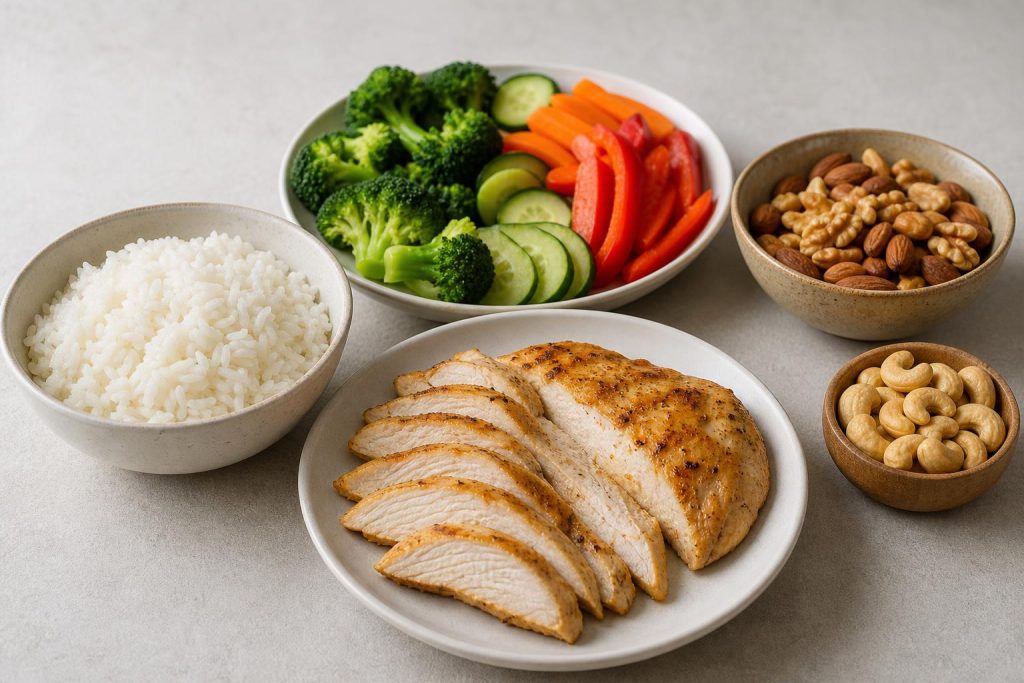
- Lunch: 30-35g protein (4-5oz chicken/fish + carbs)
- Afternoon Snack: 20-25g protein (protein bar, beef jerky, or shake)
- Dinner: 30-35g protein (5-6oz lean meat + carbs)
- Total: ~135-150g protein across 5 meals, each exceeding the synthesis threshold
For GLP-1 users struggling with volume: protein powder becomes your secret weapon. A 30g scoop in water or unsweetened almond milk is easier to consume when appetite-suppressed than whole foods, yet still triggers the full muscle synthesis response.
High-Quality Protein: Not All Protein Stimulates Equally
Ranking by MPS Effectiveness:
- Whey protein isolate: 2.5-3g leucine per 25g serving (fastest, most research-backed)
- Chicken/turkey breast: ~2.2g leucine per 25g serving
- Beef: ~2.0g leucine per 25g serving
- Fish: ~1.8-2.1g leucine per 25g serving
- Eggs: ~1.5g leucine per 25g serving
- Plant proteins alone: Lower leucine, requires larger serving sizes to match animal protein synthesis response
For GLP-1 Users: Leucine is the trigger amino acid that activates mTOR signaling—the pathway that initiates protein synthesis. If you’re eating less volume, prioritize leucine-dense sources. This means whey protein isolate, chicken, and beef are superior choices compared to plant proteins alone when appetite is limited.
Vegetarian? Mix plant proteins (legumes, soy, hemp) with dairy (Greek yogurt, cottage cheese) to boost leucine content per meal.
Protein Timing Around Training: Maximizing the Adaptation Window
Evidence-Based Protocol for GLP-1 Users:
- Pre-Workout (30-60 min before): 15-20g protein + carbs (easier to digest given GLP-1 impact on gastric emptying)
- Post-Workout (within 2 hours): 25-35g protein + 20-40g carbs (this is your most important protein meal)
- Remaining meals: 20-25g protein each, spread 3-4 hours apart
Why post-training matters: Your muscles are primed for protein uptake. The combination of training stimulus + protein intake + carbs (for insulin spike) creates a supercharged window for muscle protein synthesis. This is where you extract the most adaptation from your training while losing fat.
For GLP-1 users specifically: If you struggle to eat immediately post-workout, a whey isolate shake (30g protein, 35g carbs, minimal fat) is ideal—it bypasses volume concerns and digests quickly despite any GLP-1-related gastric slowing.
Overcoming GLP-1 Appetite Suppression: Practical Protein Strategies
The biggest challenge: getting adequate per-meal protein when you’re genuinely not hungry. Standard advice (“just eat more”) doesn’t work with GLP-1 medications.
High-Compliance Protein Strategies:
- Protein powder (whey isolate): 30g in 12-16oz water or unsweetened beverage. Easiest caloric density, minimal volume. Bonus: research-proven MPS response.
- Greek yogurt + granola: 20-25g protein, high satiety but easier to consume than whole meals
- Cottage cheese: 14g protein per half cup, neutral flavor, mixes with fruit easily
- Deli turkey/chicken breast: Pre-sliced, minimal prep, hits 25g per 3-4oz portion
- Canned fish (tuna, salmon): 20-25g protein per can, ready-to-eat
- Beef jerky/biltong: Concentrated protein, portable, satisfying without volume
- Collagen peptides + coffee/tea: 10g protein per scoop, nearly invisible, aids with satiety (bonus: some research suggests improved body composition during deficit)
Critical Timing Hack: Consume protein early in the day when appetite is typically less suppressed. Many GLP-1 users find morning appetite less affected than evening appetite. Front-load your threshold-meeting meals early, then use smaller protein snacks (shakes, jerky) for later meals.
Bottom Line: The Per-Meal Protein Framework for GLP-1 Success
Here’s what the research tells us:
- You need 20-40g of high-quality protein per meal (depending on age and body weight) to maximize muscle protein synthesis. It’s not just about daily totals.
- Distribute protein across multiple meals rather than concentrating it in one or two large meals—this creates multiple synthesis windows and better preserves muscle during deficit.
- Prioritize leucine-rich, high-quality sources (whey, chicken, beef) especially when eating less volume on GLP-1.
- Make post-training your most important protein meal—this window drives adaptation and body recomposition.
- Use protein powder strategically to hit targets when whole-food volume becomes impossible on GLP-1 therapy.
GLP-1 medications are powerful tools for weight loss, but without strategic protein intake—and specifically, hitting per-meal thresholds—you risk losing muscle alongside fat. The research is clear: getting this right transforms your results from simple weight loss to true body recomposition: fat loss + muscle preservation + improved metabolic health.
Your next step: Calculate your per-meal protein target based on your weight and age, then audit your current meal structure. Are you consistently hitting the threshold at each meal? If not, identify which meals are falling short and add high-quality protein sources. For most GLP-1 users, this simple shift—from focusing on daily totals to per-meal targets—is the missing piece in preserving muscle while losing fat.
Want to optimize your entire GLP-1 protocol? Explore our comprehensive guides on GLP-1 and muscle preservation strategies, evidence-based nutrition protocols for semaglutide users, and training programming while in caloric deficit. Your body recomposition journey depends on getting all three right.
Scientific References
-
Phillips, Chevalier, Leidy et al. (2016).
Protein “requirements” beyond the RDA: implications for optimizing health..
Applied physiology, nutrition, and metabolism = Physiologie appliquee, nutrition et metabolisme.
View on PubMed → -
Sims, Kerksick, Smith-Ryan et al. (2023).
International society of sports nutrition position stand: nutritional concerns of the female athlete..
Journal of the International Society of Sports Nutrition.
View on PubMed → -
Witard, Hearris, Morgan et al. (2025).
Protein Nutrition for Endurance Athletes: A Metabolic Focus on Promoting Recovery and Training Adaptation..
Sports medicine (Auckland, N.Z.).
View on PubMed → -
Paddon-Jones, Rasmussen et al. (2009).
Dietary protein recommendations and the prevention of sarcopenia..
Current opinion in clinical nutrition and metabolic care.
View on PubMed → -
Moore, Churchward-Venne, Witard et al. (2015).
Protein ingestion to stimulate myofibrillar protein synthesis requires greater relative protein intakes in healthy older versus younger men..
The journals of gerontology. Series A, Biological sciences and medical sciences.
View on PubMed →