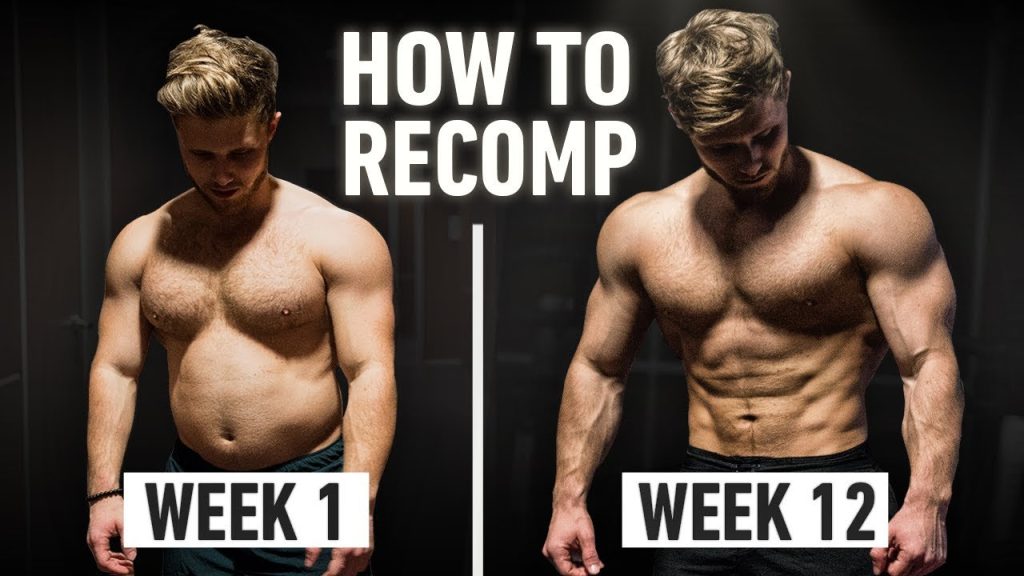
Video by Jeff Nippard on YouTube
Here is a number worth knowing: a single bout of resistance exercise can stimulate muscle protein synthesis for up to 48 hours post-workout, according to research published in the American Journal of Physiology. That means even a well-structured bodyweight squat session — no barbell, no rack, no gym — is capable of triggering the biological machinery that preserves and builds muscle tissue. The question is whether you’re using that tool correctly, or leaving results on the table by treating squats as a warmup rather than a workout.
For men focused on fat loss, metabolic health, or simply holding onto hard-earned muscle during a caloric deficit, bodyweight squat progressions deserve far more respect than they typically receive. When programmed intelligently, they provide a scalable, joint-friendly, and surprisingly demanding training stimulus that translates directly to the muscle retention goals most men are chasing.
Why Muscle Retention Should Be Your First Priority
Most conversations about fat loss lead with the diet. That’s reasonable — nutrition drives the caloric deficit that makes fat loss possible. But what often gets overlooked is that the training variable, specifically resistance training, determines how much of the weight you lose comes from fat versus muscle. A 2017 meta-analysis in Obesity Reviews confirmed that resistance training during a caloric deficit significantly attenuates lean mass loss compared to dieting alone, preserving the metabolic rate and physical capacity that make long-term success sustainable.
The lower body accounts for roughly 60 percent of your total muscle mass. The quadriceps, glutes, hamstrings, and calves aren’t just aesthetic targets — they are your primary metabolic engines. Preserving them matters whether you’re deep into a weight loss phase, recovering from an injury, traveling without gym access, or rehabbing after a prolonged sedentary period. Bodyweight squats, when taken through a proper progression, load these muscles sufficiently to trigger an adaptive response. Research in the Journal of Strength and Conditioning Research found that lower extremity exercises performed to muscular failure — even with light loads — produce comparable hypertrophic outcomes to heavy loading, provided sufficient mechanical tension and metabolic stress are achieved.
The practical implication is simple: if you can make the movement hard enough, the body doesn’t distinguish between a barbell squat and a pistol squat in terms of the muscle-building signal it generates. Your job is to create that difficulty through intelligent progression rather than added weight.
The Progression Framework That Actually Works
A bodyweight squat progression that supports muscle retention isn’t a random collection of harder variations. It’s a structured continuum where each phase builds the mechanical demand on the target musculature, while also developing the motor control and range of motion required for the next stage. Think of it as loading through leverage and stability rather than through plates.
The entry point for most men is the standard parallel squat — feet shoulder-width, toes slightly flared, descending until the thighs are roughly parallel to the floor. If this feels too easy, the temptation is to move directly to a harder variation. Resist that. Instead, manipulate tempo first. Lowering for three to four seconds, pausing at the bottom for two seconds, and returning to standing under control dramatically increases time under tension — a key driver of hypertrophy according to work published in the European Journal of Applied Physiology. A set of ten slow, paused squats recruits significantly more motor units and produces greater metabolic stress than twenty fast repetitions with no control.
From there, progression moves through several meaningful stages. The elevated heel squat shifts load toward the quadriceps by mimicking a narrower ankle range of motion — useful for men with limited dorsiflexion and for targeting the vastus medialis specifically. The Bulgarian split squat, performed with the rear foot elevated, introduces unilateral loading that effectively doubles the demand per leg while challenging hip stability and core control simultaneously. This variation is a genuine equalizer: most men who squat 200 pounds will find a bodyweight Bulgarian split squat immediately humbling. Once single-leg strength and control are established, the natural progression leads toward the pistol squat — a full unilateral squat to depth that demands extraordinary strength-to-bodyweight ratio, mobility, and proprioception. Studies examining single-leg squat mechanics confirm high quadriceps and gluteal activation comparable to barbell squats at moderate loads, making it a legitimate strength and hypertrophy tool.
Volume matters as much as variation. For muscle retention during a deficit, aim for three to four sets per exercise, targeting the eight to fifteen repetition range for bilateral movements and the five to ten range for unilateral variations where load is inherently higher. Training each movement pattern two to three times per week aligns with evidence suggesting that higher training frequency produces superior hypertrophic outcomes for natural trainees compared to once-weekly exposure. Rest periods of ninety seconds to two minutes between sets preserve the metabolic stress that contributes to the anabolic environment — shorter than a powerlifting template, longer than a cardio circuit.
Nutrition underpins everything. No squat variation will preserve muscle in the absence of adequate protein intake. Research from the British Journal of Nutrition supports a target of 1.6 to 2.2 grams of protein per kilogram of bodyweight per day for men in a caloric deficit engaged in resistance training. Distribute that intake across three to four meals, prioritizing leucine-rich sources — eggs, lean beef, chicken, Greek yogurt, whey — that robustly stimulate muscle protein synthesis at each feeding. Men who neglect protein and rely solely on the training stimulus to preserve muscle will always fall short. The combination is what creates the outcome.
The Takeaway
Bodyweight squat progressions are not a consolation prize when the gym isn’t available. They are a complete, evidence-supported system for building and retaining lower body muscle across virtually any training context. The key is treating them with the same intentionality you’d bring to a barbell program: progressive overload through tempo, variation, and volume, backed by consistent protein intake and sufficient training frequency. Move through the continuum — from tempo squats to split squats to pistol progressions — and you’ll find that the absence of external load is far less limiting than the absence of a plan. Your quads, glutes, and long-term metabolism will reflect the difference.