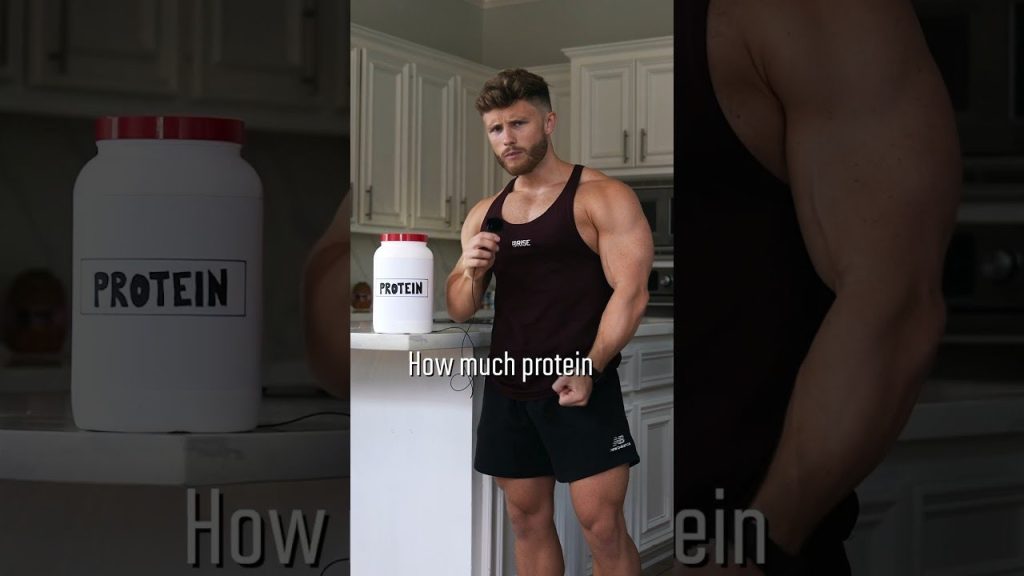
Video by Jeff Nippard on YouTube
Most men treat stretching as an afterthought — something to rush through before the real work begins, or skip entirely on the way out of the gym. But the research tells a different story. A 2011 study published in the Journal of Human Kinetics found that post-exercise static stretching significantly reduced delayed-onset muscle soreness (DOMS) and improved perceived recovery in active men. More recent work has expanded on this, showing that consistent flexibility training doesn’t just ease soreness — it actively modulates the inflammatory response to exercise, accelerates tissue repair, and may even preserve muscle fiber integrity under high training loads. Whether you’re pushing hard in the gym, managing your weight through diet and exercise, or using GLP-1 medications as part of a broader metabolic health strategy, recovery isn’t optional. It’s where adaptation actually happens.
The physiology is worth understanding before you commit to any routine. When you train — whether lifting, running, or doing high-intensity intervals — you create microtears in muscle fibers and trigger a local inflammatory cascade. This is normal and necessary. The problem is when recovery is inadequate: inflammation becomes chronic, muscle tissue stiffens, range of motion decreases, and the next training session suffers for it. Stretching works on multiple levels here. It reduces mechanical tension in the myofascia, increases blood and lymphatic flow to healing tissue, and signals the nervous system to downregulate the fight-or-flight tone that hard training elevates. Research published in Frontiers in Physiology demonstrated that stretching acutely decreases sympathetic nervous system activity and promotes parasympathetic tone — essentially shifting your body from a catabolic stress state into an anabolic recovery state. That’s not a small benefit. That’s the entire game.
Understanding the Types of Stretching — and When Each One Earns Its Place
Not all stretching is created equal, and applying the wrong type at the wrong time can actually impair performance or slow recovery. The three most relevant categories for men focused on training and body composition are static stretching, dynamic stretching, and proprioceptive neuromuscular facilitation (PNF).
Dynamic stretching — controlled, rhythmic movements that take joints through their full range of motion — belongs before your training session. Hip circles, leg swings, arm crossovers, and thoracic rotations elevate tissue temperature, increase synovial fluid distribution in the joints, and prime the neuromuscular system for the work ahead. A meta-analysis in the Scandinavian Journal of Medicine and Science in Sports confirmed that dynamic warm-up protocols improve subsequent power output and reduce injury risk more effectively than static stretching performed pre-workout — an important distinction, because static stretching before heavy lifting can transiently reduce force production if held too long.
Static stretching — holding a position for 20 to 60 seconds — is best deployed after training or on dedicated recovery days. This is the cornerstone of post-exercise flexibility work. It targets the passive mechanical properties of muscle and connective tissue, progressively increasing the tissue’s tolerance to length over time. For the best results, hold each stretch at the point of mild tension (not pain), breathe slowly, and allow the tissue to relax into greater range over the duration of the hold. Research suggests that holding static stretches for at least 30 seconds produces greater flexibility gains than shorter durations, and that multiple sets provide additional benefit.
PNF stretching — which typically involves a contract-relax cycle where you isometrically contract the target muscle before passively stretching it — is arguably the most effective method for acute and long-term range of motion gains. Studies show PNF techniques produce superior flexibility improvements compared to static or ballistic methods, likely due to autogenic inhibition — a reflexive relaxation of the muscle after it contracts. While PNF typically requires a partner or a strap, it’s worth incorporating into your weekly routine at least once or twice, especially for notoriously tight areas like the hamstrings, hip flexors, and posterior shoulder capsule.
Building Your Post-Workout Stretching Routine: The Practical Blueprint
The most effective recovery stretching routine doesn’t need to be long — but it does need to be consistent and targeted. Fifteen to twenty minutes after your training session is the sweet spot. Tissue is warm, pliable, and receptive. Your nervous system is transitioning out of high arousal. This is the window where stretching delivers the most return on investment.
Start with the hip flexors. For any man who trains lower body or spends hours at a desk, chronic hip flexor tightness is nearly universal. A deep kneeling lunge stretch, held for 45 to 60 seconds per side, targets the iliopsoas and rectus femoris — muscles that, when shortened, anteriorly tilt the pelvis and compress the lumbar spine. This single stretch, done consistently, can dramatically improve squat mechanics and reduce lower back tension.
Move from there to the hamstrings. Standing or seated hamstring stretches held for 30 to 60 seconds address one of the primary sites of post-training stiffness in men who lift or run. Follow that with a figure-four glute stretch for the piriformis and deep hip rotators — structures that frequently become overactive and restrictive in men with heavy training loads. From the floor, a supine spinal twist and a doorframe chest-and-bicep stretch round out the lower and upper body in a natural sequence that takes less than 20 minutes total.
For men using GLP-1 receptor agonists like semaglutide or tirzepatide as part of their weight loss approach, stretching carries some additional relevance worth noting. As body weight decreases — sometimes rapidly — joints and connective tissue adapt to new loading patterns. Maintaining or improving range of motion during significant weight loss helps the musculoskeletal system transition more smoothly, reducing the risk of joint discomfort and improving exercise tolerance. Moreover, because GLP-1 medications often reduce appetite and total caloric intake, protein synthesis may be constrained — making every element of the recovery process, including parasympathetic activation via stretching, more critical for preserving lean mass. This isn’t unique to GLP-1 users, of course: any man in a sustained caloric deficit should treat recovery with the same seriousness as training.
Dedicated recovery days — two per week for most active men — should expand the stretching routine and incorporate additional modalities. Foam rolling before you stretch has meaningful support in the literature: a 2015 study in the Journal of Athletic Training found that foam rolling post-exercise attenuated DOMS and maintained muscle performance better than no treatment, and combined with static stretching, the effects compounded. Roll slowly — 30 to 60 seconds per muscle group — pausing on tender points before moving into your static stretches.
Sleep is also a recovery modality, and stretching directly influences it. Research has shown that bedtime stretching routines improve sleep quality in adults, likely through the parasympathetic activation and cortisol reduction mentioned earlier. Five to ten minutes of gentle static stretching before bed — focusing on the hips, hamstrings, and thoracic spine — can improve sleep onset and depth, which is when the majority of growth hormone release and muscle repair occur. This matters enormously for any man trying to preserve or build muscle, regardless of how he’s managing his diet.
The Overlooked Variables: Breathing, Consistency, and Progression
The single most underutilized tool during stretching is controlled breathing. Slow, diaphragmatic breathing — inhaling for four counts, exhaling for six — activates the vagus nerve and deepens the parasympathetic shift that stretching initiates. It also allows you to relax further into each stretch on the exhale, gradually increasing range without triggering the stretch reflex that tightens the muscle defensively. Men who approach stretching the way they approach lifting — forcing range, white-knuckling through tension — consistently get worse results than those who breathe through it. The nervous system responds to perceived threat, and forcing a stretch signals threat. Breathing through it signals safety.
Consistency matters more than duration. Stretching for 15 minutes five days per week produces substantially better long-term flexibility adaptations than a single 60-minute session on Sunday. Evidence from flexibility training studies consistently shows that frequency of exposure drives connective tissue adaptation — collagen remodeling is a slow process that responds to repeated low-grade stimulus rather than occasional high-intensity effort. This makes stretching uniquely well-suited to being integrated into existing habits: three minutes of hip flexor work before your morning coffee, a 10-minute floor routine after dinner. The bar to entry is low; the long-term payoff is not.
Finally, treat flexibility like you treat strength: track it and progress it. Mark your starting range of motion for key movements — can you touch your toes? Can you reach your arms overhead without your lower back arching? — and reassess monthly. Progressive overload applies to flexibility training just as it applies to resistance training. As your range improves, deepen the stretch, add PNF cycles, or incorporate more challenging positions like a deep squat hold or a pigeon pose. The goal is a body that not only performs in the gym but moves freely, recovers efficiently, and remains functional and pain-free for decades.
The Takeaway
Stretching is one of the most evidence-supported, lowest-barrier recovery interventions available to men — and one of the most consistently neglected. The research is clear: regular flexibility work reduces DOMS, supports parasympathetic recovery, improves sleep, maintains joint health during fat loss, and compounds meaningfully over time. You don’t need a dedicated session every day or a yoga studio membership. You need 15 purposeful minutes after training, a couple of foam-rolling recovery days per week, and the discipline to breathe through the discomfort rather than fight it. Build that habit, and your training will compound. Skip it, and eventually your body will make the decision for you.