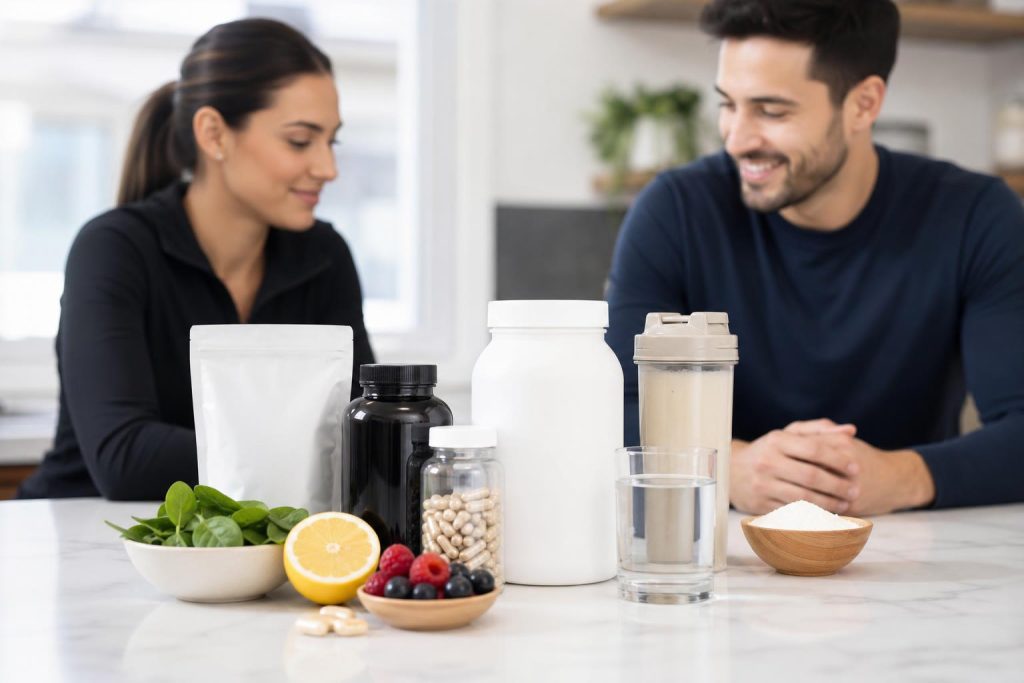
The GLP-1 drug craze has millions of men wondering whether they can get similar metabolic benefits without a prescription. Semaglutide and tirzepatide have dominated headlines, but their cost and side effects have fueled a booming market for so-called “natural GLP-1 supplements” — products claiming to mimic or boost the same hunger-suppressing, blood-sugar-stabilizing hormone. The honest answer? Some natural compounds genuinely influence GLP-1 secretion. But the magnitude is nowhere near what an injectable delivers, and understanding the difference matters if you want real results.
GLP-1 (glucagon-like peptide-1) is an incretin hormone released by L-cells in your small intestine in response to eating. It signals satiety to your brain, slows gastric emptying, and triggers insulin release — all mechanisms that support fat loss and metabolic health. Research published in Diabetes Care confirmed that GLP-1 secretion is heavily influenced by diet composition and specific nutrients, which is where natural supplementation enters the picture.
What Natural Compounds Actually Stimulate GLP-1
Berberine is the most studied candidate. This plant alkaloid, derived from barberry and goldenseal, has shown consistent ability to improve insulin sensitivity and support modest GLP-1 secretion. A 2010 trial in Metabolism found berberine improved glycemic control comparably to metformin in type 2 diabetics, with researchers noting upregulation of GLP-1 receptor signaling as a likely mechanism. A typical effective dose runs 500mg taken two to three times daily with meals.
Fiber — specifically soluble, fermentable fiber — is arguably the most underrated GLP-1 tool available to any man without a prescription. When gut bacteria ferment fiber into short-chain fatty acids like butyrate and propionate, those metabolites directly stimulate L-cell secretion of GLP-1. A study in Gut demonstrated that propionate infusion significantly increased GLP-1 and PYY levels, reducing energy intake by roughly 14 percent in healthy adults. Psyllium husk, inulin, and green banana flour are practical sources worth adding to your daily stack.
Protein deserves its place here too. High-protein meals are among the most potent natural triggers of GLP-1 release, which partly explains why higher-protein diets consistently outperform lower-protein approaches for satiety and fat loss. Research in the American Journal of Clinical Nutrition showed that a high-protein diet increased GLP-1 secretion and reduced 24-hour hunger scores significantly compared to a normal-protein control. Whey protein in particular stimulates a rapid GLP-1 response when consumed before or with meals.
Curcumin and resveratrol have also shown preliminary promise. Animal and early human data suggest curcumin may enhance GLP-1 receptor expression and improve beta-cell function, though the evidence base is thinner than berberine or fiber. These compounds are worth including for their broader anti-inflammatory benefits, but you shouldn’t hang your metabolic strategy on them alone.
The Honest Comparison: Supplements vs. Medications
Here’s where you need a reality check. GLP-1 receptor agonist medications like semaglutide produce pharmacological GLP-1 activity that is orders of magnitude greater than anything a supplement can replicate. They work at the receptor level continuously, rather than nudging endogenous secretion episodically. Men using these medications for clinically significant weight loss are not going to replace them with berberine and psyllium. That’s not what natural GLP-1 support is for.
What these compounds genuinely offer is meaningful metabolic support for men who are building their health through diet, training, and lifestyle — which is the foundation regardless of what else you’re doing. Optimizing your natural GLP-1 response through protein intake, fermentable fiber, and targeted supplementation can improve satiety signaling, blunt postprandial glucose spikes, and support the kind of consistent fat loss that compounds over months. For men already on GLP-1 medications, these same strategies may support better tolerability and nutrient partitioning during the weight loss phase.
What This Means For You
No supplement replicates a GLP-1 medication. But several compounds — berberine at 500mg with meals, 10 to 15 grams of fermentable fiber daily, and adequate dietary protein north of 0.7 grams per pound of bodyweight — have legitimate science behind their ability to enhance your body’s own GLP-1 activity. Stack these with resistance training, which independently improves incretin sensitivity, and you have a metabolic foundation that works whether you’re taking a medication or not. The prescription drug is a tool. The lifestyle is the strategy.