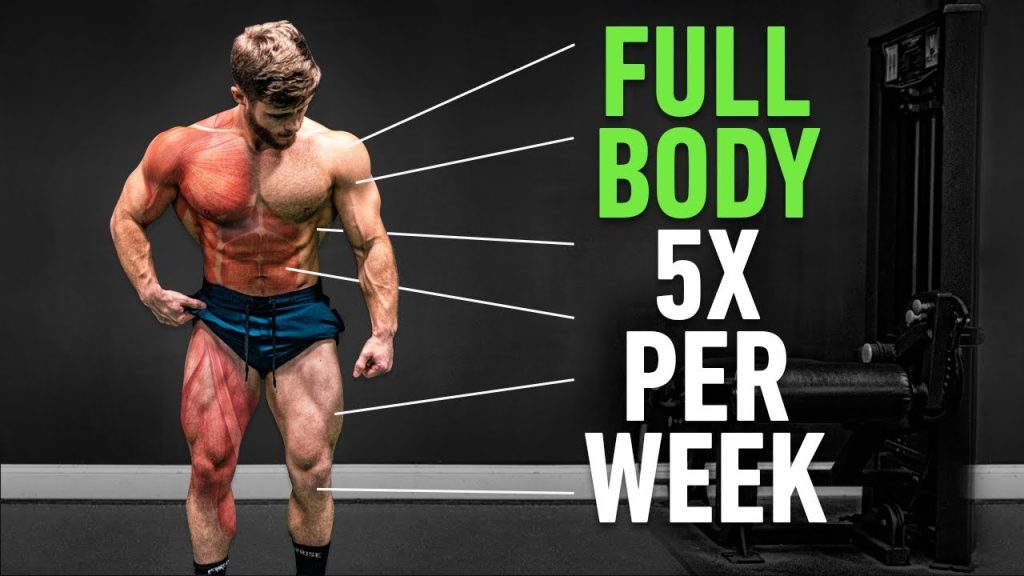
Video by Jeff Nippard on YouTube
Most men who hit the gym consistently still leave results on the table — not because they lack effort, but because they lack structure. Research published in the Journal of Strength and Conditioning Research confirms that structured, periodized training programs produce significantly greater gains in strength and body composition than unplanned workout routines. A 7-day gym workout plan is not about training to exhaustion every day — it’s about engineering the right stimulus, at the right frequency, with enough recovery to actually adapt and improve.
The goal here is simple and universal: build or preserve muscle, burn fat, improve metabolic health, and perform better over time. Whether you’re a seasoned lifter, just getting back in shape, or using every tool available — including nutrition strategies, medications, or supplements — this plan gives you a concrete weekly framework to build real results around.
How the 7-Day Plan Is Structured
This program follows a push-pull-legs split with two active recovery or cardio days and one full rest day woven in. A landmark meta-analysis in the Journal of Strength and Conditioning Research found that training each muscle group twice per week produces superior hypertrophy compared to once-weekly training — the foundation of why a well-designed 7-day split outperforms the old bro-split approach.
Day 1 is push — chest, shoulders, and triceps. You’ll build your session around compound movements first: barbell or dumbbell bench press, overhead press, and dips before moving to isolation work like lateral raises and tricep pushdowns. Day 2 is pull — back and biceps. Deadlifts or Romanian deadlifts anchor this day, followed by barbell or cable rows, pull-ups or lat pulldowns, and finishing with curls. Day 3 is legs — squats, leg press, Romanian deadlifts (if not done on pull day), leg curls, and calf raises. Day 4 is active recovery: a 30-minute low-intensity walk, cycling, or mobility work keeps blood flowing without adding recovery debt. Day 5 repeats push with slightly different exercise variations — incline press instead of flat, Arnold press instead of military. Day 6 repeats pull and adds direct arm work. Day 7 is full rest.
For each working set, aim for 3–4 sets in the 6–12 rep range for hypertrophy, with 2–3 minutes of rest between sets on compound lifts and 60–90 seconds on isolation work. Research from the Journal of Human Kinetics reinforces that moderate rep ranges with controlled progressive overload remain the most efficient pathway to both muscle growth and strength gains for natural athletes.
What to Eat and How to Recover Around This Plan
Training is only as effective as the recovery it triggers. Protein intake is non-negotiable — a comprehensive meta-analysis in the British Journal of Sports Medicine found that dietary protein supplementation significantly augments muscle mass gains during resistance training, with the greatest effects seen at intakes around 1.6 grams per kilogram of body weight per day. For a 200-pound man, that’s roughly 145 grams of protein daily, distributed across meals rather than loaded into one sitting.
Sleep is the underrated variable most men ignore. Studies from the Annals of Internal Medicine demonstrate that sleep restriction dramatically reduces the proportion of weight loss coming from fat while increasing lean mass loss — meaning poor sleep actively sabotages the results of every training session you complete. Seven to nine hours is the non-negotiable target. Progressive overload — adding weight, reps, or sets incrementally over time — is the mechanism that forces adaptation. Track your lifts. What gets measured gets improved.
The Takeaway
A 7-day gym workout plan works because it removes guesswork and replaces it with intention. You know what you’re training, when you’re training it, and why. The push-pull-legs structure, grounded in the science of muscle protein synthesis and weekly volume, gives every major muscle group the frequency it needs to grow while building in the recovery that makes growth possible. Show up consistently, eat enough protein, sleep like it’s your job, and add weight to the bar over time. That’s the formula — and it works regardless of what else you have going on with your health journey.