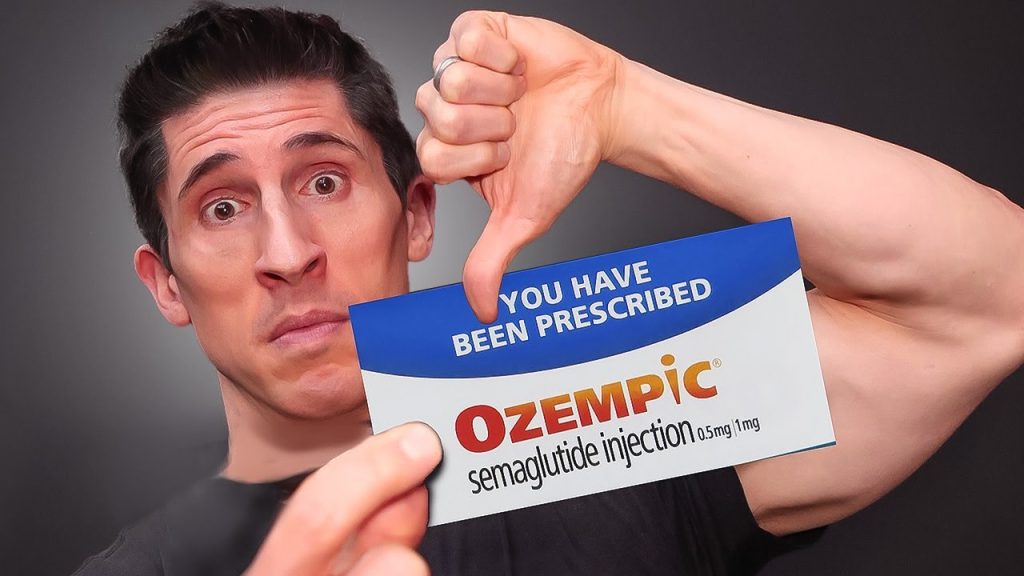
Video by AthleanX on YouTube
Most men hear “GLP-1” and immediately think of a weekly injection. But glucagon-like peptide-1 — the gut hormone that slows gastric emptying, curbs appetite, and signals satiety to the brain — isn’t something your body has to get from a pharmacy. Your gut produces it every time you eat. The real question is whether your diet is giving it the right signals. The Global Burden of Disease Study 2023 made clear that high BMI and elevated fasting plasma glucose now rank among the top five risk factors driving disability and lost years of life worldwide — and it specifically named GLP-1 receptor agonists as part of the solution. But the same report emphasized that healthier diets and physical activity are the foundational intervention. Before you ever consider a prescription, there’s a powerful case to be made for eating your way to better GLP-1 function.
This isn’t a workaround or a consolation prize for men who can’t access medication. It’s a legitimate metabolic strategy, grounded in the same physiology that makes the drugs work in the first place. When you understand what GLP-1 does — and what food-based inputs drive its release — you can build a diet plan that puts that system to work without a single injection.
What GLP-1 Actually Does and Why Your Diet Matters
GLP-1 is secreted primarily by L-cells in the small intestine and colon in response to food. Once released, it does several things that every man trying to lose fat or build a better body would want: it slows the rate at which food leaves your stomach, reduces appetite by acting on the hypothalamus, stimulates insulin secretion in a glucose-dependent manner, and suppresses glucagon to prevent blood sugar spikes. The net effect is that you feel fuller longer, eat less without suffering for it, and manage blood sugar more efficiently.
The pharmaceutical versions — semaglutide, liraglutide, tirzepatide — work by mimicking or extending these signals. A 2025 study in Cell Metabolism examining tirzepatide’s mechanisms found that beyond appetite suppression and calorie reduction, the drug increased fat oxidation — meaning the body shifted toward burning fat as its preferred fuel. That metabolic shift is meaningful. But what the study also revealed is that tirzepatide’s effects on energy expenditure were largely driven by the caloric deficit it created, not some magical alteration of the metabolic rate itself. In other words, the machinery is the same. The question is how well you can activate it through food.
Certain nutrients are potent natural GLP-1 secretagogues. Dietary protein — particularly from eggs, fish, and lean meat — triggers robust GLP-1 release. Fermentable dietary fiber, found in oats, legumes, chicory root, and green bananas, feeds gut bacteria that produce short-chain fatty acids, which in turn stimulate L-cell secretion. Healthy fats, especially long-chain fatty acids from olive oil and fatty fish, also activate GLP-1 pathways. Polyphenol-rich foods like berries, dark chocolate, and green tea appear to enhance GLP-1 sensitivity over time. The practical upshot: a diet built around whole protein sources, fiber-dense carbohydrates, and quality fats is functionally working the same levers as a GLP-1 medication — just with less magnitude and more reliance on consistency.
Building the Plan: What to Eat, When, and Why It Works
The architecture of a GLP-1-optimizing diet isn’t complicated, but it does require intentionality. Start with protein. Aim for at least 0.7 to 1.0 grams per pound of body weight daily, distributed across meals rather than loaded into one sitting. High-protein meals have been shown to extend satiety and reduce subsequent caloric intake — effects that run through GLP-1 and other satiety hormones like peptide YY. Prioritizing protein at breakfast is especially effective: it blunts appetite for hours and reduces the likelihood of compensatory overeating later in the day.
Fiber is the second pillar, and most men fall drastically short. The target is 30 to 40 grams per day from whole food sources — not a fiber supplement dumped into a protein shake, but actual plant matter that your gut microbiome can ferment. Legumes like lentils, black beans, and chickpeas are among the most potent sources. Resistant starch — found in cooked-and-cooled potatoes, unripe bananas, and whole oats — is particularly valuable because it travels intact to the colon, where it feeds the bacteria most responsible for GLP-1-stimulating short-chain fatty acid production. Add leafy greens, cruciferous vegetables, and berries, and you’ve built a gut environment that is actively working to support satiety hormones around the clock.
Meal timing and structure matter more than most men realize. Eating slowly allows GLP-1 to rise before you’ve already overeaten — the hormone takes roughly 15 to 20 minutes to peak after food reaches the intestine. Eating your largest meals earlier in the day aligns with circadian patterns of insulin sensitivity and GLP-1 secretion, which are both highest in the morning. Front-loading calories is not a bro-science strategy; it’s supported by metabolic research showing better glucose control and improved hormonal signaling when meals are aligned with the body’s natural rhythm. Minimizing ultra-processed foods, refined grains, and added sugars isn’t just about calories — these foods blunt the gut’s hormonal signaling machinery and contribute to the kind of metabolic dysfunction that makes GLP-1 resistance worse over time.
Hydration also plays a supporting role. Drinking water before and during meals physically distends the stomach, which enhances vagal signals to the brain that overlap with the satiety cascade. It’s a small lever, but in a system where multiple small levers add up to meaningful change, it earns its place.
Exercise Is Not Optional — It’s Part of the Protocol
No honest discussion of a GLP-1-activating lifestyle plan can ignore exercise. A 2026 secondary analysis published in Sports Medicine from the S-LITE randomized controlled trial found that exercise — not liraglutide alone — drove clinically meaningful improvements in cardiorespiratory fitness and functional performance in adults with obesity. Liraglutide preserved relative muscle strength (because of the weight lost), but exercise was the variable that actually moved the needle on VO2 peak and physical capacity. The combination of both was superior to either alone — but exercise without medication still outperformed medication without exercise on nearly every fitness metric.
For men following a food-first GLP-1 strategy, this means structured exercise isn’t a supplement to the diet plan — it’s a co-equal component. Resistance training two to four times per week preserves and builds muscle during a caloric deficit, maintains metabolic rate, and improves insulin sensitivity in ways that amplify the dietary interventions above. Cardiovascular training — whether zone 2 endurance work or higher-intensity intervals — independently improves gut hormone signaling and reduces visceral adipose tissue, the metabolically active fat that most aggressively disrupts metabolic health.
The same S-LITE trial found that diet-induced weight loss improved sperm concentration and count in men with obesity by nearly 50 percent — and that these gains were maintained at one year only in men who kept the weight off through exercise or GLP-1 therapy. The message cuts both ways: losing fat matters for men’s hormonal and reproductive health, and keeping it off requires a sustained strategy. Exercise and a well-structured diet are not the less-effective alternatives to medication. For most men, they are the primary tools.
The AACE/ACE comprehensive clinical practice guidelines on obesity make this explicit: intensive lifestyle intervention — combining dietary modification, physical activity, and behavioral strategies — forms the evidence-based foundation of obesity management regardless of whether pharmacotherapy is added. The guidelines rate lifestyle intervention at their highest evidence level, and the research base behind it is enormous.
The Takeaway
A GLP-1 diet plan without medication isn’t a compromise — it’s a complete metabolic strategy. Build your meals around high-quality protein, fermentable fiber, and whole-food fats. Eat slowly, front-load your calories, and eliminate the processed foods that blunt gut hormone signaling. Add structured resistance training and cardiovascular exercise as non-negotiable components, not afterthoughts. The biology here is real: you are activating the same hormonal pathways that make GLP-1 medications effective, using the inputs your gut was designed to respond to. It takes more consistency and less convenience than an injection — but the men who build this foundation aren’t just managing their weight. They’re rebuilding their metabolic health from the ground up.
Scientific References
-
Garvey, Mechanick, Brett et al. (2016).
AMERICAN ASSOCIATION OF CLINICAL ENDOCRINOLOGISTS AND AMERICAN COLLEGE OF ENDOCRINOLOGY COMPREHENSIVE CLINICAL PRACTICE GUIDELINES FOR MEDICAL CARE OF PATIENTS WITH OBESITY..
Endocrine practice : official journal of the American College of Endocrinology and the American Association of Clinical Endocrinologists.
View on PubMed → -
Ravussin, Sanchez-Delgado, Martin et al. (2025).
Tirzepatide did not impact metabolic adaptation in people with obesity, but increased fat oxidation..
Cell metabolism.
View on PubMed → -
Andersen, Juhl, Kjøller et al. (2022).
Sperm count is increased by diet-induced weight loss and maintained by exercise or GLP-1 analogue treatment: a randomized controlled trial..
Human reproduction (Oxford, England).
View on PubMed → -
Unknown Authors (2025).
Burden of 375 diseases and injuries, risk-attributable burden of 88 risk factors, and healthy life expectancy in 204 countries and territories, including 660 subnational locations, 1990-2023: a systematic analysis for the Global Burden of Disease Study 2023..
Lancet (London, England).
View on PubMed → -
Jensen, Fiorenza, Juhl et al. (2026).
Physical Fitness with Exercise and GLP-1 Receptor Agonist Treatment Alone or Combined After Diet-Induced Weight Loss: A Secondary Analysis of a Randomized Controlled Trial in Adults with Obesity..
Sports medicine (Auckland, N.Z.).
View on PubMed →