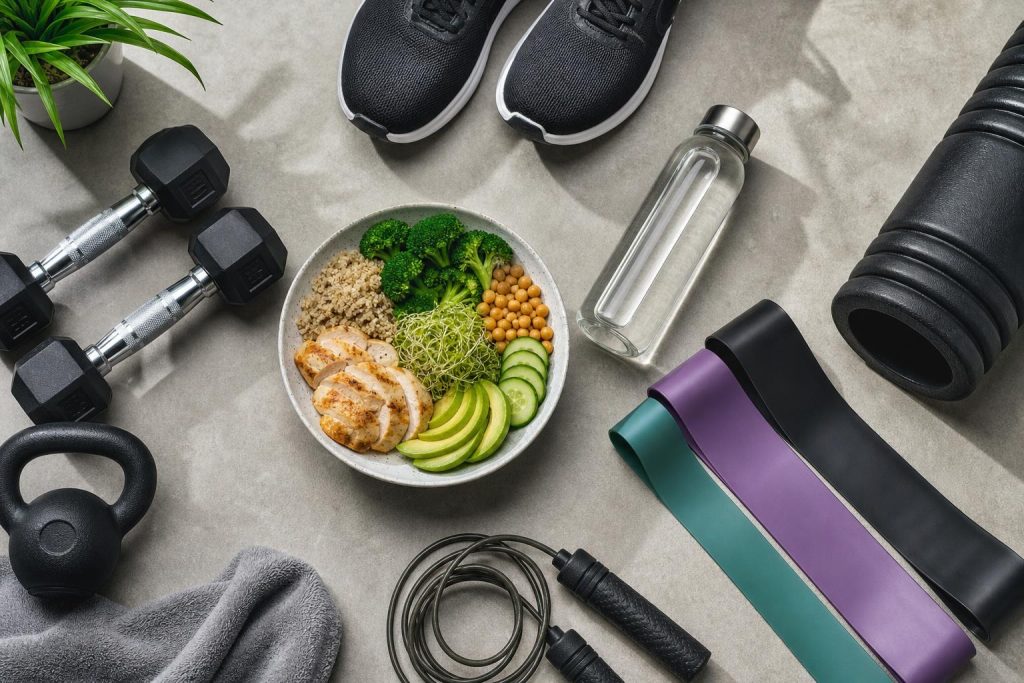
Here’s something that surprises most men who start a GLP-1 medication like semaglutide or liraglutide: the drug does the easy part. It curbs your appetite, slows gastric emptying, and makes it genuinely easier to eat less. What it doesn’t do — and what the research is now making crystal clear — is protect your muscle, improve your fitness, or make you metabolically resilient. That requires a deliberate diet and training strategy running alongside the medication. And if you’re not on a GLP-1 at all, the same principles apply just as powerfully.
A 2026 randomized controlled trial published in Sports Medicine put this into sharp focus. Researchers led by Jensen, Fiorenza, Juhl and colleagues studied 193 adults with obesity across exercise-only, liraglutide-only, combined, and placebo groups during a weight maintenance phase following diet-induced weight loss. The liraglutide-only group saw no meaningful improvement in cardiorespiratory fitness and experienced a decline in relative muscle strength of about one percent — essentially the medication moved the scale without building a better body underneath it. The exercise group and the combined group, by contrast, saw dramatically better outcomes: peak oxygen consumption improved by 3.0 mL/min/kg of fat-free mass in the combined group compared to liraglutide alone, and relative muscle strength in the combined group came in at positive 3.3 percent versus a negative 7.8 percent in the placebo group. The message is unambiguous — structured effort is non-negotiable.
Building a Diet That Protects Muscle While You Lose Fat
Whether you’re using a GLP-1 medication or simply running a disciplined calorie deficit, the dietary challenge is identical: eat little enough to lose fat, but not so little — or so poorly — that you sacrifice lean tissue. GLP-1 medications create a particular vulnerability here because they suppress appetite so effectively that some men end up eating 800 to 1,000 calories a day without even trying. At that intake level, muscle loss is almost guaranteed unless protein intake is aggressively prioritized.
The target that consistently holds up in the research is between 0.7 and 1.0 grams of protein per pound of bodyweight daily — or roughly 1.6 to 2.2 grams per kilogram. For a 200-pound man, that means landing somewhere between 140 and 200 grams of protein every day, even on the days appetite feels nonexistent. Practically, this means anchoring every meal around a dense protein source first: eggs, Greek yogurt, cottage cheese, chicken breast, salmon, lean beef, or a high-quality protein shake when solid food feels like too much. Protein is thermogenic, highly satiating per calorie, and the primary nutritional signal for muscle protein synthesis — it earns its macronutrient throne at every meal.
Beyond protein, total calorie depth matters more than any specific dietary ideology. Keto, Mediterranean, low-carb, whole food plant-based — any of these frameworks can produce excellent results when protein is adequate and calories support a moderate deficit of around 300 to 500 calories per day. Men on GLP-1 medications may need to consciously build their meals rather than simply responding to hunger cues, because those cues have been pharmacologically suppressed. Meal prepping or scheduling two to three protein-forward eating windows daily — even if the portions feel small — is a practical solution that prevents the inadvertent starvation that undoes months of progress.
Micronutrient density deserves equal attention. When overall food volume drops, so does the intake of vitamins, minerals, and electrolytes. Prioritizing nutrient-dense foods — leafy greens, colorful vegetables, legumes, fatty fish — and considering a high-quality multivitamin and omega-3 supplement as insurance against deficiency is simply smart practice during any fat-loss phase.
The Exercise Strategy That Makes the Difference
The Jensen et al. trial didn’t use a casual gym routine. Participants in the exercise arms trained at a median of 2.65 sessions per week, clocking around 116 minutes weekly at 79 percent of maximum heart rate — that’s genuine moderate-to-vigorous intensity work, not leisurely walks. And that intensity is what drove the separation in outcomes. Cardiorespiratory fitness improved meaningfully. Functional performance — measured by a stair climb test — improved by 8.6 percent in the combined group. These are not cosmetic changes; they are health-span changes.
For men focused on fat loss and muscle preservation, the optimal weekly training structure combines resistance training with cardiovascular conditioning. Resistance training two to four days per week, built around compound movements — squats, deadlifts, rows, presses, lunges — is the primary driver of muscle retention during a deficit. Progressive overload, meaning gradually increasing weight, volume, or intensity over time, is the stimulus that tells your body muscle is worth keeping even when calories are restricted. Skipping the gym while cutting is one of the most common and costly mistakes men make, regardless of whether a medication is involved.
Cardiovascular training complements this by improving insulin sensitivity, accelerating fat oxidation, and — as the trial data confirms — preserving and improving the cardiorespiratory fitness that directly predicts long-term mortality risk. Zone 2 cardio, performed at a conversational pace for 30 to 45 minutes two or three times per week, is sustainable and effective for most men. Higher-intensity intervals can be layered in for those with the recovery capacity and training background to handle them.
One practical note for GLP-1 users specifically: reduced appetite can mean reduced energy for training. If workouts feel flat, experimenting with a small carbohydrate-containing snack — fruit, rice cakes, oats — in the hour before training can restore performance without meaningfully disrupting the overall calorie deficit.
The Takeaway
GLP-1 medications are a legitimate and effective tool, but the 2026 Sports Medicine trial makes clear they are not a complete solution on their own. Pharmacotherapy alone did not improve fitness. It did not preserve relative muscle strength. It moved weight — and that weight included muscle. The men who came out of that trial stronger, fitter, and metabolically healthier were the ones who exercised alongside the medication or instead of it. The diet plan that works for maximum fat loss and muscle preservation is not complicated: prioritize protein at every meal, maintain a moderate calorie deficit, train with weights consistently, and add meaningful cardiovascular work. That formula holds whether you’re injecting semaglutide weekly or simply committed to doing the work. The medication may change the appetite environment — but the strategy remains the same.
Scientific References
-
Jensen, Fiorenza, Juhl et al. (2026).
Physical Fitness with Exercise and GLP-1 Receptor Agonist Treatment Alone or Combined After Diet-Induced Weight Loss: A Secondary Analysis of a Randomized Controlled Trial in Adults with Obesity..
Sports medicine (Auckland, N.Z.).
View on PubMed →