In 2024, a landmark phase 2 clinical trial published in The New England Journal of Medicine quietly changed the conversation around GLP-1 receptor agonists. Researchers studying lixisenatide — a GLP-1 medication typically prescribed for type 2 diabetes — found that participants with early Parkinson’s disease who received the drug showed virtually no progression in motor disability over 12 months, while the placebo group worsened by more than 3 points on the standard motor disability scale. wasn’t designed to cure Parkinson’s, but what it revealed was something neuroscientists had suspected for years: GLP-1 receptor signaling has profound effects on the brain, not just the pancreas.
For the growing number of men using GLP-1 medications like semaglutide or tirzepatide — and for those who simply want to optimize brain health through diet, training, and lifestyle — this research opens a critical question. If GLP-1 activity can slow neurodegeneration in one of the most devastating brain diseases known to medicine, what does that mean for everyday cognitive performance, mental clarity, mood, and long-term brain resilience? And more practically: what should you be eating, supplementing, and doing to support your brain while your metabolic health is under construction?
This guide answers those questions with specificity — for GLP-1 users and for every man serious about protecting the organ that runs everything else.
Why GLP-1 Receptors Matter Far Beyond Blood Sugar
Most men first encounter GLP-1 in the context of appetite suppression and weight loss. The mechanism is real and clinically significant — GLP-1 receptor agonists slow gastric emptying, reduce hunger signals from the gut, and improve insulin sensitivity in ways that create meaningful, sustained fat loss. But framing GLP-1 purely as a weight-loss mechanism is like describing the ocean as a place to get your feet wet.
GLP-1 receptors are distributed throughout the central nervous system, including regions governing memory, executive function, dopamine regulation, and inflammatory response. In the Parkinson’s trial, lixisenatide’s suspected mechanism wasn’t hormonal — it was neuroprotective. The drug appeared to reduce neuroinflammation and support dopaminergic neuron survival, effects that had previously been demonstrated in animal models. The fact that motor scores held essentially flat in the treatment group — while placebo patients deteriorated — and that this difference was still measurable two months after stopping the drug, suggests a structural rather than purely symptomatic effect on brain tissue.
This matters for men on GLP-1 medications because the brain benefits may be part of the package. It also matters for men who aren’t on GLP-1 medications, because the nutritional and lifestyle strategies that upregulate endogenous GLP-1 secretion — the GLP-1 your gut produces naturally — are well within reach and carry many of the same downstream effects. Fermentable fiber, protein-rich meals, polyphenol-dense foods, and resistance training all stimulate endogenous GLP-1 release. You don’t need a prescription to activate this system partially. The medication amplifies the signal; smart nutrition and training build the infrastructure.
Emerging research is also exploring the gut-brain axis through the lens of bioactive peptides. suggests that dietary compounds — including those found in fermented foods, aged proteins, and mushrooms — interact with neuroendocrine pathways in ways that influence immune regulation and potentially neuroprotection. The science here is early but directionally consistent: what you eat sends biochemical signals to your brain, and some of those signals look remarkably similar to what GLP-1 receptor activation produces.
The Nutritional Architecture of a Brain-Protective Diet
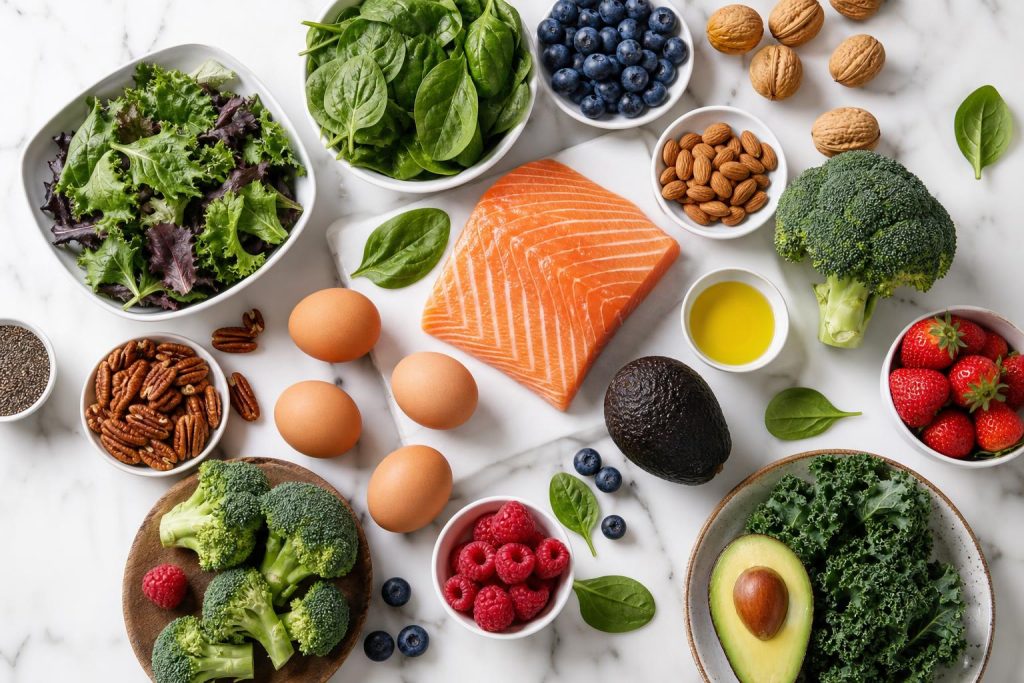
If GLP-1 receptor activity supports neuroprotection, then the diet that best supports brain health on these medications — or without them — is one that simultaneously reduces neuroinflammation, fuels neuronal energy metabolism, provides the raw materials for neurotransmitter synthesis, and promotes the gut conditions that stimulate endogenous GLP-1 release. That’s a specific set of requirements, and they translate into concrete food choices.
Omega-3 fatty acids, particularly DHA and EPA from marine sources, are non-negotiable. DHA is structurally incorporated into neuronal cell membranes and is essential for synaptic plasticity — the cellular mechanism underlying learning and memory. Multiple randomized controlled trials have linked higher omega-3 intake with reduced markers of neuroinflammation, improved processing speed, and lower rates of cognitive decline. For men on GLP-1 medications who may be eating significantly less food overall due to appetite suppression, fatty fish like salmon, mackerel, and sardines become even more critical. Eating less means nutrient density must go up proportionally. Aim for two to three servings of fatty fish per week minimum, or supplement with a high-quality fish oil providing at least 1,000 mg of combined EPA and DHA daily.
Protein is the second pillar, and not just for muscle preservation — though that matters enormously on any caloric deficit, including GLP-1-induced ones. The amino acid tyrosine is the precursor to dopamine and norepinephrine, both of which regulate mood, drive, and executive function. Tryptophan is the precursor to serotonin. Glycine supports GABAergic signaling and sleep architecture, which is when the brain’s glymphatic system clears metabolic waste products, including the amyloid and tau proteins implicated in Alzheimer’s disease. Men should target a minimum of 1.6 grams of protein per kilogram of body weight daily — closer to 2.0 grams if training hard — prioritizing complete animal proteins alongside strategic plant sources like tempeh, edamame, and lentils that also deliver fermentable fiber.
That fermentable fiber component deserves its own attention. Gut microbiome diversity correlates with both metabolic health and cognitive function through the gut-brain axis — a bidirectional communication network involving the vagus nerve, immune signaling, and neurotransmitter production. Approximately 90 percent of the body’s serotonin is synthesized in the gut. Short-chain fatty acids produced by gut bacteria fermenting fiber — particularly butyrate — cross the blood-brain barrier and exert anti-inflammatory and neuroprotective effects. Foods rich in prebiotic fiber include Jerusalem artichokes, garlic, leeks, green bananas, and oats. Fermented foods like kimchi, kefir, sauerkraut, and miso add live cultures that modulate microbiome composition. For men on GLP-1 medications, who already experience changes in gastric motility and gut signaling, maintaining microbiome diversity isn’t optional — it’s foundational to both tolerance and long-term benefit.
Polyphenols are the third major category most men underestimate. These plant compounds — found in blueberries, dark chocolate, green tea, olive oil, pomegranate, and red wine in modest amounts — have demonstrated the ability to cross the blood-brain barrier and directly reduce oxidative stress and neuroinflammation. Flavonoids in particular have been associated with improved cerebral blood flow and enhanced memory performance in clinical studies. Incorporating a wide variety of deeply colored plant foods isn’t just general health advice — it’s a targeted brain-protection strategy. The more diverse the polyphenol sources, the broader the neuroprotective coverage.
Micronutrients round out the architecture. Magnesium, found in pumpkin seeds, dark leafy greens, and dark chocolate, is required for over 300 enzymatic reactions including those governing neuroplasticity and stress response regulation. B vitamins — particularly B6, B12, and folate — are essential for homocysteine metabolism; elevated homocysteine is an independent risk factor for cognitive decline and is particularly relevant for men on restrictive diets. Zinc and vitamin D both modulate inflammatory pathways in the brain and are frequently suboptimal in men who train hard and eat in a caloric deficit. For GLP-1 users eating significantly reduced food volumes, a high-quality multivitamin alongside targeted supplementation becomes a practical necessity rather than an optional add-on.
Lifestyle Factors That Amplify Brain Protection
Nutrition provides the substrate, but lifestyle behaviors determine how effectively that substrate is used. Resistance training stands out as the single most well-supported behavioral intervention for brain health in men. It raises BDNF — brain-derived neurotrophic factor — a protein that promotes neuronal survival, supports the growth of new neurons in the hippocampus, and enhances synaptic connectivity. BDNF has been called the brain’s fertilizer, and its decline with age tracks closely with cognitive deterioration. Three to four sessions of progressive resistance training per week, combined with two sessions of moderate cardiovascular activity, appears to maximize BDNF output based on current evidence. For men on GLP-1 medications, resistance training is also essential for preserving lean muscle mass during weight loss — making it doubly important, both for body composition and for neural health.
Sleep quality is where most men fall short, and the consequences for brain health are severe and rapidly accumulating. The glymphatic system — the brain’s waste clearance network — operates predominantly during deep slow-wave sleep, flushing out neurotoxic proteins that accumulate during waking hours. Chronic sleep restriction of even one to two hours per night significantly impairs this process and accelerates the accumulation of amyloid plaques. For men using GLP-1 medications, sleep may also influence medication tolerability and appetite regulation. Prioritizing seven to nine hours of quality sleep, managing light exposure in the evenings, and keeping consistent sleep-wake timing are not soft recommendations — they are clinical interventions with measurable effects on brain structure and function over time.
Stress management through structured practices — whether that’s controlled breathing, meditation, cold exposure, or simply deliberate time in nature — reduces cortisol chronicity, which is directly toxic to the hippocampus at elevated sustained levels. High chronic stress shrinks the hippocampus and degrades working memory. Managing it systematically is part of any serious brain health protocol.
What This Means For You
The 2024 lixisenatide trial was a phase 2 study — preliminary by design, requiring larger confirmation. But it pointed a spotlight at something the research has been building toward for years: GLP-1 receptor activation is a neuroprotective signal, and how you support that signal through nutrition, training, and lifestyle determines the real-world outcome. Whether you’re using a GLP-1 medication or not, the dietary framework is the same — high-quality protein, omega-3-rich fatty fish, fermentable fiber, diverse polyphenols, and targeted micronutrient coverage. The training is the same. The sleep is the same.
If you are on a GLP-1 medication, understand that eating less doesn’t mean you need less nutrition — it means you need to be more deliberate about every bite. The men who get the most out of these medications, metabolically and neurologically, are the ones who treat the reduced appetite as an opportunity to optimize quality rather than simply reduce quantity. Feed your brain like it’s doing the most important work of your life — because it is.
Scientific References
-
Meissner, Remy, Giordana et al. (2024).
Trial of Lixisenatide in Early Parkinson’s Disease..
The New England journal of medicine.
View on PubMed → -
Hemmati, Mohagheghzadeh et al. (2026).
The NeuroImmunoEndocrine Circuit of Umami Peptides: A Systems Biology Approach..
Nutrients.
View on PubMed →