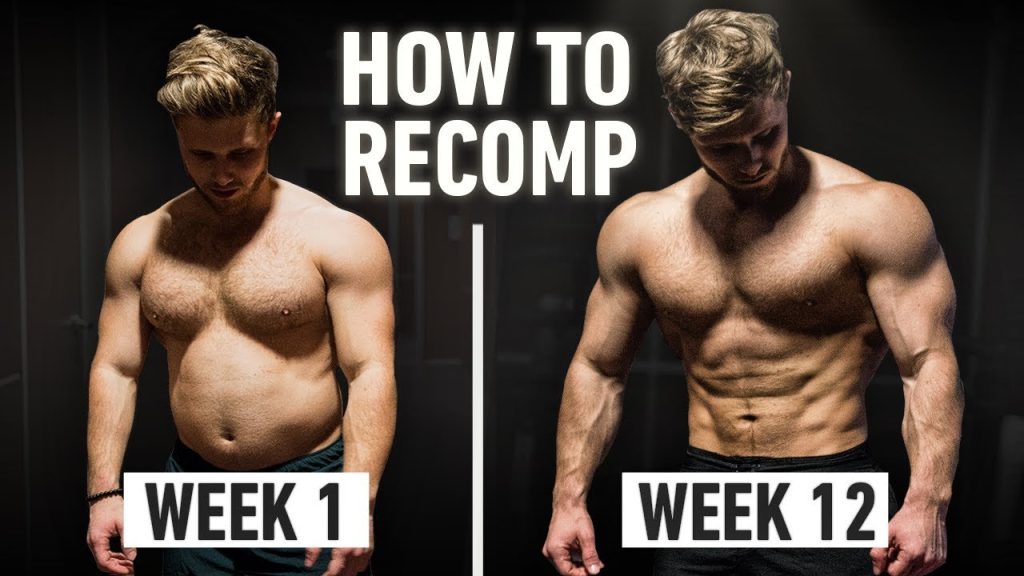
Video by Jeff Nippard on YouTube
Here’s a fact that should change how you approach GLP-1 therapy: in a landmark 2021 study published in Obesity, participants who lost weight through caloric restriction alone lost roughly 39% of that weight from lean muscle mass — not just fat. For men on semaglutide or tirzepatide, where appetite suppression can be dramatic and caloric intake drops sharply, this risk is very real. The medication handles the hunger. Strength training handles the muscle. Without both working together, you’re not getting the full picture.
This isn’t only a GLP-1 story, though. Any man in a caloric deficit — whether through medication, disciplined eating, or a combination of approaches — faces the same physiological challenge: the body doesn’t distinguish between fat and muscle when it’s running low on fuel. Resistance training is the signal that tells your body to preserve what matters. If you’re brand new to lifting, that signal is even more powerful, because beginners respond to strength training faster and more dramatically than anyone else. The science calls it “newbie gains,” and it’s one of the most underutilized advantages in men’s health.
Why Strength Training Is Non-Negotiable During Weight Loss
Muscle is metabolically expensive tissue. It burns calories at rest, improves insulin sensitivity, and supports nearly every hormonal process that makes a man feel like himself — energy, libido, mood, strength. Research published in Obesity Reviews confirms that resistance training is the primary strategy for attenuating lean mass loss during caloric restriction, and that combining it with adequate protein intake compounds those protective effects significantly.
For GLP-1 users specifically, this matters even more. Semaglutide and tirzepatide suppress appetite aggressively, which means many men are eating far less protein than they realize. A 2023 analysis in Diabetes, Obesity and Metabolism found that GLP-1 receptor agonists reduce overall food intake without selectively preserving protein-rich foods — meaning muscle loss becomes a genuine risk if training and nutrition aren’t structured deliberately. But again, this applies equally to anyone cutting aggressively: the solution is the same regardless of how you got into a deficit.
Strength training also does something no medication or diet alone can replicate — it improves body composition at the structural level. You lose fat and build or maintain muscle simultaneously, which changes how your body looks, moves, and performs. A foundational study in Journal of Applied Physiology demonstrated that resistance training increases muscle protein synthesis by up to 40% above baseline — a response that remains elevated for 24 to 48 hours after a single session. That’s your window. That’s what you’re building when you train.
The Beginner Strength Program: What to Do and How to Do It
The most effective beginner program isn’t complicated — in fact, simplicity is its greatest asset. Beginners don’t need specialization, periodization, or elaborate programming. They need compound movements performed consistently, progressive overload applied gradually, and enough recovery to adapt between sessions. Three full-body workouts per week, spaced roughly 48 hours apart, hits the optimal frequency supported by meta-analysis data showing that training each muscle group twice per week outperforms once-weekly protocols for hypertrophy.
Each session should anchor around four to five compound movements: the squat, hip hinge (deadlift or Romanian deadlift), horizontal push (bench press or push-up), horizontal pull (barbell or dumbbell row), and a vertical pull (lat pulldown or assisted pull-up). These exercises recruit the most muscle mass per movement, stimulate the most hormonal response, and build functional strength that transfers into everyday life. Start with weights that feel manageable for three sets of eight to ten reps — challenging enough that the last two reps require real effort, light enough that your form stays clean throughout.
Progressive overload is the mechanism behind all strength adaptation. A 2009 review in Journal of Strength and Conditioning Research identified progressive overload as the single most important variable in long-term resistance training outcomes. In practice, this means adding five to ten pounds to lower body lifts and two and a half to five pounds to upper body lifts once you can complete all sets and reps with solid technique. Don’t rush this. Beginners who add load too quickly get injured; beginners who add load too slowly stall unnecessarily. Steady and consistent wins.
On the nutrition side, protein intake is the variable that determines whether your training produces results or just fatigue. Current evidence, including a 2017 meta-analysis in British Journal of Sports Medicine, supports a target of 1.6 grams of protein per kilogram of bodyweight per day to maximize muscle protein synthesis — and some data suggests men over 40 or those in aggressive deficits may benefit from pushing closer to 2.0 to 2.2 grams per kilogram. For a 200-pound man, that’s roughly 145 to 200 grams of protein daily. If appetite suppression from GLP-1 medications or restrictive dieting makes hitting that target difficult, a quality whey or casein protein supplement can bridge the gap without requiring large meals.
Rest and recovery are not optional add-ons — they are where adaptation happens. Sleep is when muscle protein synthesis peaks, testosterone is secreted, and cortisol is cleared. Research from the University of Chicago found that sleep restriction reduced anabolic hormone levels and increased muscle-wasting cortisol in men on a caloric deficit — precisely the conditions many men using GLP-1 medications find themselves in. Seven to nine hours per night isn’t a luxury. It’s part of the program.
The Takeaway
GLP-1 medications are a powerful tool, but they work best when they’re part of a larger system. Strength training preserves the muscle that makes fat loss meaningful. Protein keeps your body building instead of breaking down. Sleep and recovery let adaptation happen. Whether you’re on semaglutide, eating in a deficit the old-fashioned way, or just starting your fitness journey for the first time, these principles apply equally. The beginner phase is actually your greatest opportunity — your body responds faster, adapts harder, and builds more efficiently than it ever will again. Start simple, stay consistent, and let the compound interest of progressive overload do its work over months, not weeks.