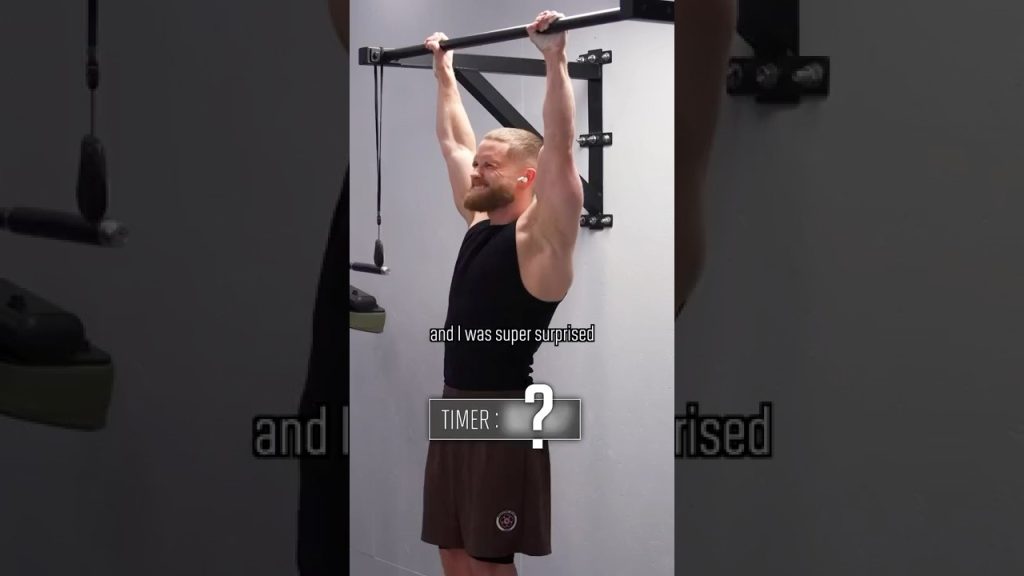
Video by Jeff Nippard on YouTube
Pick up something heavy. Walk with it. Put it down. That’s the farmer’s carry in its entirety — and yet this deceptively simple movement may be one of the most effective tools available for building grip strength, preserving lean muscle mass, and improving total-body functional fitness. A growing body of research confirms what strength coaches have known for decades: loaded carries produce outsized physiological returns for the time invested. Research published in the Journal of Human Kinetics found that grip strength is a significant independent predictor of all-cause mortality, cardiovascular disease risk, and musculoskeletal health — making the farmer’s carry far more than just a gym party trick.
If you’re trying to lose fat, build muscle, slow the aging process, or simply perform better in daily life, the farmer’s carry deserves a permanent spot in your training program. Here’s what the science says, and exactly how to do it right.
Why Grip Strength and Loaded Carries Matter More Than You Think
Grip strength is increasingly recognized as a proxy for overall health and systemic muscle quality. A landmark study published in The Lancet that tracked over 140,000 adults across 17 countries found that each 5 kg decrease in grip strength was associated with a 17% higher risk of cardiovascular mortality and a 16% increased risk of death from any cause. That’s not a trivial correlation — it reflects the deep relationship between muscular integrity, metabolic function, and longevity.
Grip strength also has meaningful implications for muscle preservation. As men age, they begin losing muscle mass at a rate of roughly 1–2% per year after age 30 — a process called sarcopenia. Studies show that handgrip strength decline is one of the earliest and most reliable markers of sarcopenia onset, meaning that maintaining strong hands and forearms is closely tied to preserving lean tissue throughout the body. This matters whether you’re 35 or 65, whether you’re cutting calories aggressively or simply trying to hold onto hard-earned muscle during a fat loss phase.
The farmer’s carry addresses this directly. Unlike isolated forearm curls or grip trainers, the carry creates systemic mechanical tension across the shoulders, traps, core, hips, and legs simultaneously — all while demanding sustained isometric grip effort. This full-body loading stimulus is precisely the kind of training signal that drives muscle protein synthesis and supports lean mass retention. Research on whole-body resistance training confirms that multi-joint, high-tension movements produce superior anabolic hormonal responses compared to single-joint isolation exercises, and the loaded carry qualifies as one of the most functionally complete movements in that category.
How to Do the Farmer’s Carry Correctly
Proper execution is what separates a productive carry from a wasted set — or worse, an injury. The setup begins before you ever leave the ground. Stand between your implements — whether that’s a pair of heavy dumbbells, kettlebells, hex bar handles, or dedicated farmer’s carry handles — with your feet hip-width apart. Hinge at the hips, maintaining a neutral spine, and grip the handles firmly. Think about crushing them: your knuckles should whiten slightly, your forearms engaged from the moment you make contact.
From there, drive through your heels and stand tall as if you were performing a deadlift. Your shoulders should be pulled back and down — not shrugged up toward your ears — and your ribcage should be stacked over your pelvis. Avoid the temptation to lean forward or let the weights pull your torso to one side. Walk with controlled, deliberate steps, landing with your heel first, keeping your gaze forward. Your core should remain braced throughout — treat it like an anti-rotation challenge as much as a grip challenge, because that’s exactly what it is.
Distance and load are the two primary programming variables. For general strength and muscle preservation, aim to carry between 50–75% of your bodyweight in each hand as a working target — though beginners should start much lighter and prioritize posture over load. Studies examining loaded carry protocols in athletic populations suggest that cumulative time under tension — rather than raw distance alone — is the primary driver of grip and upper-body endurance adaptation. This means shorter, heavier sets of 20–30 seconds can be equally effective to longer, lighter walks of 40–60 meters, depending on your goal.
For most men, two to four sets of 30–40 meters — or 30–45 seconds of continuous walking — two to three times per week is a highly effective programming structure. This can be added at the end of a lower body or full-body session, used as a conditioning finisher, or even programmed as a standalone loaded carry block. The farmer’s carry pairs particularly well with pulling days, since it reinforces the same posterior chain and grip musculature recruited during deadlifts, rows, and pull-ups. If your grip is failing on heavy pulling work, the carry is one of the most direct remedies available.
Common mistakes worth avoiding: allowing the shoulders to round forward under load, taking choppy or hurried steps that compromise core stability, and using a load so heavy that your form breaks down within the first ten steps. The farmer’s carry is a patience exercise as much as a strength exercise. The goal is sustained mechanical tension with perfect posture — not getting from point A to point B as fast as possible.
One variation worth incorporating is the single-arm farmer’s carry, sometimes called the suitcase carry. By loading only one side, you dramatically increase the anti-lateral flexion demand on your core — specifically the quadratus lumborum and obliques — while also exposing any asymmetries in grip strength or shoulder stability. Research on unilateral loading strategies shows measurable improvements in core stability and functional movement quality, making the suitcase carry an excellent complement to the bilateral version for men with any history of lower back issues or side-to-side strength imbalances.
The Takeaway
The farmer’s carry is one of those rare exercises that earns its place in every training program — regardless of your age, your primary goal, or what approach you take to your health. It builds grip strength that transfers to virtually every other lift you do. It preserves and builds lean muscle through systemic mechanical loading. It trains the core in the way real life actually demands it. And the research connecting grip strength to long-term health outcomes makes a compelling case that this isn’t just about aesthetics or performance — it’s about longevity.
Pick up something heavy. Walk with intention. Put it down with control. Do it consistently, and your body — your muscles, your metabolism, your joints, your cardiovascular system — will reward you for it. Few movements deliver that much return on so little complexity.