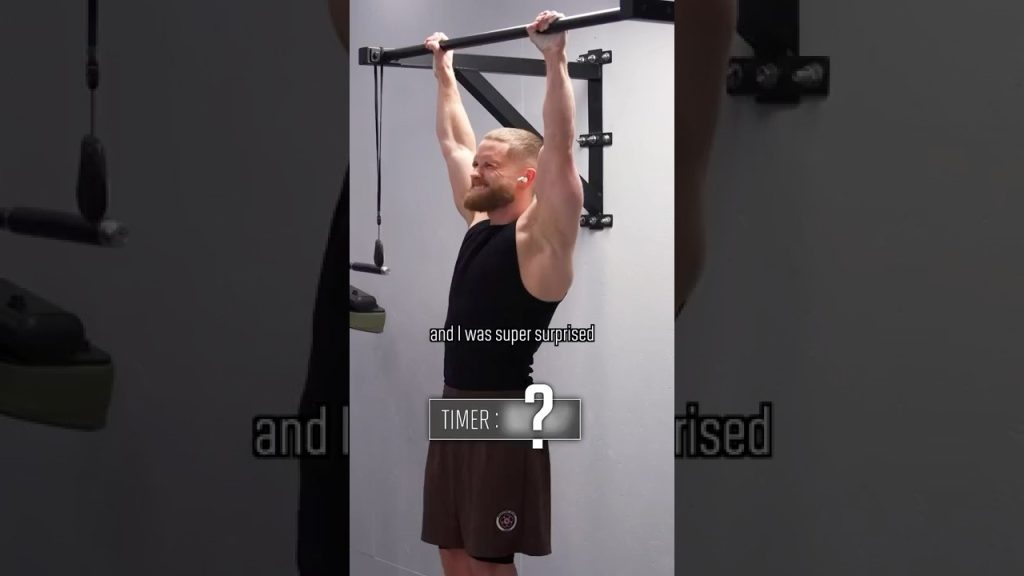
Video by Jeff Nippard on YouTube
There’s a growing body of evidence suggesting that grip strength isn’t just a measure of how hard you can squeeze a barometer — it’s a legitimate predictor of long-term health outcomes. Research published in The Lancet following over 140,000 participants across 17 countries found that grip strength was a stronger predictor of cardiovascular mortality than systolic blood pressure. That data alone should make every man reconsider what counts as functional training. And few movements build grip strength as effectively — or as efficiently — as the farmer’s carry.
The farmer’s carry is deceptively simple: pick up a heavy load in each hand and walk. But what happens physiologically during that walk is anything but simple. Your forearm flexors and extensors are under continuous isometric tension. Your rotator cuff and scapular stabilizers are working overtime to keep your shoulders packed and neutral. Your core, from the deep transverse abdominis to the obliques, is bracing against rotational forces with every step. And your traps, rhomboids, and erector spinae are all firing to keep your posture upright under load. This is a full-body muscle preservation exercise disguised as a conditioning drill.
How to Actually Do It Right
Execution matters more than load, especially when you’re starting out. Begin by selecting dumbbells, kettlebells, or a trap bar — whatever is available. A good starting point for most men is a weight that feels challenging but allows you to maintain an upright posture for 40 to 60 feet. If your shoulders are rounding forward or your lower back is arching aggressively, the load is too heavy.
Before you lift, set your grip firmly around the handle — not at the fingertips, but deep in the palm where your fingers meet your hand. Pull your shoulders back and down, creating what coaches call a “packed” shoulder position. Brace your core as if you’re about to take a punch. Then lift the weights by driving through your legs, not by hinging at the lower back. Once you’re upright, walk with purpose: short, controlled strides, eyes forward, chest tall. Keep your breathing rhythmic. Don’t let the weights swing or drift away from your body. At the end of your distance, lower the weights under control — the eccentric phase still counts.
Distance and load can be manipulated based on your goal. For raw grip strength and muscle hypertrophy, heavier loads over shorter distances (30 to 50 feet) with longer rest periods work well. For metabolic conditioning and cardiovascular benefit, moderate loads over longer distances (100 feet or more) with shorter rest intervals shift the demand. Research in the Journal of Human Kinetics confirms that loaded carries produce significant metabolic and neuromuscular adaptations, making them a legitimate tool for both fat loss and strength development — not just an accessory movement.
Why Grip Strength Is a Proxy for Muscle You Want to Keep
Grip strength correlates strongly with overall lean mass and functional capacity, particularly as men age. A study in the American Journal of Clinical Nutrition found that handgrip strength was significantly associated with total muscle mass and inversely associated with all-cause mortality risk in older adults. This matters even for younger men, because the habits you build in your 30s and 40s determine the foundation you’re standing on at 60 and beyond.
For men in a caloric deficit — whether that’s through disciplined eating, structured dieting, or the appetite suppression that comes with GLP-1 medications — muscle preservation is an active fight, not a passive outcome. The farmer’s carry contributes directly to that fight. It imposes mechanical tension on the muscles through load-bearing and isometric work, which is one of the primary drivers of muscle protein synthesis signaling. Evidence consistently shows that resistance-based mechanical loading stimulates mTOR pathways responsible for muscle maintenance and growth, even in a calorie-reduced state.
Program the farmer’s carry two to three times per week, either at the end of a lifting session or as a standalone conditioning block. Three to five sets of 40 to 60 feet is a practical starting template. Progress by adding load every one to two weeks or by extending the carry distance. Your grip, your posture, your core stability, and your metabolic health will all reflect the investment.
The Takeaway
The farmer’s carry earns its place in any training program because it does what very few exercises can — it builds grip strength, preserves muscle, improves posture, and challenges your cardiovascular system simultaneously. It requires no machine, no complex setup, and no specialized skill. Just load, brace, and walk. In a fitness landscape obsessed with novelty, sometimes the oldest tools are the ones that hold up best.