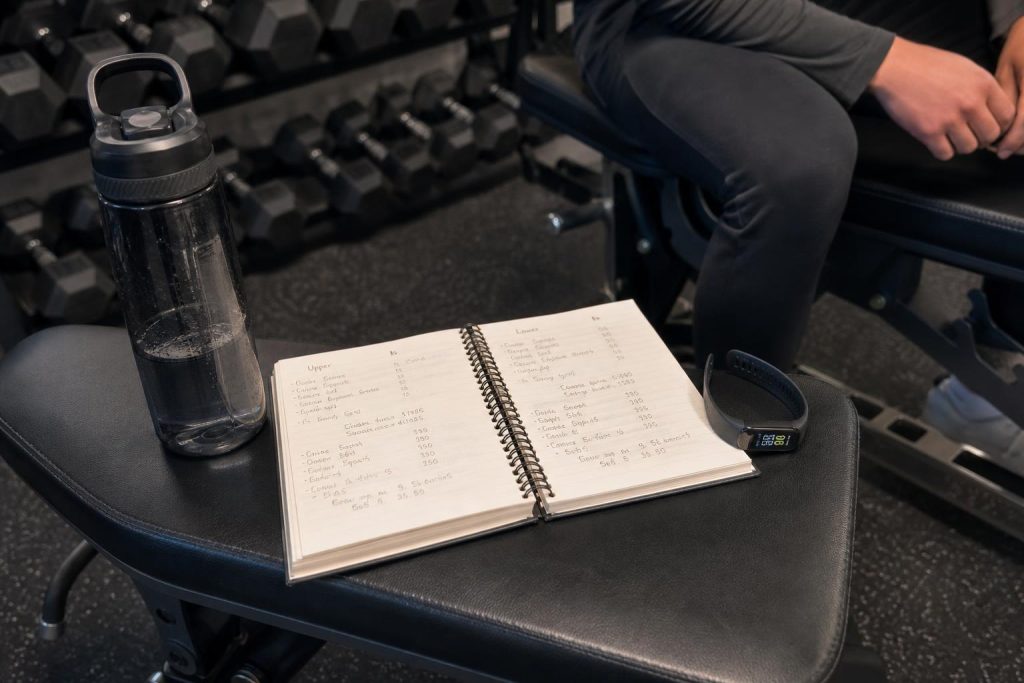
When researchers at McMaster University analyzed resistance training frequency and muscle protein synthesis, they found that training a muscle group twice per week produced significantly greater hypertrophic adaptations than once-weekly training — a finding that quietly validates what serious lifters have known for years. The evidence consistently points to training frequency as one of the most underutilized levers for building and preserving lean mass. And if there’s one program architecture that delivers on that frequency without destroying recovery, it’s the upper lower split.
Whether you’re cutting calories aggressively, navigating reduced appetite on a GLP-1 medication like semaglutide, or simply trying to lose fat while holding onto the muscle you’ve built, the upper lower split may be the most strategically sound training structure available to you right now. Four training days. Full-body stimulus across the week. Built-in recovery. It’s not flashy — but the physiology behind it is hard to argue with.
Why the Upper Lower Split Works So Well During a Cut
Muscle loss during caloric restriction is one of the most frustrating biological realities men face when trying to lean out. Research published in Obesity Reviews confirms that without adequate resistance training stimulus, a significant portion of weight lost during caloric deficit comes from lean tissue — not just fat. The upper lower split directly counters this by hitting every major muscle group twice per week with sufficient volume and mechanical tension to signal muscle retention at the cellular level.
The structure is straightforward: two upper body days and two lower body days spread across the week, typically Monday, Tuesday, Thursday, and Friday. Upper days focus on horizontal and vertical pushing and pulling movements — think bench press, rows, overhead press, and pull-ups. Lower days anchor around the squat and hip hinge pattern — squats, Romanian deadlifts, leg press, and lunges. This division allows you to train with genuine intensity on each session because you’re not trying to compress your entire body into one exhausting workout.
For men in a caloric deficit — whether that deficit comes from disciplined meal prep, a high-protein low-calorie diet, or appetite suppression from a GLP-1 receptor agonist — managing training volume and fatigue becomes critical. Studies on resistance training volume suggest that 10 to 20 working sets per muscle group per week is the productive range for most trained individuals. The upper lower format makes hitting that target sustainable without accumulating the kind of systemic fatigue that tanks performance and recovery mid-week.
Programming the Details: Sets, Reps, and Protein
On upper days, aim for three to four sets each of a horizontal push, a horizontal pull, a vertical push, and a vertical pull. Rep ranges can vary — heavier compound work in the four to six rep range builds strength and dense neuromuscular adaptations, while accessory movements in the eight to fifteen rep range drive hypertrophy and metabolic stress. Lower days should anchor on a squat-pattern movement and a hip-hinge movement as the primary lifts, followed by unilateral work like split squats or single-leg Romanian deadlifts to address imbalances and add volume without excessive spinal loading.
None of this works without protein. A landmark meta-analysis in the British Journal of Sports Medicine found that protein intakes beyond 1.62 grams per kilogram of body weight per day produced no additional muscle-building benefit — but getting to that threshold is non-negotiable when you’re in a deficit. For a 200-pound man, that’s roughly 145 to 160 grams of protein daily. Men using GLP-1 medications need to be especially deliberate here, since blunted appetite can make hitting protein targets genuinely difficult without intentional planning around high-protein, lower-volume foods like Greek yogurt, eggs, cottage cheese, and lean meats.
Progressive overload remains the engine of the entire program. Research on resistance training adaptations is unambiguous: without progressive increases in load or volume over time, the stimulus for muscle adaptation plateaus. Track your lifts. Add weight when you can hit the top of your rep range cleanly. This doesn’t need to be complicated — a simple training log, even a notes app, changes outcomes.
The Takeaway
The upper lower split isn’t a trend. It’s a time-tested framework that aligns with the science of training frequency, recovery, and muscle retention during fat loss. Whether you’re deep into a structured cut, managing your intake with pharmaceutical help, or just trying to build a leaner, stronger body through hard work and consistency — this four-day structure gives you the stimulus your muscles need without burning you out in the process. Run it for eight to twelve weeks, eat enough protein, push for progressive overload, and the results will follow.