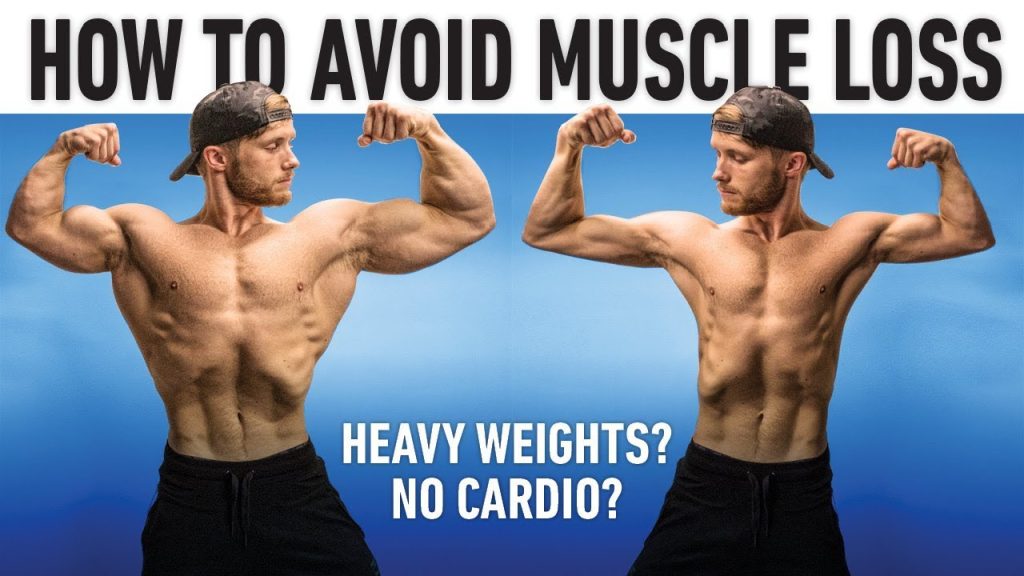
Video by Jeff Nippard on YouTube
The weight loss numbers coming out of GLP-1 clinical trials are impressive — semaglutide and tirzepatide producing 15 to 24 percent reductions in body weight is genuinely remarkable pharmacology. But buried inside those headline figures is a problem that doesn’t make it onto the prescription pad: a significant portion of that weight isn’t fat. Research published in Diabetes Care found that GLP-1 receptor agonists cause rapid and significant loss of lean mass — roughly 10 percent or approximately 6 kilograms — an amount the authors describe as comparable to a decade or more of aging. For a man who got on a GLP-1 medication to get leaner and healthier, quietly losing that much muscle in the process is not a win. Strength training is not an optional add-on to GLP-1 therapy. It is the essential countermeasure.
This matters whether you’re on a GLP-1 medication or not. Any aggressive caloric deficit — whether driven by semaglutide, a crash diet, or simply aggressive portion control — creates conditions where your body will sacrifice muscle tissue to meet its energy demands. The mechanisms differ slightly, but the outcome is the same: without a deliberate resistance training stimulus, the scale goes down and so does your muscle mass. The goal of fat loss is to change your body composition, not just your body weight. Strength training is how you protect that distinction.
What GLP-1 Medications Actually Do to Your Body Composition
Understanding the physiology helps clarify why the stakes are high. GLP-1 receptor agonists work primarily by suppressing appetite, slowing gastric emptying, and modulating reward circuits around food. They are extraordinarily effective at getting people to eat significantly less. The problem is that dramatic caloric restriction — even when medically supervised — doesn’t discriminate cleanly between fat tissue and muscle tissue.
A 2025 review in Obesity Reviews synthesized trial data showing that participants receiving incretin-mimetic drugs like semaglutide and tirzepatide lost 10 percent or more of their muscle mass over 68 to 72 week interventions — a loss roughly equivalent to 20 years of age-related muscle decline. The authors are explicit: the pace of clinical adoption of these medications has outrun clinical practice guidelines, leaving many patients at risk for adverse long-term outcomes they may not even be aware of.
Part of the interpretive complexity here involves understanding what “fat-free mass” actually means. Research in the Journal of the Endocrine Society from Tinsley and Heymsfield emphasizes that fat-free mass and skeletal muscle mass are not the same thing. Fat-free mass includes connective tissue, organ mass, bone, and water — much of which decreases predictably as body fat drops, regardless of whether actual muscle is being preserved. This distinction matters when evaluating study data, but it doesn’t change the practical conclusion: skeletal muscle is genuinely at risk during rapid GLP-1-driven weight loss, and resistance training remains the most evidence-supported intervention to protect it.
There is also a downstream metabolic consequence worth considering. Muscle is metabolically active tissue. It drives resting energy expenditure, improves insulin sensitivity, and acts as a glucose reservoir. A 2025 review in Current Opinion in Clinical Nutrition and Metabolic Care notes that up to 40 percent of total weight lost on GLP-1 receptor agonists can come from fat-free mass. Men who lose substantial lean mass during GLP-1 therapy — and then stop the medication — are not returning to baseline. They’re returning to a body with worse metabolic infrastructure, which sets the stage for rapid fat regain on a thinner muscle frame. That is the weight cycling scenario no one wants.
The Training Protocol That Actually Protects Your Muscle
The evidence on resistance training during caloric restriction is consistent and encouraging. The Diabetes Care review reports that supervised resistance exercise interventions lasting more than 10 weeks produce meaningful increases in lean mass — approximately 3 kilograms — and strength improvements of around 25 percent in men and women. That is not a marginal effect. In the context of GLP-1 therapy, where lean mass is under continuous pressure, adding 3 kilograms of muscle while losing fat fundamentally changes the outcome of the treatment.
The practical prescription is straightforward, even if executing it consistently takes discipline. Three to four resistance training sessions per week, built around compound movements — squats, deadlifts, rows, presses, lunges — form the foundation. These multi-joint movements recruit the greatest volume of muscle tissue per session, making them the highest-return investment for someone whose appetite and caloric intake may be significantly reduced. Isolation work has its place, but if you are eating less and training around a medication that suppresses hunger, your training needs to be efficient and heavy enough to send a clear preservation signal to your nervous system.
Progressive overload remains the governing principle. The body preserves what it is forced to use. If your training stimulus stays constant — same weights, same reps, same patterns week after week — the adaptation signal fades. Men on GLP-1 medications often report fatigue and reduced appetite, which can make high-volume training feel unsustainable. That is a legitimate challenge, but it argues for smarter programming, not less training. Lower volume with higher relative intensity — working at 70 to 85 percent of your one-rep max across three to four working sets — can deliver a robust hypertrophic stimulus without requiring enormous caloric support.
Protein intake is the inseparable partner to the training stimulus. The Obesity Reviews consensus is explicit that all patients receiving incretin-mimetic drugs should be in comprehensive programs emphasizing adequate protein intake alongside resistance training. The challenge on GLP-1 therapy is that reduced appetite makes hitting protein targets genuinely difficult. Men should prioritize protein-dense foods first at every meal — lean meats, eggs, Greek yogurt, cottage cheese, fish — before filling the remainder of a smaller-than-usual caloric allotment with other foods. A general target of 1.6 to 2.2 grams of protein per kilogram of body weight is well-supported in the resistance training and weight loss literature. A 2025 joint advisory from the American College of Lifestyle Medicine, the American Society for Nutrition, the Obesity Medicine Association, and The Obesity Society reinforces that preserving muscle and bone mass through resistance training and appropriate diet is a core priority during GLP-1 treatment — not an afterthought.
For men who find hitting whole-food protein targets difficult while appetite-suppressed, a quality protein supplement — whey, casein, or a well-formulated plant-based blend — becomes a practical tool rather than a luxury. The same advisory also flags the potential role of specific nutrients including creatine, leucine, branched-chain amino acids, omega-3 fatty acids, and vitamin D in supporting muscle preservation when dietary intake is compromised, though the evidence base for these in the specific context of GLP-1 therapy continues to develop.
The Takeaway
GLP-1 medications are a legitimate and powerful tool for men dealing with obesity and its downstream metabolic consequences. But they are not a complete treatment in isolation. The research is unambiguous on this point: without resistance training and adequate protein intake, a meaningful fraction of the weight you lose on these medications will come from muscle — and that trade carries real long-term costs to your metabolism, your physical function, and your ability to maintain the results you worked for. Strength training is not a supplement to GLP-1 therapy. It is the mechanism by which GLP-1 therapy becomes a genuine body composition intervention rather than just a number on a scale. Pick up the weights. Prioritize your protein. The medication opens the door; the training determines what you build on the other side.
Scientific References
-
Mozaffarian, Agarwal, Aggarwal et al. (2025).
Nutritional priorities to support GLP-1 therapy for obesity: A joint Advisory from the American College of Lifestyle Medicine, the American Society for Nutrition, the Obesity Medicine Association, and The Obesity Society..
Obesity (Silver Spring, Md.).
View on PubMed → -
Locatelli, Costa, Haynes et al. (2024).
Incretin-Based Weight Loss Pharmacotherapy: Can Resistance Exercise Optimize Changes in Body Composition?.
Diabetes care.
View on PubMed → -
Mechanick, Butsch, Christensen et al. (2025).
Strategies for minimizing muscle loss during use of incretin-mimetic drugs for treatment of obesity..
Obesity reviews : an official journal of the International Association for the Study of Obesity.
View on PubMed → -
Chavez, Carrasco Barria, León-Sanz et al. (2025).
Nutrition support whilst on glucagon-like peptide-1 based therapy. Is it necessary?.
Current opinion in clinical nutrition and metabolic care.
View on PubMed → -
Tinsley, Heymsfield et al. (2024).
Fundamental Body Composition Principles Provide Context for Fat-Free and Skeletal Muscle Loss With GLP-1 RA Treatments..
Journal of the Endocrine Society.
View on PubMed →