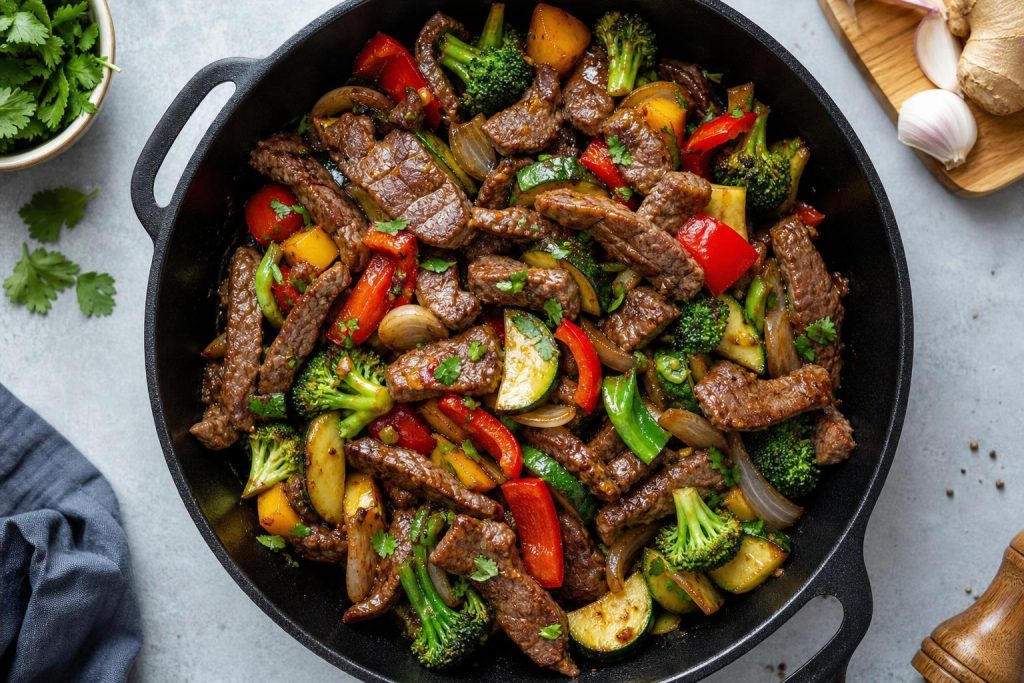
High-Protein Beef and Vegetable Skillet: 42g Protein Per Serving
When you’re focused on preserving muscle while optimizing body composition, meal timing and protein density matter. This beef and vegetable skillet delivers a complete, nutrient-dense meal that supports recovery, satiety, and sustained energy—whether you’re managing your appetite naturally or using pharmacological tools to enhance fat loss.
The beauty of this one-pan approach is simplicity without sacrificing macros. Ground beef provides bioavailable protein and essential micronutrients like iron, zinc, and B12. The vegetable base adds fiber, micronutrients, and volume without excessive calories, keeping you full longer and stabilizing blood sugar.
Ingredients (2 servings)
- 1 lb 93/7 lean ground beef
- 2 cups broccoli florets, chopped
- 1 medium zucchini, diced
- 1 red bell pepper, sliced
- 4 oz mushrooms, sliced
- 3 cloves garlic, minced
- 2 tbsp extra virgin olive oil
- 1 tsp dried oregano
- ½ tsp smoked paprika
- Salt and black pepper to taste
- ¼ cup low-sodium beef broth (optional, for moisture)
- Fresh parsley for garnish (optional)
Step-by-Step Instructions
Step 1: Prepare Your Mise en Place
Chop all vegetables uniformly—this ensures even cooking. Consistency matters for both texture and macronutrient distribution across servings. Mince garlic fresh rather than using jarred; the flavor profile and nutrient density are superior.
Step 2: Brown the Beef
Heat a large 12-inch skillet over medium-high heat. Once hot, add ground beef without oil initially. Break it into small, uniform pieces as it cooks—this increases surface area for browning and creates better texture. Cook for 5-7 minutes until the meat is 75% cooked and has released its fat. The rendered beef fat will be your cooking medium, so don’t drain it.
Step 3: Build Flavor
Add minced garlic directly to the beef and stir constantly for 30-45 seconds until fragrant. Add oregano and paprika, stirring for another 15 seconds to bloom the spices in the residual heat. This technique amplifies flavor without adding calories.
Step 4: Sauté Vegetables (Timing Matters)
Add the olive oil, then introduce mushrooms first—they require the longest cooking time and will help deglaze the pan. Sauté for 2 minutes. Next, add broccoli and bell pepper (they need 4-5 minutes). Finally, add zucchini in the last minute (it releases water quickly and will soften if overcooked). Stir occasionally to prevent sticking and ensure even cooking.
Step 5: Finish and Season
Once all vegetables are tender-crisp (broccoli should still have slight resistance), add beef broth if the mixture seems dry. Season aggressively with salt and black pepper—this is your primary seasoning vehicle. Taste and adjust. Cook for 1 additional minute to integrate flavors.
Step 6: Plate and Serve
Divide evenly between two plates. Garnish with fresh parsley if desired. Serve immediately.
Macronutrient Breakdown Per Serving
- Calories: 385
- Protein: 42g (44% of calories)
- Carbohydrates: 18g (19% of calories)
- Fat: 18g (42% of calories)
- Fiber: 4g
This macronutrient split prioritizes protein for muscle preservation and satiety while maintaining enough fat for hormone production and nutrient absorption. The carbs come entirely from vegetables—no blood sugar spikes, sustained energy delivery.
Pro Tips for Meal Prep and Body Composition Goals
Meal Prep Strategy: This recipe scales beautifully. Make 4 servings at once (double the recipe), portion into glass containers, and refrigerate for up to 4 days. The flavors actually improve on day 2-3 as spices continue to integrate. Reheat gently in a skillet over medium heat or microwave at 70% power for 2 minutes.
Macro Adjustment for Different Goals: Eating in a caloric deficit? This meal is already optimized—42g protein in 385 calories is excellent satiety. Maintenance calories? Add a quarter avocado (60 cal) or a small side of rice (80 cal). Lean bulking? Increase ground beef to 1.25 lb and add a starch side.
Beef Selection Matters: Stick with 93/7 or 96/4 lean ground beef. Higher fat percentages (80/20) add 100+ empty calories without increasing satiety. Buy in bulk and freeze in 1 lb portions for convenience.
Vegetable Swaps: Frozen broccoli, bell peppers, and zucchini work equally well and often cost less. Green beans, asparagus, and cauliflower are excellent alternatives. Avoid watery vegetables like tomatoes (adds volume without satiety).
Flavor Compounds: For variety, rotate spice profiles—use cumin and chili powder for a Mexican lean; Italian seasoning and red pepper flakes for Mediterranean lean; ginger and low-sodium soy sauce for Asian lean. Each variation keeps the protein target constant while preventing palate fatigue.
Bottom Line
This high-protein beef and vegetable skillet exemplifies evidence-based nutrition for men prioritizing body composition. It’s simple, scalable, nutrient-dense, and designed to support your goals whether you’re optimizing naturally or using other tools. Cook once, eat multiple times, and let the macros do the work.
Inspired by content from Eat This Not That (https://www.eatthis.com/chair-exercises-lower-back-pain-after-60/)