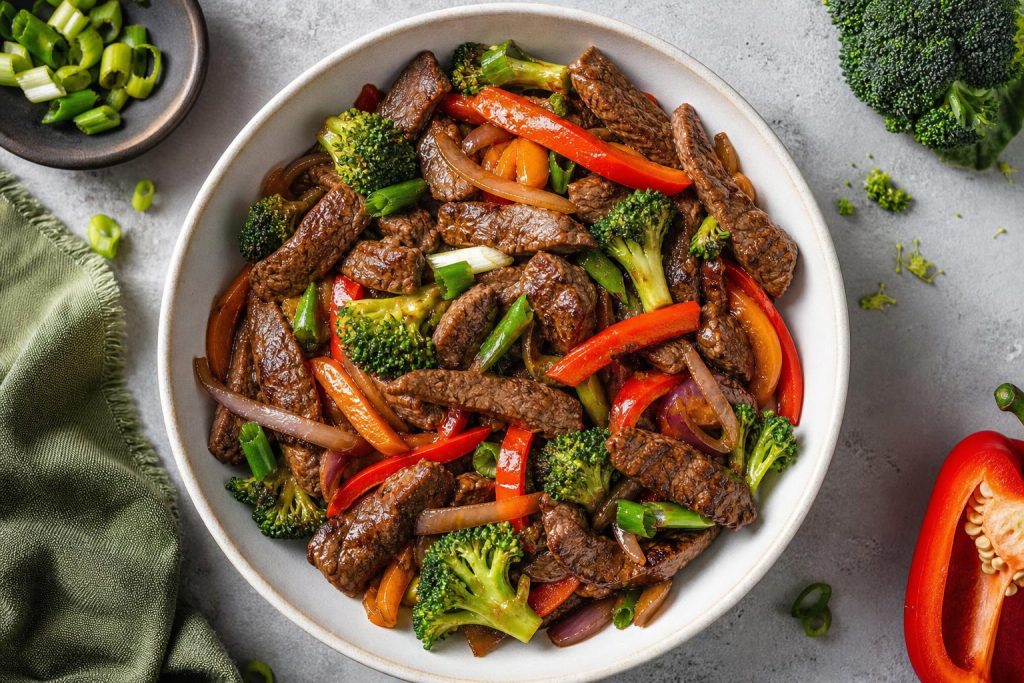
High-Protein Beef and Vegetable Stir-Fry: 42g Protein Per Serving
Building muscle while managing body composition requires consistent protein intake—especially if you’re optimizing your nutrition for metabolic health. This beef and vegetable stir-fry delivers over 40 grams of protein per serving with minimal processed ingredients, making it a cornerstone meal for men focused on performance and fat loss.
The beauty of this recipe lies in its simplicity and macronutrient density. You’re getting lean protein from grass-fed beef, micronutrients from cruciferous vegetables, and healthy fats from sesame oil—all delivered in under 500 calories per serving. This makes it scalable whether you’re in a caloric deficit or maintenance phase.
Ingredients (Serves 2)
- 1 lb grass-fed sirloin or flank steak, sliced thin against the grain
- 3 cups broccoli florets
- 2 cups mushrooms, sliced
- 1 red bell pepper, sliced
- 3 cloves garlic, minced
- 1 tbsp fresh ginger, minced
- 2 tbsp sesame oil (divided)
- 2 tbsp low-sodium soy sauce
- 1 tbsp rice vinegar
- 1 tsp arrowroot powder
- ¼ tsp red pepper flakes
- 2 green onions, sliced
- 1 tbsp sesame seeds
- Sea salt and black pepper to taste
Step-by-Step Instructions
Step 1: Prepare Your Ingredients
Pat the sliced beef dry with paper towels—this ensures better browning and crust development. Cut all vegetables uniformly so they cook evenly. This prep work takes 8-10 minutes but makes the cooking process seamless.
Step 2: Make the Sauce
In a small bowl, combine soy sauce, rice vinegar, arrowroot powder, and red pepper flakes. The arrowroot acts as a thickener without the cornstarch bloat. Set aside.
Step 3: Sear the Beef
Heat 1 tbsp sesame oil in a large wok or skillet over high heat until it begins to shimmer. Season beef with salt and pepper, then add to the pan in a single layer. Work in batches if needed—overcrowding drops temperature and causes steaming rather than searing. Cook 2-3 minutes per side for medium-rare. Remove to a clean plate.
Step 4: Cook the Vegetables
In the same pan, add remaining sesame oil. Add broccoli and mushrooms first—they need more time. Stir-fry for 4 minutes over high heat. Add bell pepper, garlic, and ginger. Cook for another 2 minutes until fragrant and vegetables have slight char but remain crisp.
Step 5: Combine and Finish
Return beef to the pan along with any accumulated juices. Pour in the sauce and toss everything together for 1 minute until the sauce coats the ingredients and thickens slightly. Finish with green onions and sesame seeds.
Step 6: Serve and Enjoy
Divide evenly between two plates. Serve immediately while the beef is warm and vegetables maintain their texture.
Nutrition Breakdown Per Serving
- Calories: 485
- Protein: 42g (35% of calories)
- Carbohydrates: 18g (15% of calories)
- Fat: 24g (45% of calories)
- Fiber: 4g
Pro Tips for Maximum Results
Meal Prep Strategy: This recipe scales beautifully. Prepare 4 servings on Sunday and store in glass containers. The stir-fry stays fresh for 4 days refrigerated. Reheat gently in a skillet with a splash of water to restore texture—microwaving works but tends to overcook the vegetables.
Protein Optimization: If your daily target is 180+ grams of protein, this single meal covers 23% of your intake. Pair it with a whey-based post-workout shake (30g protein) and a breakfast with eggs or Greek yogurt to hit your macros consistently.
Caloric Flexibility: In a deficit? This recipe sits at 485 calories—ideal for a 300-500 calorie lunch. Maintenance phase? Add a small side of white rice (150 calories, 30g carbs) to fuel training performance. Bulking? Include rice plus a tablespoon of almond butter on the side.
Ingredient Sourcing: Grass-fed beef contains higher omega-3 levels and conjugated linoleic acid (CLA) compared to conventional beef—both support body composition. Frozen broccoli works equally well if fresh isn’t available and saves prep time.
Flavor Variation: Swap soy sauce for coconut aminos if you’re sodium-sensitive. Replace sesame oil with avocado oil if you prefer a cleaner taste. The protein and macros remain identical.
Why This Works for Body Composition
This meal checks every box for metabolic health: high protein satiety, nutrient density, minimal processed ingredients, and flexible macros. Whether you’re optimizing body composition through traditional caloric deficit or leveraging medication-assisted approaches, consistent protein intake from whole foods remains non-negotiable for muscle preservation and recovery.
Inspired by content from Eat This Not That (https://www.eatthis.com/balance-exercises-after-60-standing/)