When the STEP clinical trials wrapped up their findings on semaglutide, the numbers were hard to ignore. Research published in The American Journal of Managed Care showed that adults using semaglutide 2.4 mg achieved a mean body weight reduction of 14.9% to 16.0% over 68 weeks — dwarfing the 4% to 10.9% seen with every other approved anti-obesity medication at the time. That is not a modest difference. That is a generational shift in what pharmacotherapy can do for weight management. But buried in those same trial protocols is a detail that often gets overlooked: every single participant was also following a structured diet and lifestyle intervention. The medication was never the whole story.
If you are using Ozempic or Wegovy — both semaglutide-based medications — and you are not paying close attention to what you eat, you are leaving a significant portion of your results on the table. This is the diet plan framework designed to help you capture every percentage point of that potential.
Why Food Quality Still Rules the Equation
Semaglutide works by mimicking glucagon-like peptide-1, a hormone that slows gastric emptying, reduces appetite, and improves insulin sensitivity. The practical effect is that you feel full faster and stay full longer. What it does not do is tell your body what to do with the calories you do eat. That part is still entirely up to you.
A 2025 review in Cureus confirmed that lifestyle modifications — specifically nutritional therapy, a low-calorie diet, and exercise — remain the foundational pillars of obesity management even in the era of powerful pharmacotherapy. Semaglutide sits on top of that foundation; it does not replace it. This distinction matters enormously for men who assume the medication will compensate for poor food choices. It will not, at least not fully.
The practical implication is that your dietary framework needs to do two things simultaneously: support the appetite-suppressing environment that semaglutide creates, and ensure that the weight you are losing comes primarily from fat rather than muscle. Ozempic narrows your caloric window significantly. If the food inside that window is low in protein and micronutrients, you will lose weight, but a disproportionate amount of it will be lean mass — a metabolic disaster that slows your resting metabolism and leaves you weaker long-term.
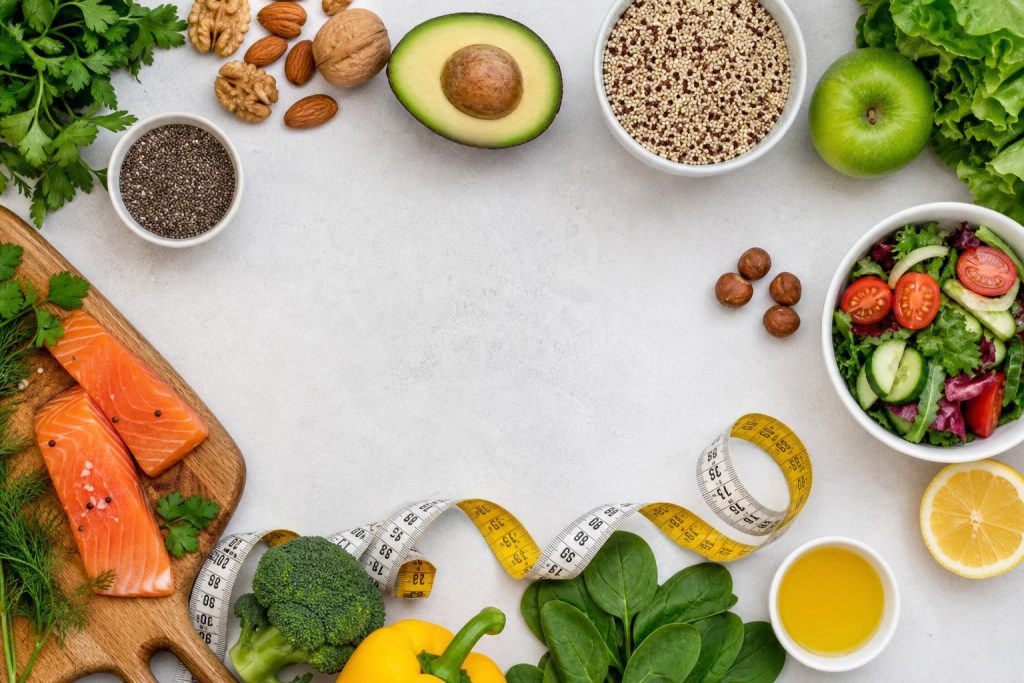
The macronutrient anchor for any Ozempic diet plan is protein, and it needs to be non-negotiable. Aim for a minimum of 0.7 to 1.0 grams per pound of body weight daily, even if your overall caloric intake drops substantially. On semaglutide, you may find yourself naturally gravitating toward smaller portions, which makes hitting protein targets harder. Prioritize protein at every meal — eggs, Greek yogurt, cottage cheese, lean beef, chicken thighs, salmon, and legumes should anchor your plate before anything else is added. Carbohydrates and fats fill in the remaining calories, with an emphasis on fiber-dense vegetables, whole grains, and healthy fats like avocado, olive oil, and nuts that support satiety and metabolic function.
Building the Daily Structure That Works With Semaglutide
Because semaglutide slows gastric emptying, large meals can feel uncomfortable or even nauseating, particularly in the early weeks of dose escalation. The practical workaround is not skipping meals — it is restructuring their size and composition. Two to three moderate meals spaced evenly across the day, each anchored by 30 to 50 grams of protein, tends to work better than the traditional three large meals. Snacking often becomes unnecessary, which is fine, but if hunger does emerge between meals, hard-boiled eggs, string cheese, Greek yogurt, or a small handful of mixed nuts are metabolically efficient choices that do not trigger the nausea some men experience with heavier, fattier snacks on semaglutide.
Hydration deserves serious attention. Reduced appetite can mask thirst, and many men on GLP-1 medications inadvertently become chronically under-hydrated. A minimum of 90 to 100 ounces of water daily is a reasonable target, and electrolyte balance — particularly sodium, potassium, and magnesium — supports energy levels and reduces the fatigue that some users report during the early months of treatment.
Alcohol warrants a specific caution. Semaglutide changes alcohol tolerance in a meaningful way for some men, with lower quantities producing stronger effects. Beyond the immediate physiological response, alcohol is calorically dense, drives poor food decisions, disrupts sleep architecture, and directly suppresses testosterone — none of which align with the goals of a man trying to lose fat and preserve muscle. Reducing or eliminating alcohol while on semaglutide is one of the higher-leverage decisions you can make.
The benefits of this approach extend beyond body composition. Emerging research in Journal of Experimental & Clinical Cancer Research has found that semaglutide may reshape the tumor microenvironment in pancreatic cancer associated with metabolic syndrome, suggesting that the metabolic improvements driven by GLP-1 receptor activation go far deeper than the scale reflects. And preclinical data published in Diabetologia suggests that weight loss driven by GLP-1 receptor activation before a stroke significantly improves neurological recovery in diabetic models — pointing to protective effects on the brain and vasculature that extend well beyond aesthetics. What you eat while on semaglutide either accelerates or undermines all of that downstream benefit.
The Takeaway
Ozempic creates a powerful biological environment for fat loss. But the men who see the most dramatic and lasting results are the ones who treat the medication as a tool that amplifies a solid dietary strategy — not a substitute for one. Anchor every meal in protein, prioritize fiber and whole foods, stay hydrated, and reduce alcohol. That combination, layered on top of semaglutide’s appetite modulation, is where the real transformation happens. The drug opens the door. Your diet determines how far you walk through it.
Scientific References
-
Kyrillos et al. (2022).
Semaglutide 2.4-mg injection as a novel approach for chronic weight management..
The American journal of managed care.
View on PubMed → -
Cencioni, Malatesta, Vigiano Benedetti et al. (2025).
The GLP-1R agonist semaglutide reshapes pancreatic cancer associated fibroblasts reducing collagen proline hydroxylation and favoring T lymphocyte infiltration..
Journal of experimental & clinical cancer research : CR.
View on PubMed → -
Manoria et al. (2025).
The Obesity Drug Revolution: New Frontiers in Pharmacotherapy..
Cureus.
View on PubMed → -
Vercalsteren, Karampatsi, Neicu et al. (2026).
Pre-stroke weight loss by glucagon-like peptide 1 receptor and neuropeptide Y receptor Y2 activation improves post-stroke functional recovery in male diabetic mouse models..
Diabetologia.
View on PubMed →