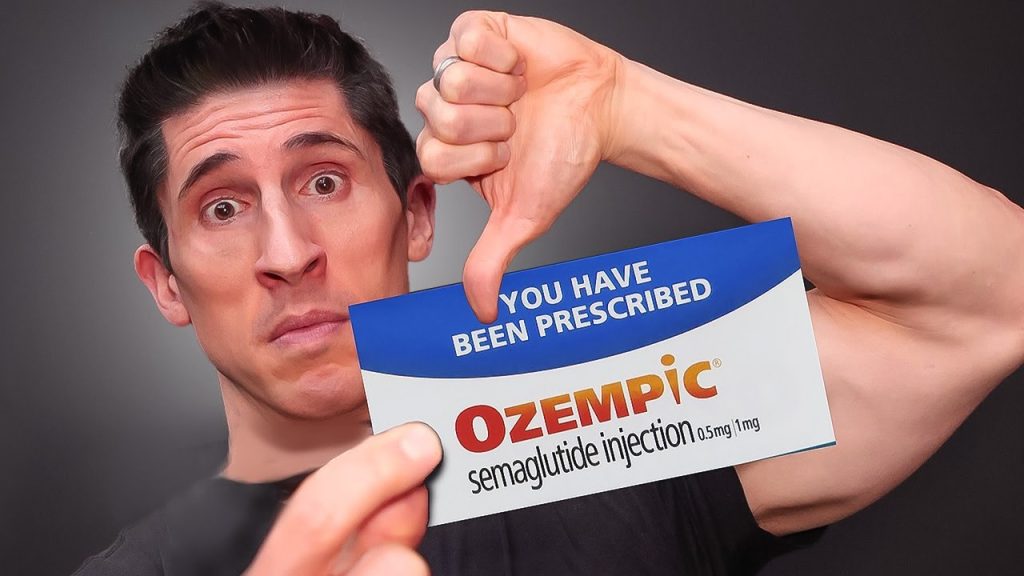
Video by AthleanX on YouTube
Most men first hear about GLP-1 in the context of injections and prescriptions. But here’s what the pharmaceutical conversation tends to obscure: your body already makes glucagon-like peptide-1. Every time you eat, intestinal L cells release GLP-1 into your bloodstream, slowing digestion, blunting appetite, and signaling your pancreas to regulate insulin. The drug versions — semaglutide, liraglutide, tirzepatide — work precisely because this hormone pathway is so powerful. The question worth asking is whether you can meaningfully activate that same pathway through diet and lifestyle alone.
The science says yes — at least to a significant degree. Research published in eLife in 2024 revealed that intestinal L cells express a mechanosensitive ion channel called Piezo1, which responds to the physical pressure of food moving through the gut. When Piezo1 is activated, GLP-1 synthesis and secretion increase. When researchers knocked out Piezo1 in L cells, blood glucose control deteriorated and GLP-1 levels dropped. This means the texture, fiber content, and volume of what you eat — not just its caloric profile — directly influences how much of this appetite-regulating hormone you produce. That’s a lever you can pull every single day, no prescription required.
What to Eat to Naturally Elevate GLP-1
The foods that most reliably stimulate GLP-1 secretion share a few common traits: they’re high in fiber, they slow gastric emptying, and they tend to require more mechanical work from your digestive system — exactly the kind of physical stimulus that activates the Piezo1 pathway described above. Fermentable fibers like inulin, beta-glucan from oats, and resistant starch from cooled potatoes or legumes have all been shown to amplify L cell activity. Protein is equally important here. Whey protein, casein, and high-quality animal proteins trigger GLP-1 release directly and help sustain satiety far longer than carbohydrates of comparable caloric value.
In practical terms, a GLP-1-optimizing diet looks something like this: you’re building each meal around a dense protein anchor — chicken thighs, salmon, eggs, Greek yogurt, beef — and adding substantial fiber through vegetables, legumes, or whole grains. You’re not cutting fat arbitrarily, because dietary fat also stimulates GLP-1 through fat-sensing receptors in the small intestine. What you are cutting is ultra-processed food, which tends to be engineered to bypass satiety signals rather than support them. The AACE/ACE comprehensive clinical practice guidelines on obesity management emphasize that dietary patterns matter as much as macronutrient ratios — and that the most effective eating strategies are those that improve metabolic function and reduce adiposity simultaneously, not just restrict calories.
Meal timing also matters. Eating slowly and mindfully isn’t just stress-reduction advice — it gives L cells time to sense luminal contents and mount a GLP-1 response before you’ve already overeaten. Front-loading your day with protein and fiber, rather than saving calories for evening, appears to support better glycemic control and appetite regulation throughout the day. Skipping breakfast habitually, on the other hand, tends to blunt GLP-1 responses at subsequent meals.
Exercise, Weight Loss, and the GLP-1 Connection
Diet isn’t the only tool. Exercise independently improves GLP-1 sensitivity and metabolic health in ways that compound over time. A 2022 randomized controlled trial published in Human Reproduction — the S-LITE trial — tracked men with obesity through an eight-week, 800 kcal/day low-calorie diet followed by a year of either exercise, liraglutide (a GLP-1 analogue), or both. Men who lost weight through diet saw sperm concentration increase 1.49-fold and sperm count increase 1.41-fold. Crucially, men who maintained their weight loss through either exercise or liraglutide held onto those improvements — while men who regained weight lost them. The takeaway isn’t that you need medication. It’s that sustained weight loss through lifestyle intervention produces the same downstream metabolic improvements that GLP-1 drugs are credited for.
Resistance training deserves specific mention because it improves insulin sensitivity and body composition in ways that directly support GLP-1 function. When your muscles are more metabolically active and your visceral fat is lower, your gut hormone signaling becomes more effective. You don’t need to run marathons — three to four sessions of progressive resistance training per week, combined with daily walking, represents a powerful metabolic intervention that costs nothing and compounds in value the longer you maintain it.
The global burden of disease data reinforces the urgency here. GBD 2023 findings published in The Lancet identified high BMI as one of only three leading risk factors for which age-standardized disease burden rates actually increased between 2010 and 2023. Ischemic heart disease, stroke, and diabetes — conditions directly linked to poor metabolic health — represent hundreds of millions of disability-adjusted life years lost annually. Diet and exercise aren’t soft recommendations. They’re the primary intervention.
Meanwhile, a 2025 study in Cell Metabolism examining tirzepatide’s mechanisms found that the drug’s primary effects included reduced appetite, lower caloric intake, and increased fat oxidation — all things that a well-structured diet and training program can also achieve, particularly when caloric deficit and high protein intake are maintained. This doesn’t minimize what GLP-1 medications can do for men who need them. But it does confirm that the underlying biology you’re trying to influence is responsive to lifestyle, not just pharmacology.
The Takeaway
You don’t need a prescription to work with your body’s GLP-1 system. Eating high-fiber, high-protein meals that require real digestion, exercising consistently, maintaining a meaningful caloric deficit when fat loss is the goal, and sleeping enough to support appetite-regulating hormones — these are the inputs that move the needle. The men who see the most dramatic metabolic improvements, whether on medication or not, are the ones who treat nutrition and training as non-negotiable rather than optional. Start there. Build the foundation. The biology will follow.
Scientific References
-
Garvey, Mechanick, Brett et al. (2016).
AMERICAN ASSOCIATION OF CLINICAL ENDOCRINOLOGISTS AND AMERICAN COLLEGE OF ENDOCRINOLOGY COMPREHENSIVE CLINICAL PRACTICE GUIDELINES FOR MEDICAL CARE OF PATIENTS WITH OBESITY..
Endocrine practice : official journal of the American College of Endocrinology and the American Association of Clinical Endocrinologists.
View on PubMed → -
Ravussin, Sanchez-Delgado, Martin et al. (2025).
Tirzepatide did not impact metabolic adaptation in people with obesity, but increased fat oxidation..
Cell metabolism.
View on PubMed → -
Huang, Mo, Yang et al. (2024).
Mechano-regulation of GLP-1 production by Piezo1 in intestinal L cells..
eLife.
View on PubMed → -
Unknown Authors (2025).
Burden of 375 diseases and injuries, risk-attributable burden of 88 risk factors, and healthy life expectancy in 204 countries and territories, including 660 subnational locations, 1990-2023: a systematic analysis for the Global Burden of Disease Study 2023..
Lancet (London, England).
View on PubMed → -
Andersen, Juhl, Kjøller et al. (2022).
Sperm count is increased by diet-induced weight loss and maintained by exercise or GLP-1 analogue treatment: a randomized controlled trial..
Human reproduction (Oxford, England).
View on PubMed →