When researchers published the landmark STEP 1 trial in the New England Journal of Medicine, the numbers were hard to ignore: participants using semaglutide lost an average of 14.9% of their body weight over 68 weeks. But buried in the fine print was something the headlines missed — the medication worked alongside a reduced-calorie diet and increased physical activity. The drug wasn’t the whole story. What you eat while taking it matters enormously, and most men on Ozempic never get a real answer on that front.
If you’re using semaglutide (Ozempic or Wegovy), the reduced appetite is a tool — not a substitute for a structured nutrition strategy. Research shows that GLP-1 receptor agonists slow gastric emptying and suppress appetite signaling in the hypothalamus, which means you’ll naturally eat less. But eating less of the wrong things can lead to muscle loss, nutritional deficiencies, and metabolic slowdown that undermines your long-term progress. The goal isn’t just to lose weight — it’s to lose fat, protect muscle, and actually keep the results once you’re off the medication.
Build Your Plate Around Protein First
The most critical dietary principle for men on Ozempic — or any caloric deficit — is prioritizing protein. When appetite suppression is doing the heavy lifting, it becomes dangerously easy to under-eat protein without realizing it. A 2020 meta-analysis in Advances in Nutrition confirmed that higher protein intake during weight loss preserves lean mass better than standard intake, with targets around 1.2 to 1.6 grams per kilogram of body weight showing the strongest protective effect.
Practically, this means anchoring every meal to a protein source — eggs, Greek yogurt, chicken, salmon, lean beef, or cottage cheese — before anything else fills the plate. Because Ozempic reduces total food volume, every bite counts more. A 6-ounce portion of grilled salmon or three scrambled eggs isn’t just satisfying; it’s doing metabolic work that processed carbohydrates simply cannot replicate.
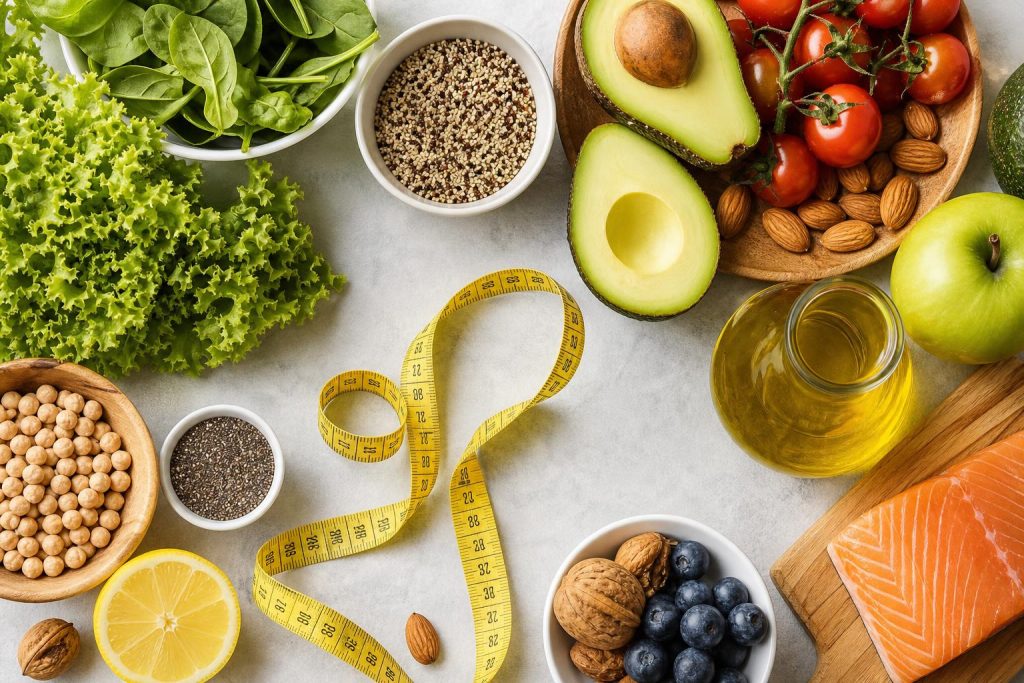
Beyond protein, focus on nutrient density over calorie density. Ozempic users eating 1,200 to 1,600 calories daily are working with a narrow nutritional window. Leafy greens, cruciferous vegetables, legumes, and whole grains deliver fiber, micronutrients, and satiety without competing with your protein targets. Fiber is particularly important here — studies show that dietary fiber slows glucose absorption and further supports the glycemic improvements that semaglutide initiates at the hormonal level.
Foods to limit aren’t surprising, but the reasoning behind them matters more when you’re on a GLP-1. High-fat, high-sugar ultra-processed foods can worsen the nausea that’s already a common side effect of Ozempic. Clinical guidance from gastroenterology researchers consistently points to fatty, greasy, or heavily spiced foods as primary triggers for GI distress in patients with slowed gastric emptying. Alcohol deserves special attention here too — it adds empty calories, disrupts sleep and recovery, and can intensify nausea on the medication.
Structure Your Eating Pattern, Not Just Your Food Choices
One underappreciated aspect of eating on Ozempic is meal timing and portion architecture. Because gastric emptying is delayed, large meals can cause significant discomfort. Smaller, more frequent meals — three modest meals with one or two protein-focused snacks — tend to work better physiologically. Think 300 to 450 calories per meal rather than two large sittings of 700 to 800 calories.
Hydration also deserves a dedicated mention. Reduced appetite often means reduced fluid intake by association, and dehydration can mimic hunger while worsening the constipation that some men experience on GLP-1 therapy. Aim for at least 2.5 to 3 liters of water daily, and consider electrolyte support if you’re also training regularly or following a lower-carbohydrate approach.
Resistance training remains non-negotiable regardless of how effective the medication is at reducing scale weight. A 2023 analysis in Obesity found that GLP-1 users who did not engage in resistance training lost significantly more lean mass compared to those who did — a finding that should motivate every man on this medication to lift weights at least two to three times per week.
The Takeaway
Ozempic creates a metabolic environment that favors weight loss — but it doesn’t dictate the quality of that weight loss. Men who use the medication alongside a high-protein, whole-food diet, structured meal timing, and consistent resistance training get dramatically different outcomes than those who simply eat less of whatever’s convenient. The drug lowers the ceiling on your appetite. Your diet determines what you build within that space. Treat every meal as an investment in muscle preservation and metabolic resilience, and Ozempic becomes a powerful accelerant rather than a crutch.