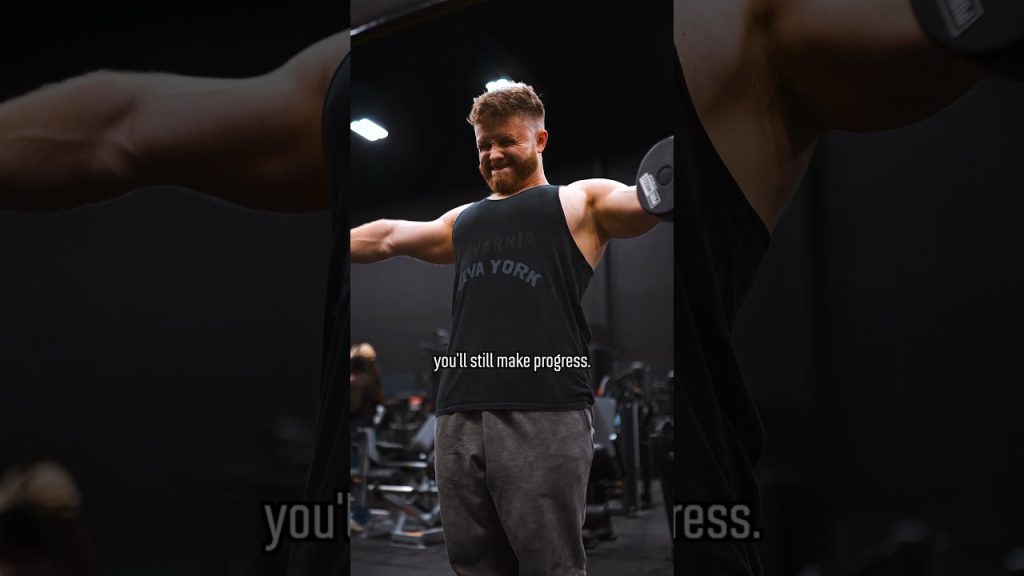
Video by Jeff Nippard on YouTube
You can’t out-train a bad program. And you can’t build muscle without one fundamental principle: progressive overload.
Whether you’re starting your fitness journey, returning after time off, or optimizing your training alongside other metabolic health tools (like GLP-1 medications or structured nutrition), progressive overload is the non-negotiable foundation of strength and muscle development.
Research published in the Journal of Sports Sciences shows that progressive overload is the primary driver of muscle hypertrophy and strength gains, regardless of age or training experience. Without it, your body adapts to the stimulus and stops improving—a phenomenon called the adaptation plateau.
This guide breaks down what progressive overload actually is, why it matters, and exactly how to implement it as a beginner.
What Is Progressive Overload and Why Does It Matter?
Progressive overload simply means gradually increasing the demands placed on your muscles during training. Your body adapts to stress by building stronger, larger muscle tissue. But once it adapts, you need to increase the challenge to keep progressing.
A meta-analysis in Sports Medicine found that progressive resistance training produces a 1.4% increase in muscle mass per week during the adaptation phase—but only when overload is systematically applied.
Without progressive overload:
- You plateau within 4-6 weeks
- Muscle adaptation stalls
- Strength gains flatline
- Fat loss becomes harder (muscle is metabolically active tissue)
This matters especially if you’re managing your body composition or metabolic health. Studies show that preserving lean muscle mass during fat loss improves metabolic rate and long-term weight management outcomes. Progressive overload ensures you’re building and protecting muscle while losing fat.
The 5 Methods of Progressive Overload (Pick Your Path)
You don’t need to be perfect at all of these. Pick one or two and master them. Here are the evidence-backed methods:
1. Increase Weight (Most Straightforward)
Add 2.5-5 lbs to the barbell or dumbbell when you hit your target reps for 2-3 sets. This is the clearest form of progression and the easiest to track.
2. Add Reps (Gradual and Sustainable)
If you’re doing 8 reps at 200 lbs, work toward 10 reps at the same weight before increasing load. Research in the Journal of Applied Physiology demonstrates that rep ranges of 6-12 reps produce optimal hypertrophy when progressed systematically.
3. Increase Volume (Total Work Done)
More sets or more total reps per session. If you do 3 sets of 8 squats, try 4 sets next week. This is especially valuable for beginners because it doesn’t require adding weight.
4. Decrease Rest Periods
Rest 90 seconds between sets instead of 120. This increases metabolic demand and muscle endurance.
5. Improve Form and Range of Motion
Go deeper on squats, pause longer at the bottom of a bench press, or eliminate momentum. This increases time under tension—the stimulus for muscle growth.
A Beginner’s Progressive Overload Protocol
Start here if you’re new to lifting:
Week 1-2: Focus on learning proper form with a weight you can control. Do 3 sets of 8-10 reps on compound movements (squats, deadlifts, bench press, rows).
Week 3-4: Try to add 1-2 reps per set while keeping weight the same. Track everything.
Week 5-6: Once you hit 10-12 reps comfortably, increase weight by 5-10% and drop back to 8 reps. Repeat.
Ongoing: Follow the rule: If you hit your target reps for 2-3 consecutive sessions, it’s time to progress.
This approach works because periodized progressive training (gradually increasing demands) produces significantly greater strength and muscle gains than random training.
Tracking and Accountability
You cannot manage what you don’t measure. Use a simple spreadsheet, a notebook, or an app to log:
- Exercise name
- Weight used
- Reps completed
- Date
This takes 30 seconds per exercise and is the difference between random training and systematic progress.
Common Beginner Mistakes
Ego lifting: Jumping to heavy weights before you can control the movement. This kills progress and increases injury risk.
Never deloading: Every 4-6 weeks, reduce volume or weight by 40% for one week. Research shows strategic deloading prevents overuse injuries and allows nervous system recovery, improving the next training block.
Ignoring nutrition: You can’t build muscle in a caloric deficit without adequate protein. Aim for 0.7-1g of protein per lb of body weight daily.
Skipping compound lifts: Focus 70% of your training on multi-joint movements (squats, deadlifts, presses, rows). Isolation work is supplemental.
Progressive Overload and Fat Loss
If you’re losing fat (whether through traditional caloric deficit, structured nutrition, or with GLP-1 medications), progressive overload becomes even more critical. Studies show that resistance training during caloric deficit preserves lean mass and improves body composition outcomes compared to cardio alone.
Your goal: progress strength and reps even while in a deficit. This signals to your body that muscle is valuable and should be preserved.
Bottom Line
Progressive overload is not complicated—it’s deliberate, measured increases in training demand over time. Start with one method (weight or reps), track everything, and prioritize form over ego.
Whether your goal is building muscle, losing fat, improving strength, or optimizing metabolic health, progressive overload is the framework that makes it happen. Beginners can expect noticeable strength gains within 3-4 weeks and visible muscle changes within 8-12 weeks if nutrition and recovery are dialed in.
The difference between men who transform their physique and those who spin their wheels isn’t genetics—it’s consistency with progressive overload.
Ready to build a complete training program? Check out our guides on beginner strength training protocols and nutrition for muscle building.