If you’re serious about losing fat while keeping your muscle, the stakes are higher than ever. Most men who diet aggressively lose muscle along with fat—a metabolic double-punch that leaves you smaller, weaker, and with a slower metabolism.
But recent research reveals a game-changing approach: combining structured nutrition, strategic training, and—if you choose—GLP-1 medications can preserve or even build muscle while fat melts away.
A 2026 randomized controlled trial published in Sports Medicine examined 193 adults with obesity and found that men who combined exercise with GLP-1 receptor agonist treatment (liraglutide) achieved clinically meaningful improvements in physical performance and preserved muscle strength while losing substantial weight—outperforming those using medication or exercise alone.
Here’s what you need to know to build your own fat loss and muscle preservation strategy, whether or not you use GLP-1 medications.
The Muscle Preservation Problem with Weight Loss
When you diet, your body doesn’t discriminate between fat and muscle. Without proper intervention, roughly 25–30% of weight lost comes from lean muscle tissue—especially if you’re not training or eating enough protein.
This matters because:
- Muscle loss slows metabolism. Each pound of muscle burns roughly 6 calories at rest daily. Lose 10 pounds of muscle, and your baseline metabolism drops.
- Strength and performance suffer. You’ll feel weaker, fatigue faster, and struggle with daily tasks.
- Body composition stays poor. Losing 40 pounds of muscle and fat leaves you soft. Losing 30 pounds of pure fat with 10 pounds of muscle gain leaves you ripped.
The research shows a powerful solution: when men combined moderate-to-vigorous exercise with GLP-1 treatment, they maintained absolute muscle strength while losing significant weight, resulting in higher relative muscle strength (strength per pound of bodyweight). Those using GLP-1 alone saw a 1.0% improvement in relative muscle strength, while placebo-only saw a 7.8% *decline*—driven by muscle loss.
Protein and Nutrition: The Non-Negotiable Foundation
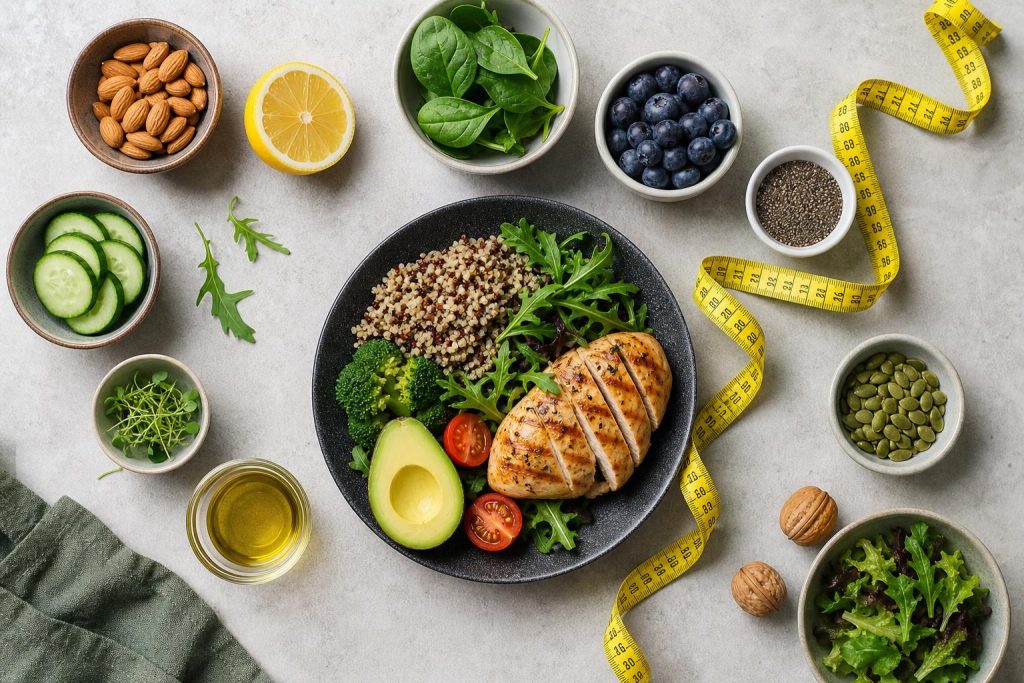
No medication or training program compensates for poor nutrition. Protein intake is the single biggest lever you control for muscle preservation during fat loss.
Protein targets for fat loss:
- Minimum: 0.8–1.0g per pound of bodyweight (This is higher than standard RDA, but necessary during caloric deficit)
- Optimal range: 1.0–1.2g per pound for maximum muscle preservation
- Example: A 200-pound man aiming to preserve muscle should consume 160–240g protein daily
Protein distribution matters too. Spread intake across 4–5 meals, hitting 30–40g per meal. This optimizes muscle protein synthesis throughout the day rather than front-loading all protein at dinner.
If using GLP-1 medications: Appetite suppression means you’ll eat less volume naturally. This makes hitting protein targets easier—you’re eating smaller, more nutrient-dense meals. However, some men report nausea or reduced appetite early on. Prioritize high-protein foods: Greek yogurt, cottage cheese, lean meat, and protein powder. Liquid protein (shakes) may be tolerated better than solid food if nausea occurs.
Caloric deficit: Aim for a moderate deficit of 300–500 calories below maintenance. Aggressive deficits (1000+ calories) accelerate muscle loss even with high protein and training. A moderate deficit typically yields 1–1.5 pounds of fat loss per week while preserving muscle.
Training for Muscle Preservation During Fat Loss
This tells us: training is the primary driver of muscle preservation and fitness improvements, not the medication.
Your training protocol should include:
- Strength training 3–4 days per week (primary priority)
- Focus on compound movements: squats, deadlifts, bench press, rows, overhead press
- Moderate-to-heavy loads (6–12 rep range)
- 3–4 sets per exercise
- This signals your body to preserve muscle during caloric deficit
- Cardiovascular training 2–3 days per week
- Moderate intensity (60–75% max HR) for 30–45 minutes
- Or vigorous intervals: 20–30 minutes at 75–85% max HR
- Walking, cycling, rowing all work—choose something sustainable
Why this combination works: Strength training preserves muscle mass by creating demand for it. Cardio creates the caloric deficit needed for fat loss and improves cardiovascular fitness. Together, they optimize body recomposition.
GLP-1 Medications: How They Fit the Strategy
GLP-1 receptor agonists (semaglutide, liraglutide, tirzepatide) suppress appetite and improve satiety. They’re tools—powerful ones—but not magic.
Realistic expectations:
- GLP-1 alone (without exercise or proper nutrition) does NOT preserve muscle or build fitness
- GLP-1 + proper nutrition and training = synergistic fat loss with muscle preservation
- GLP-1 makes a caloric deficit more sustainable by reducing hunger and cravings
If you’re using GLP-1:
- Still hit your protein targets—the medication won’t preserve muscle automatically
- Still train hard—the medication amplifies results when combined with exercise, not replaces it
- Use it to simplify adherence: fewer calories consumed naturally means fewer decisions to make
- Manage side effects: nausea is common early; eat smaller, frequent meals; stay hydrated; take medications as prescribed
If you’re not using GLP-1: You’ll rely more heavily on discipline with portion control, protein intake, and training consistency. This is entirely viable—discipline and structure can replicate what GLP-1 does hormonally.
Implementation Protocol: Your 12-Week Fat Loss and Muscle Preservation Plan
Week 1–2: Baseline and Adjustment
- Calculate maintenance calories (use 14–16x bodyweight in pounds)
- Set caloric target: maintenance minus 400 calories
- Plan protein: 1.0–1.2g per pound bodyweight
- Begin training schedule (don’t over-complicate; consistency beats perfection)
Week 3–12: Execution
- Weigh yourself twice weekly, track average weekly weight change
- Target 1–1.5 pounds fat loss per week (faster = more muscle loss)
- Every 2–3 weeks, assess strength levels in main lifts—if strength drops significantly, eat slightly more
- If using GLP-1, follow prescribed dosing; maintain training and protein even if appetite is suppressed
- Adjust calories if weight loss stalls for 2+ weeks (reduce by another 100–150 calories)
Progress markers (beyond the scale):
- Strength in compound lifts (deadlift, squat, bench press)
- Body measurements (chest, waist, arms, thighs)
- Mirror and photo comparisons
- Cardiovascular fitness (faster mile time, easier stairs, lower resting HR)
Bottom Line
Maximum fat loss with maximum muscle preservation requires three aligned pillars:
- Protein-rich nutrition (1.0–1.2g per pound bodyweight) in a moderate caloric deficit (300–500 calories below maintenance)
- Structured strength training 3–4 days per week to signal your body to preserve muscle
- Consistent cardio 2–3 days per week to create the deficit and build fitness
If you choose to use GLP-1 medications, they amplify results by making adherence easier—not by replacing the fundamentals above. Research confirms that exercise combined with GLP-1 treatment delivers superior results in muscle preservation, strength, and fitness compared to either intervention alone.
Your body recomposition—losing fat while gaining or preserving muscle—is achievable. The tools exist. The research backs it. Now execute.
Ready to dial in your nutrition and training? Check out our complete guide on protein intake for fat loss or our evidence-based strength training protocol for men.
Scientific References
-
Jensen, Fiorenza, Juhl et al. (2026).
Physical Fitness with Exercise and GLP-1 Receptor Agonist Treatment Alone or Combined After Diet-Induced Weight Loss: A Secondary Analysis of a Randomized Controlled Trial in Adults with Obesity..
Sports medicine (Auckland, N.Z.).
View on PubMed →