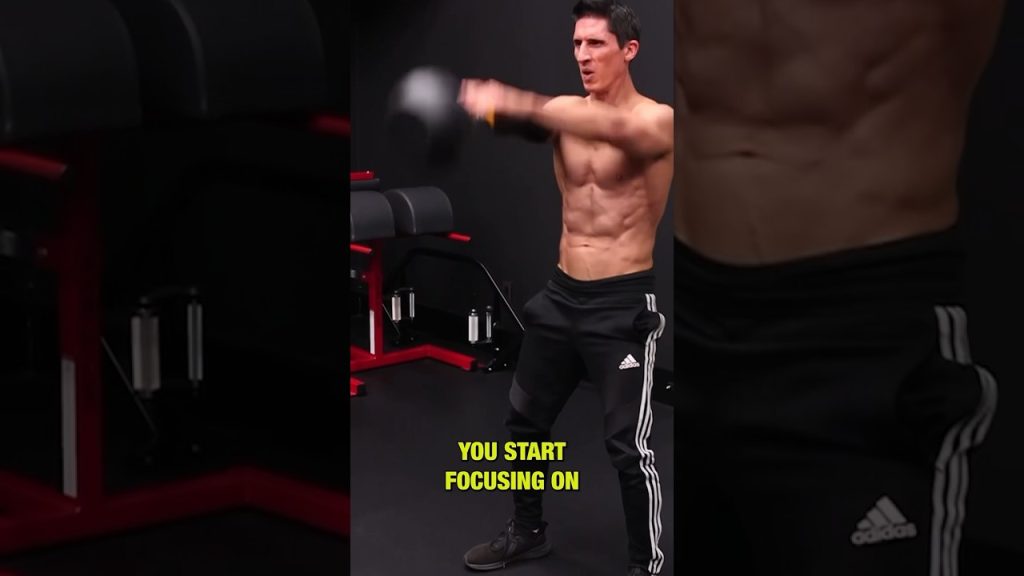
Video by AthleanX on YouTube
When researchers at the University of New Mexico analyzed resistance training movements for their ability to activate multiple muscle groups simultaneously, compound lower-body exercises consistently outperformed isolation work — not just for hypertrophy, but for preserving lean mass during caloric restriction. The goblet squat, often underestimated because of its beginner-friendly reputation, sits near the top of that list. It trains the quads, glutes, hamstrings, core, and upper back in a single fluid movement, making it one of the most efficient tools available for men who are trying to lose fat without sacrificing the muscle they’ve worked hard to build.
The challenge during any fat loss phase — whether you’re cutting calories through traditional dieting, following a structured macronutrient plan, or using a GLP-1 medication that naturally suppresses appetite — is that the body doesn’t distinguish cleanly between fat and muscle when it’s in an energy deficit. Research published in Obesity Reviews found that without adequate resistance training and protein intake, a significant portion of weight lost during caloric restriction comes from lean mass — sometimes accounting for 20 to 30 percent of total weight lost. That’s not just aesthetically undesirable. Muscle loss lowers your resting metabolic rate, reduces insulin sensitivity, and undermines long-term weight maintenance. The goblet squat, performed correctly and consistently, directly counters this risk.
Mastering the Mechanics: How to Perform the Goblet Squat
The movement starts with load position. Hold a dumbbell vertically at chest height, gripping the top end of the weight with both palms flat against the underside of the top plate — like you’re holding a goblet, hence the name. A kettlebell works equally well, held by the horns with the bell hanging down. Either tool creates an anterior load that serves a biomechanical purpose: it counterbalances your center of gravity as you descend, allowing you to maintain a more upright torso than a conventional back squat demands.
Stand with your feet roughly shoulder-width apart, toes turned out between 15 and 30 degrees depending on your hip anatomy. Before you move, brace your core as if you’re about to take a punch — this intra-abdominal pressure protects your lumbar spine and transfers force efficiently through the kinetic chain. Take a full breath in, hold it through the descent and ascent (the Valsalva maneuver), and exhale only at the top of the movement.
Initiate the squat by pushing your knees out in the direction of your toes while simultaneously hinging slightly at the hips. The cue here is not “sit down” but “spread the floor” — externally rotating your hips as you descend activates the glutes from the start of the movement, not just at lockout. Lower yourself until your elbows touch the inside of your knees at the bottom position, ideally reaching at or below parallel with your thighs. Studies measuring muscle activation in squats have shown that depth significantly affects glute and hamstring recruitment, with deeper squats producing substantially greater posterior chain engagement than quarter or half squats.
At the bottom, pause briefly and use the elbows-to-knees contact to push your knees wider — this reinforces the external rotation and keeps the hips in an optimal position. Drive through the entire foot to stand, squeezing the glutes at the top without hyperextending the lumbar spine. That’s one clean rep. Most men rushing through goblet squats lose the benefit somewhere in that bottom position — either bouncing out of the hole, caving the knees inward, or letting the chest collapse forward as fatigue sets in. Slow down. The movement rewards patience and control.
Why This Movement Is Particularly Valuable During a Fat Loss Phase
The goblet squat’s anterior load position does something that back-loaded squat variations don’t do as naturally: it forces the thoracic spine into extension and the core into continuous activation throughout the range of motion. Research on core muscle activation during squat variations confirms that anterior loading increases erector spinae and rectus abdominis engagement compared to traditional barbell back squats at equivalent relative intensities. This matters during a fat loss phase because you’re getting more total muscle stimulus per set — which is critical when training volume and recovery capacity may be reduced due to lower caloric intake.
It’s also a movement with a low technical barrier, which means men who are newer to the gym, returning after a long break, or dealing with the energy fluctuations that come with aggressive dieting can still execute it safely and effectively. Compare this to the barbell back squat, which requires significant mobility and technical proficiency to perform without injury risk — errors become more likely when you’re fatigued or underfueled. The goblet squat has enough built-in feedback (the weight touching your chest tells you if your torso is upright, the elbows touching your knees tell you about depth) that most athletes can self-correct in real time.
For programming purposes, the goblet squat sits comfortably in a range of three to five sets of eight to fifteen repetitions, depending on your goal. At heavier loads and lower reps, it builds strength and stimulates hypertrophy through mechanical tension. At moderate loads and higher reps, it creates metabolic stress and drives a significant caloric burn while keeping the joints in safe positions. A 2019 meta-analysis in the Journal of Strength and Conditioning Research confirmed that both high-load and moderate-load resistance training produce comparable muscle hypertrophy when volume is equated — meaning you don’t need to go heavy to preserve muscle. You need to go hard enough, often enough, with good form.
Progressive overload still applies even with this “beginner” exercise. Most men plateau at a 50- or 60-pound dumbbell and stop pushing. But loaded goblet squats with 80, 90, or even 100 pounds while maintaining perfect depth and tempo are genuinely challenging and continue driving adaptation well into an intermediate training career. Tempo manipulation is another underused variable — a three-second eccentric (lowering phase) followed by a one-second pause at the bottom dramatically increases time under tension without adding load, which is particularly useful when equipment is limited or joint tenderness is a concern during a caloric deficit.
Pair the goblet squat with adequate protein — most evidence now supports a minimum of 0.7 to 1 gram per pound of bodyweight daily during a fat loss phase — and you’ve created the two-factor combination that the research consistently identifies as most protective of lean mass during weight loss. The exercise provides the anabolic stimulus; the protein provides the raw material for muscle protein synthesis. Neither works as well without the other.
The Takeaway
The goblet squat isn’t a beginner exercise you graduate from — it’s a foundational movement you refine. For men focused on losing fat without losing muscle, it offers a rare combination of high muscle activation, joint safety, technical accessibility, and progressive scalability. Load it heavier than you think you need to. Go deeper than feels comfortable until it becomes comfortable. Brace hard, spread the floor, and control the descent. Done consistently, this single exercise can anchor an entire lower-body program and meaningfully protect the lean mass you’ve earned — no matter how you’re approaching your fat loss journey.