When semaglutide and tirzepatide first made headlines for their dramatic weight loss results, the conversation focused almost entirely on the scale. What got far less attention was what men were losing along with the fat. A 2025 narrative review published in Obesity Pillars by Fitch, Gigliotti, Bays, and colleagues identified muscle mass loss as one of the primary clinical challenges facing patients on GLP-1 based therapies — and concluded that the medical community has largely failed to address it with the urgency it deserves. For men who are already on one of these medications or considering one, that finding should stop you cold. Because losing muscle while losing weight is not a neutral outcome. It is a metabolic setback that can haunt you for years.
This is not a fringe concern or a worst-case scenario. Significant weight loss through any mechanism — whether from caloric restriction, bariatric surgery, or GLP-1 receptor agonists — results in a loss of both fat mass and lean mass. The ratio matters enormously. Muscle tissue is metabolically active, meaning it burns calories at rest, governs insulin sensitivity, supports hormonal function, and protects against the kind of age-related decline that turns healthy men into fragile ones. When aggressive appetite suppression accelerates weight loss without a deliberate strategy to protect lean tissue, the result can be what researchers call sarcopenic obesity — a condition where body fat percentage remains high even as total body weight drops, because the lost weight skews heavily toward muscle rather than fat.
Why GLP-1 Medications Create a Unique Muscle Risk
GLP-1 receptor agonists work primarily by slowing gastric emptying, increasing satiety signals, and reducing appetite. They are remarkably effective at doing exactly what they promise. The problem is that the caloric deficits they create are often steep and sustained, and for many men, those deficits arrive without any structured plan to compensate for what the body needs to hold onto muscle. The 2025 review in Obesity Pillars notes explicitly that many patients on GLP-1 therapies do not receive appropriate nutrition guidance — and that this gap represents a serious threat to long-term health outcomes.
When you eat significantly less, your body enters a catabolic state. Without sufficient dietary protein to fuel muscle protein synthesis, and without a mechanical stimulus telling the body that muscle is necessary for survival, catabolism will claim lean tissue alongside fat. GLP-1 medications suppress appetite so effectively that some men find themselves eating 1,000 to 1,200 calories per day without even trying — a deficit so large that protein intake almost certainly falls below what is needed to maintain muscle mass. Combine that with reduced energy for training and the natural anabolic resistance that comes with aging, and the conditions for significant muscle loss are fully in place.
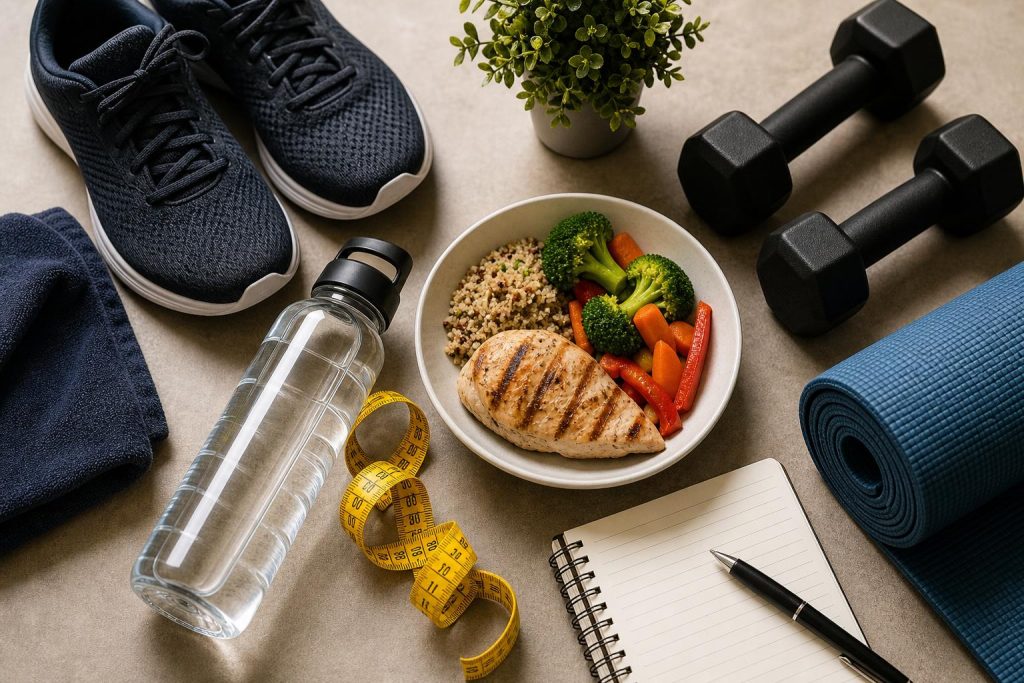
The clinical review is direct about the solution: increased protein intake alongside resistance training is the intervention that the evidence supports for preserving muscle mass in this population. Neither element alone is sufficient. Protein without training leaves the anabolic signal incomplete. Training without adequate protein gives your muscles the stimulus but not the raw material to respond. Together, they create the conditions under which fat loss can proceed while lean tissue is defended.
The Protein and Training Protocol That Actually Works
For men on GLP-1 medications, hitting protein targets becomes both more important and more difficult. Appetite suppression means food feels like an obligation rather than a pleasure, and protein-dense foods — meat, eggs, dairy, legumes — tend to be among the most satiating and filling options. That satiety is a feature in most contexts, but when you are already barely eating, it can make adequate protein intake feel nearly impossible.
The current evidence supports targeting somewhere between 1.6 and 2.2 grams of protein per kilogram of body weight per day for men actively working to preserve muscle during a caloric deficit. For a 200-pound man, that translates to roughly 145 to 200 grams of protein daily — a target that demands deliberate planning even under normal eating conditions. On a suppressed appetite, it requires strategy. Front-loading protein early in the day, prioritizing high-protein foods at every meal before anything else, and using protein shakes as a tool to close gaps without volume are all practical approaches that help men hit these numbers without forcing themselves to eat past their tolerance.
On the training side, resistance exercise is non-negotiable. The stimulus it provides — mechanical tension on muscle fibers — is the primary signal that tells the body muscle is worth keeping. Three to four sessions per week of compound, multi-joint movements such as squats, deadlifts, rows, and presses provide the broadest anabolic signal with the most efficient use of training time. Progressive overload matters here: the goal is not simply to move weights but to gradually increase the challenge placed on the muscle over weeks and months. This progressive stimulus, combined with adequate protein, is the mechanism by which men can realistically lose fat and hold muscle simultaneously, regardless of whether they are on a GLP-1 medication or not.
Creatine monohydrate is worth mentioning as a practical and well-supported addition. It is one of the most studied supplements in exercise science, with consistent evidence supporting its role in maintaining strength and muscle volume during periods of reduced caloric intake. For men who are eating less and training hard, the small ergogenic edge creatine provides can make a real difference in how well they hold lean mass through a caloric deficit.
Sleep and stress management deserve more than a passing mention here. Cortisol, the body’s primary stress hormone, is catabolic — it accelerates muscle breakdown and promotes fat storage, particularly around the abdomen. Poor sleep raises cortisol, blunts testosterone, and impairs the muscle protein synthesis that makes your training count. The 2025 review identifies sleep hygiene and mental health support as components of a comprehensive GLP-1 management strategy, and for good reason. Men who optimize their training and protein intake but sleep five hours a night and live in chronic stress are fighting an uphill battle for muscle preservation.
The Takeaway
GLP-1 medications can be a legitimate and powerful tool for men who need meaningful weight loss to improve their metabolic health. But the medication does not do the complete job — it handles appetite; you handle everything else. The research is clear that without deliberate, structured attention to protein intake and resistance training, significant muscle loss is not a possibility but a probability. The men who come out of a GLP-1 cycle leaner, stronger, and metabolically healthier are the ones who treated the medication as one component of a complete strategy — not as a passive solution. Build the muscle-preserving habits now, while the fat is coming off, because the body you rebuild during this window is the one you will be living in for the next several decades.
Scientific References
-
Fitch, Gigliotti, Bays et al. (2025).
Application of nutrition interventions with GLP-1 based therapies: A narrative review of the challenges and solutions..
Obesity pillars.
View on PubMed →