Getting enough protein is one of the most well-supported strategies in nutrition science for preserving lean mass during a caloric deficit — and the research is unambiguous about the stakes. Studies consistently show that men in a caloric deficit who fail to hit adequate protein targets lose significantly more muscle mass than those who do, with some trials reporting up to 40% of total weight loss coming from lean tissue when protein intake is insufficient. A quality protein powder can bridge that gap — but only if you can actually stomach it.
That last point matters more than most supplement reviews acknowledge. Palatability and mixability are not vanity metrics. They determine whether a product becomes a daily habit or sits forgotten on a shelf. And for men using GLP-1 receptor agonists like semaglutide or tirzepatide — where appetite suppression is dramatic and nausea is a real side effect — a protein shake that’s gritty, overly sweet, or hard to digest can be a dealbreaker in ways that go beyond preference.
What Makes a Protein Powder Actually Work for Reduced Appetite and Sensitive Digestion
The most common complaint among men hitting the gym on a reduced-calorie diet — GLP-1 user or not — is protein powder that tastes like chalk, clumps in the shaker, or causes bloating. These aren’t trivial complaints. Research on dietary adherence makes clear that taste satisfaction is one of the strongest predictors of whether individuals stick with a nutritional protocol long-term. If it tastes bad, you stop taking it. Simple as that.
Whey protein isolate tends to outperform whey concentrate in mixability and digestive tolerance. Because isolates are more processed to remove lactose and fat, they dissolve more cleanly in water and are better tolerated by men with mild lactose sensitivity. For those on GLP-1 medications, where nausea is already part of the landscape, a lighter, cleaner-mixing isolate is typically going to be easier to get down than a thick, heavily flavored concentrate. Whey isolate has also shown superior leucine content per gram, which is directly relevant to muscle protein synthesis — the biological process you’re trying to stimulate every time you consume protein.
Flavor formulation matters more than most brands admit. Artificial sweeteners like sucralose and acesulfame potassium dominate the market because they’re cheap and shelf-stable, but a meaningful portion of men find them to taste metallic or overly intense — particularly when appetite is blunted. Stevia-sweetened or naturally flavored options tend to read as cleaner on the palate, though individual tolerance varies. Chocolate and vanilla remain the most reliably rated flavors across independent consumer testing, and for good reason: they’re forgiving and blend easily into smoothies, oats, or just water without requiring culinary creativity.
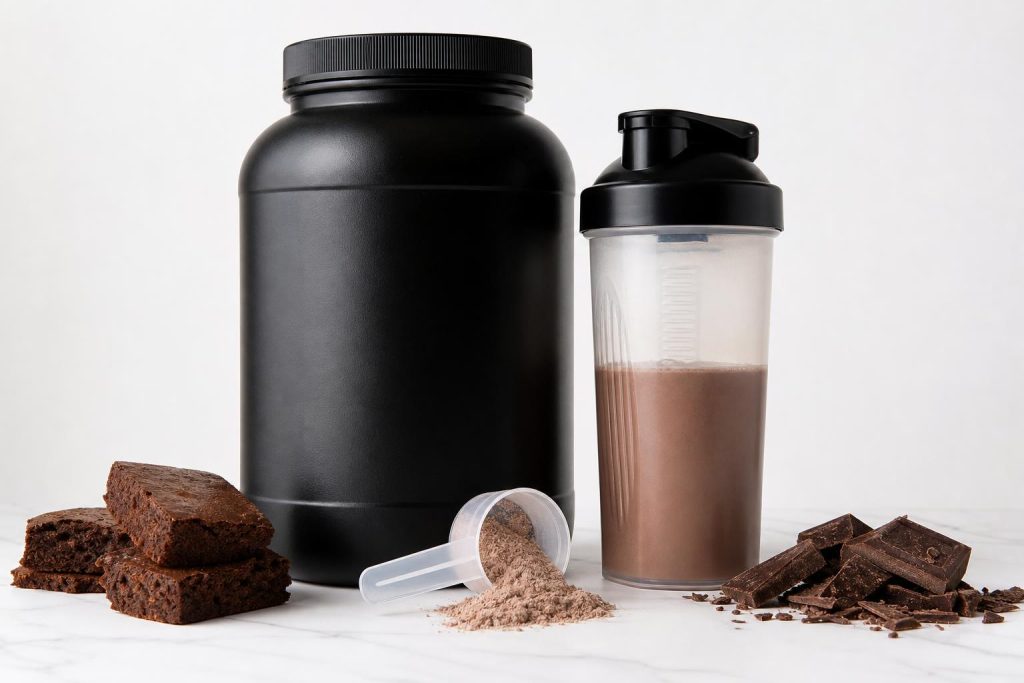
Mixability is worth testing rigorously. A protein powder that passes the shaker bottle test — no lumps, no film, no gritty residue after 20 seconds of shaking — will integrate into your routine with zero friction. Powders that require a blender are not inherently inferior, but they do introduce a barrier that erodes daily compliance over time. If your goal is hitting 140 to 200 grams of protein per day while eating in a deficit, friction is your enemy.
The Protein Numbers That Actually Move the Needle
The research on optimal protein intake for men who are actively training is more settled than supplement marketing would have you believe. A landmark meta-analysis published in the British Journal of Sports Medicine found that protein intakes beyond 1.62 grams per kilogram of body weight per day provided no additional benefit for muscle gain — but hitting that threshold consistently was the key variable. For a 200-pound man, that’s roughly 147 grams daily. Getting there through whole food alone while eating at a deficit is achievable but demanding. A well-tolerated protein powder makes it practical.
For men on GLP-1 medications specifically, where total food volume drops sharply, protein powder isn’t a convenience — it’s infrastructure. Getting 30 to 40 grams of high-quality protein into a single low-volume shake is one of the most efficient tools available when appetite is suppressed and solid meals feel like a chore. The same logic applies to anyone in an aggressive cut: when calories are tight, every gram of protein has to earn its place.
The Takeaway
A protein powder review that only covers macros misses the point. Taste and mixability are the variables that determine whether the product actually delivers on its nutritional promise — because a tub you don’t finish does nothing for your muscle mass or your metabolic health. Choose whey isolate for digestive tolerance and clean mixability, prioritize natural or lightly sweetened flavors if appetite sensitivity is a factor, and test your shaker protocol before committing to a large purchase. The best protein powder is the one you use consistently. Everything else is marketing.