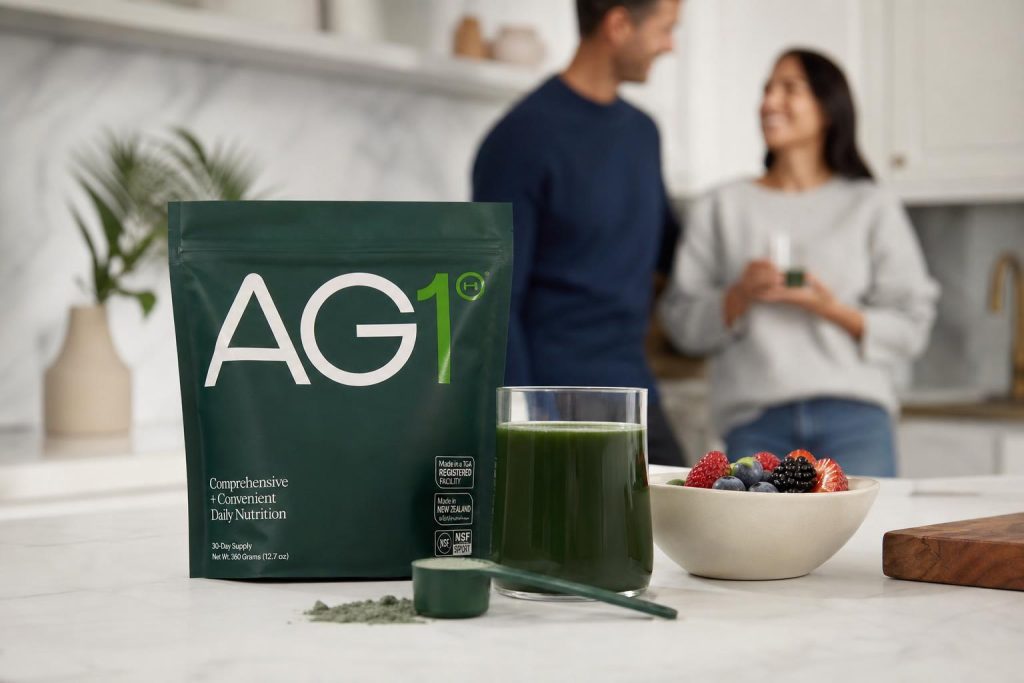
Most men who train consistently eat better than the average person — but that doesn’t mean they’re hitting every micronutrient target. Research published in the Journal of the International Society of Sports Nutrition found that even athletes following structured nutrition plans frequently fall short of key vitamins and minerals, including magnesium, zinc, and vitamin D — all of which are directly tied to testosterone production, recovery, and metabolic function. AG1 by Athletic Greens is one of the most heavily marketed supplements in the men’s health space, promising to fill those gaps in a single daily scoop. But does it hold up to scrutiny? Here’s what the science says — and whether it’s worth your money.
What AG1 Actually Contains — and Why Micronutrients Matter More Than You Think
AG1 is a greens powder that combines 75 ingredients across vitamins, minerals, adaptogens, probiotics, and plant extracts. The formula includes vitamin C, B12, zinc, magnesium, and a meaningful 1.25 billion CFU probiotic blend, along with adaptogenic herbs like ashwagandha and rhodiola. On paper, it reads like a comprehensive nutritional insurance policy.
The case for that insurance is stronger than many people assume. Micronutrient deficiencies are surprisingly common in active men — not because they eat poorly, but because intense training increases the body’s demand for certain nutrients. A 2013 review in Nutrients confirmed that magnesium depletion accelerates during exercise, and chronically low magnesium is associated with impaired muscle function, poor sleep quality, and elevated cortisol. Zinc, similarly, is lost through sweat and plays a central role in testosterone synthesis — a landmark study in Nutrition found that zinc supplementation significantly raised testosterone levels in zinc-deficient men. AG1 provides both, at reasonable doses.
The probiotic component also carries legitimate weight. Emerging research links gut microbiome diversity to nutrient absorption, systemic inflammation, and even body composition. While greens powders aren’t a replacement for a fiber-rich diet, a daily probiotic dose can meaningfully support the gut environment that determines how well you absorb everything else you eat and supplement.
For men on GLP-1 medications like semaglutide or tirzepatide, micronutrient sufficiency is an especially relevant concern. Reduced appetite means reduced food volume — and with it, reduced intake of vitamins and minerals. In this context, a comprehensive daily supplement like AG1 functions less as a luxury and more as a practical safeguard against the nutritional gaps that caloric restriction creates. But this logic applies equally to anyone running a calorie deficit to lose fat, whether through medication, structured dieting, or simply eating clean and training hard.
Where AG1 Delivers — and Where It Falls Short
AG1’s biggest strength is convenience. It consolidates a multivitamin, greens blend, probiotic, and adaptogen stack into one daily serving. For men who are already managing a full supplement protocol — creatine, protein, fish oil, vitamin D — reducing complexity has real behavioral value. Consistency matters more than perfection, and if a single scoop keeps you from skipping a handful of pills each morning, the aggregate benefit is meaningful.
The adaptogens deserve attention too. Ashwagandha, one of AG1’s included herbs, has been shown in randomized controlled trials to reduce cortisol levels and improve resistance training outcomes — including increases in muscle strength and recovery. Rhodiola rosea has demonstrated similar stress-buffering effects in clinical research focused on fatigue and cognitive performance. These aren’t marketing buzzwords — they’re botanical compounds with real mechanistic data behind them.
The honest limitation is cost. At roughly $99 per month, AG1 is a premium product. For men on a tight budget, a high-quality multivitamin, a separate probiotic, and vitamin D with K2 can replicate much of its effect at a fraction of the price. AG1 also uses proprietary blends for several of its ingredient categories, which makes it difficult to verify whether certain compounds are present at clinically effective doses. That’s a real transparency issue worth acknowledging.
The Takeaway
AG1 isn’t magic — but it’s not snake oil either. For men who train consistently, eat reasonably well, and want a convenient daily foundation for micronutrient coverage, gut health, and stress resilience, it delivers genuine value. The science supporting its core ingredients is solid. Whether you’re cutting calories, running a GLP-1 protocol, or simply grinding through weekly training sessions, the nutritional gaps that accumulate over time are real — and filling them matters. If the price fits your budget and the convenience fits your lifestyle, AG1 earns its place in a well-designed health stack.