There’s a reason elite athletes and registered dietitians have been meal prepping for decades before it became an Instagram trend — it works. Research published in the International Journal of Behavioral Nutrition and Physical Activity found that meal planning was strongly associated with better diet quality, greater food variety, and significantly lower rates of obesity. The container sitting in your refrigerator on a Tuesday night is doing more metabolic work than most people realize.
For men focused on fat loss, muscle preservation, or simply eating with more intention — whether that’s driven by a new training block, a metabolic health goal, or the appetite changes that come with GLP-1 medications like semaglutide or tirzepatide — the mechanics of how you store, portion, and plan your food can make or break your progress. This isn’t about obsessive calorie counting. It’s about building an environment that makes good decisions automatic.
Choosing the right meal prep container is the kind of unsexy variable that actually moves the needle. And yet most men grab whatever Tupperware is closest and wonder why their diet keeps sliding off the rails by Wednesday.
Why Portion Architecture Matters More Than Willpower
The science of behavioral nutrition is unambiguous on this point: the size of the vessel you eat from directly influences how much you consume. A landmark study by Wansink and colleagues demonstrated that people consistently underestimate portion sizes when eating from larger containers — consuming up to 31% more without realizing it. That’s not a character flaw. It’s environmental design working against you.
This matters regardless of your approach. If you’re in a calorie deficit trying to lose fat, a container that encourages overeating chips away at your margin. If you’re building muscle and tracking macros, inconsistent portions mean inconsistent data and inconsistent results. If you’re on a GLP-1 medication and your appetite is already suppressed, using an oversized container can create confusion around how much you’ve actually eaten — and make it harder to hit your protein targets without overdoing total calories.
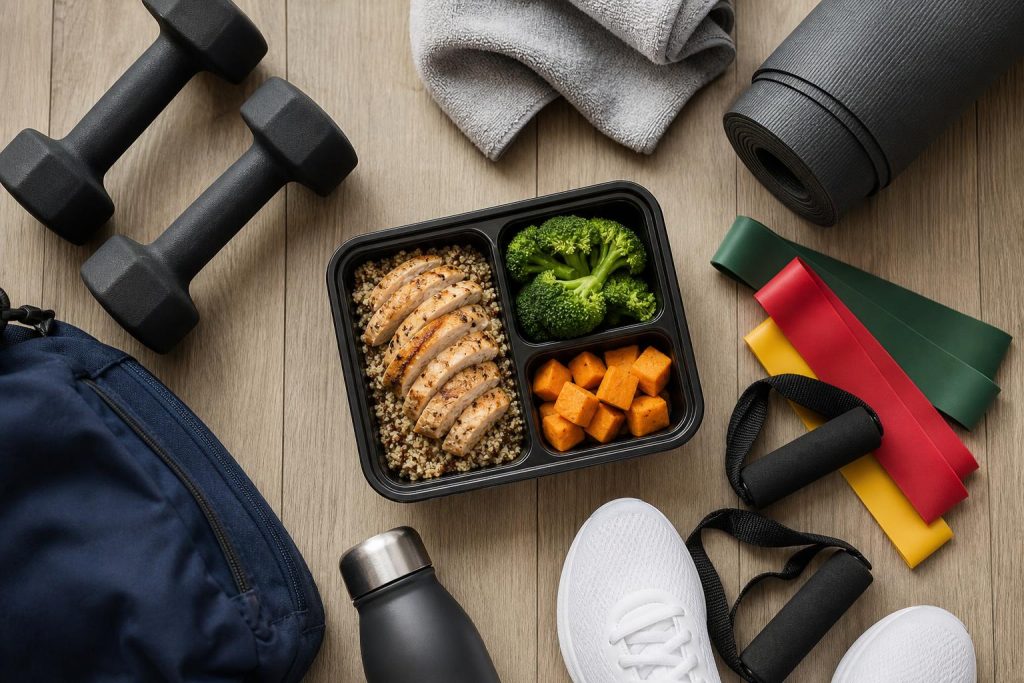
The fix is straightforward: use containers engineered with built-in portion logic. Compartmentalized containers — the kind with two or three divided sections — are particularly effective because they externalize the macro split you’re trying to hit. A reasonable target for most men in a fat-loss or body-recomposition phase is roughly 40% of the container’s volume dedicated to lean protein, 30% to complex carbohydrates or starchy vegetables, and 30% to fibrous vegetables and healthy fats. That visual architecture removes decision fatigue and reduces the cognitive load of every meal.
For men using GLP-1 medications specifically, smaller total volume matters even more. Gastric emptying slows significantly on these drugs, meaning a standard 32-ounce container may feel overwhelming. Opting for containers in the 16-to-24-ounce range — with compartments — allows you to prioritize protein-dense foods in the largest section without the visual burden of a full adult-sized meal. Studies on GLP-1 receptor agonists and satiety signaling confirm that users need to be strategic about protein density to prevent lean mass loss during significant caloric restriction.
What to Actually Look for When Buying Meal Prep Containers
Material matters more than most buyers consider. Glass containers are the gold standard from a health and longevity standpoint — they don’t leach chemicals, they handle temperature extremes from freezer to oven without degrading, and they don’t absorb odors over time. Research on bisphenol A (BPA) and endocrine disruption remains a genuine concern with older or lower-quality plastics, particularly when containers are microwaved repeatedly. If you’re going to invest in your health through food, don’t undermine it with the vessel you heat your chicken in.
That said, glass is heavier and less practical for gym bags or office commutes. High-quality BPA-free plastic — specifically Tritan plastic or PP (polypropylene, labeled #5) — is the next best option. Look for containers labeled microwave-safe, dishwasher-safe, and freezer-safe. Brands like Prep Naturals, Rubbermaid Brilliance, and OXO Good Grips consistently earn high marks across these categories. For glass, Pyrex and Glasslock remain the most durable options with leak-resistant lids.
Lid quality is non-negotiable. A container that leaks grilled salmon into your gym bag teaches you, very quickly, not to meal prep anymore. Look for silicone-sealed or snap-lock lids with multiple closure points. Square or rectangular containers stack far more efficiently than round ones — a detail that sounds minor until you’re trying to fit a week of prep into a single shelf.
Volume-wise, think in terms of your specific macro needs. Most men in a moderate deficit do well with 500-700 calorie meals, which translates to roughly 20-28 ounces of total food volume depending on food density. Men in a muscle-building phase may be targeting 600-900 calorie meals and need containers in the 28-36 ounce range. Buying a variety pack with multiple sizes is the most practical approach — it gives you flexibility across different meals and different days of the week.
One underrated feature: transparent containers. Visibility of food has been shown to influence consumption choices — when you can see your prepped meals clearly in the refrigerator, you’re more likely to reach for them instead of defaulting to takeout. This seems trivial, but behavior change research consistently supports the idea that friction and visibility are two of the most powerful levers available to you.
Building a Practical Meal Prep System That Actually Sticks
The container is only as useful as the system around it. Most men who fail at meal prep don’t fail because of willpower — they fail because their system is too complex to sustain. The goal is a repeatable weekly process that takes two hours on a Sunday and yields five to six ready-to-eat meals with minimal cognitive overhead during the week.
Start by anchoring your prep around protein. Cook a large batch of a single protein source — grilled chicken thighs, ground turkey, hard-boiled eggs, or canned salmon — and divide it across your containers first. Evidence consistently shows that higher protein intakes — in the range of 1.6 to 2.2 grams per kilogram of body weight — are protective against muscle loss during caloric restriction, making protein the non-negotiable anchor of every meal, not an afterthought.
Once protein is portioned, fill the remaining compartments with your carbohydrate source (roasted sweet potato, brown rice, quinoa) and your fiber source (steamed broccoli, roasted Brussels sprouts, mixed greens). Healthy fats — olive oil, avocado, nuts — are easiest to add at the time of eating rather than prepping in advance, which prevents texture degradation and gives you a natural control point for daily caloric variance.
Label your containers with the prep date using masking tape and a marker. Food safety guidelines suggest consuming refrigerated prepped meals within three to four days, so prep twice weekly if you want seven days of coverage. Keep meals for later in the week in the freezer and move them to the refrigerator the night before. This two-batch system eliminates the food safety concern while keeping prep sessions short enough to actually do.
The Takeaway
The best meal prep container is the one that fits your volume needs, survives your weekly routine, and makes the right portion feel like the obvious choice rather than a disciplined one. Whether you’re running a strict caloric deficit, training hard and eating to fuel performance, or navigating appetite changes from a GLP-1 medication, the infrastructure you build around your food determines how consistently your plan survives contact with a real week. Invest twenty dollars in the right containers, spend two hours on a Sunday, and watch how much easier every other decision becomes.