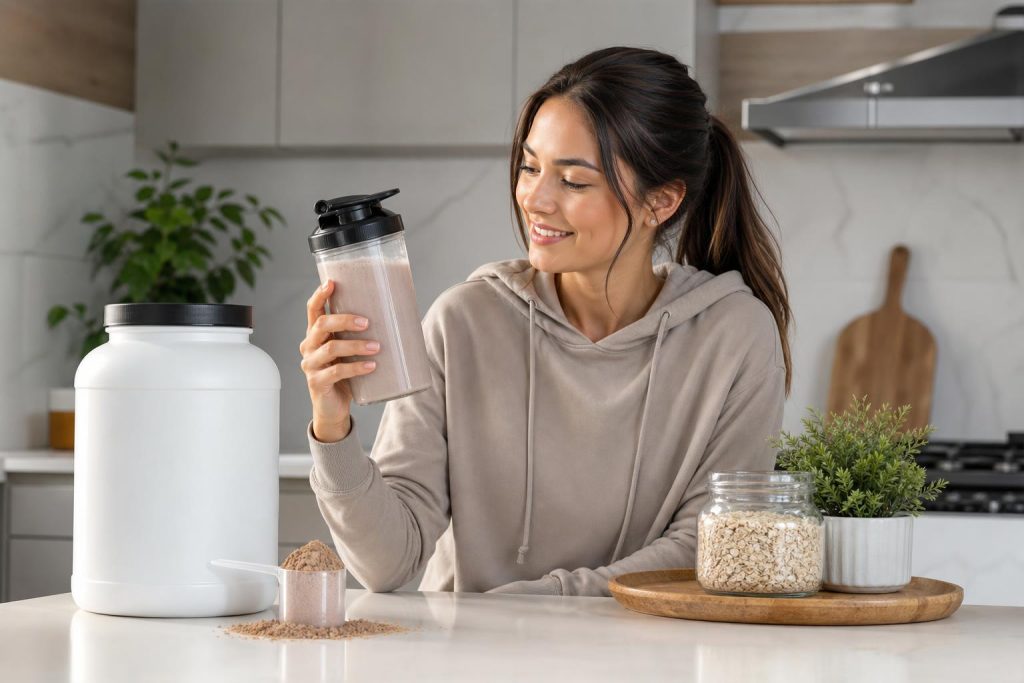
Here’s a problem most supplement brands don’t want to talk about: a protein powder can look perfect on paper — 25 grams of protein, low sugar, clean ingredients — and still be something you dread drinking. And when you’re already fighting appetite suppression from a GLP-1 medication like semaglutide or tirzepatide, or you’re deep in a caloric deficit trying to hold onto muscle, choking down a chalky, artificial-tasting shake isn’t just unpleasant. It’s a barrier to actually hitting your protein goals.
Protein intake matters more than most men realize, especially during fat loss. Research published in the American Journal of Clinical Nutrition demonstrated that increasing protein to 30% of total calories significantly increased satiety, reduced spontaneous caloric intake, and supported lean mass retention during weight loss. The catch: you have to actually consume it. Taste and mixability aren’t trivial concerns — they’re compliance variables.
Why Taste and Texture Determine Whether Protein Actually Works for You
Supplement companies spend enormous resources on macros and sourcing, but comparatively little on sensory experience. That’s a problem because palatability is one of the strongest predictors of dietary adherence, and adherence is where results are actually made or lost. A protein powder you skip half the time delivers roughly half the benefit, regardless of its amino acid profile.
Whey protein concentrate tends to have the richest, most naturally dairy-forward flavor — some describe it as closer to a real milkshake — but it also carries more lactose and fat, which can cause digestive discomfort in sensitive individuals. Whey isolate processes out most of the fat and lactose, producing a cleaner taste and much faster mixability, though it can taste thinner. Casein, by contrast, mixes into a thicker consistency that some men find satiating and others find heavy or chalky. Plant-based proteins — pea, rice, hemp — have improved dramatically in flavor over the past decade, but the gritty texture problem hasn’t been completely solved, particularly when mixed with water alone.
For men on GLP-1 medications specifically, nausea and altered taste sensitivity are documented side effects. Clinical data on semaglutide users shows nausea affects a substantial portion of patients, particularly during dose escalation. This changes the calculus around protein shakes significantly. Overly sweet, artificially flavored products can trigger or worsen nausea in this group — which means natural sweeteners, lighter flavor profiles, and smoother textures aren’t just preferences, they’re functional requirements. If you’re on a GLP-1 and struggling to get enough protein on dramatically reduced appetite, a shake you can actually finish becomes a clinical tool, not a luxury.
What the Research Says About Protein Sources and How They Mix
Not all protein powders mix equally because not all proteins behave the same way in liquid. Whey isolate has excellent solubility due to its processing, and most quality whey isolates will dissolve completely in cold water with ten to fifteen seconds of shaking. This matters because clumping isn’t just a texture issue — undissolved protein aggregates can contribute to bloating and GI discomfort. Studies on protein digestibility confirm that whey protein’s rapid absorption rate and high leucine content make it particularly effective for muscle protein synthesis, especially post-training.
Pea protein has emerged as one of the strongest plant-based alternatives, with research showing comparable gains in muscle thickness to whey when doses and training were equated. The remaining challenge is texture — pea protein tends to be grittier, and the best products address this with microfiltration or by blending pea with rice protein to create a more complete amino acid profile and smoother mouthfeel. If you’re mixing plant protein with water, expect a more substantial texture. Mix it with unsweetened oat milk or almond milk and the experience improves considerably.
Sweetener choice plays an outsized role in how a shake tastes over time. Sucralose — still the most common artificial sweetener in the category — is highly stable and intensely sweet, but some research suggests it may alter gut microbiome composition with consistent use, though the data in humans remains mixed. Stevia and monk fruit provide sweetness without the potential downsides, and many users report that stevia-sweetened products taste more natural and less cloying, though individual sensitivity to stevia’s slightly bitter aftertaste varies significantly. Unflavored protein powders sidestep the issue entirely — they mix into oatmeal, Greek yogurt, or coffee without altering the flavor, which can be the best solution for men with sensitive palates or GI concerns.
When evaluating mixability practically, the variables that matter most are particle size (finer is better), lecithin content (soy or sunflower lecithin acts as an emulsifier and dramatically reduces clumping), and liquid temperature. Cold water mixes most proteins cleanly; warm water can cause whey to denature slightly and clump. Shaker bottles with wire whisk balls outperform standard lid-and-shake methods, and blenders are the gold standard — though not always practical for daily use.
The Takeaway
Hitting your daily protein target — whether that’s 150 grams or 200 grams depending on your bodyweight and goals — is one of the highest-leverage things you can do for body composition, regardless of how you’re approaching fat loss. A protein powder that tastes good and mixes cleanly removes friction from that process. For most men, a quality whey isolate with natural sweeteners will win on taste, mixability, and post-training performance. Plant-based men or those with dairy sensitivity should look for a pea-rice blend with lecithin added. GLP-1 users should prioritize lighter, less intensely sweet formulas and consider unflavored options mixed into foods rather than standalone shakes. The best protein powder is ultimately the one you drink consistently — make palatability part of your selection criteria, not an afterthought.